
World Happiness Report 2026 Links Social Media Use to Declining Adolescent Wellbeing in Western Nations
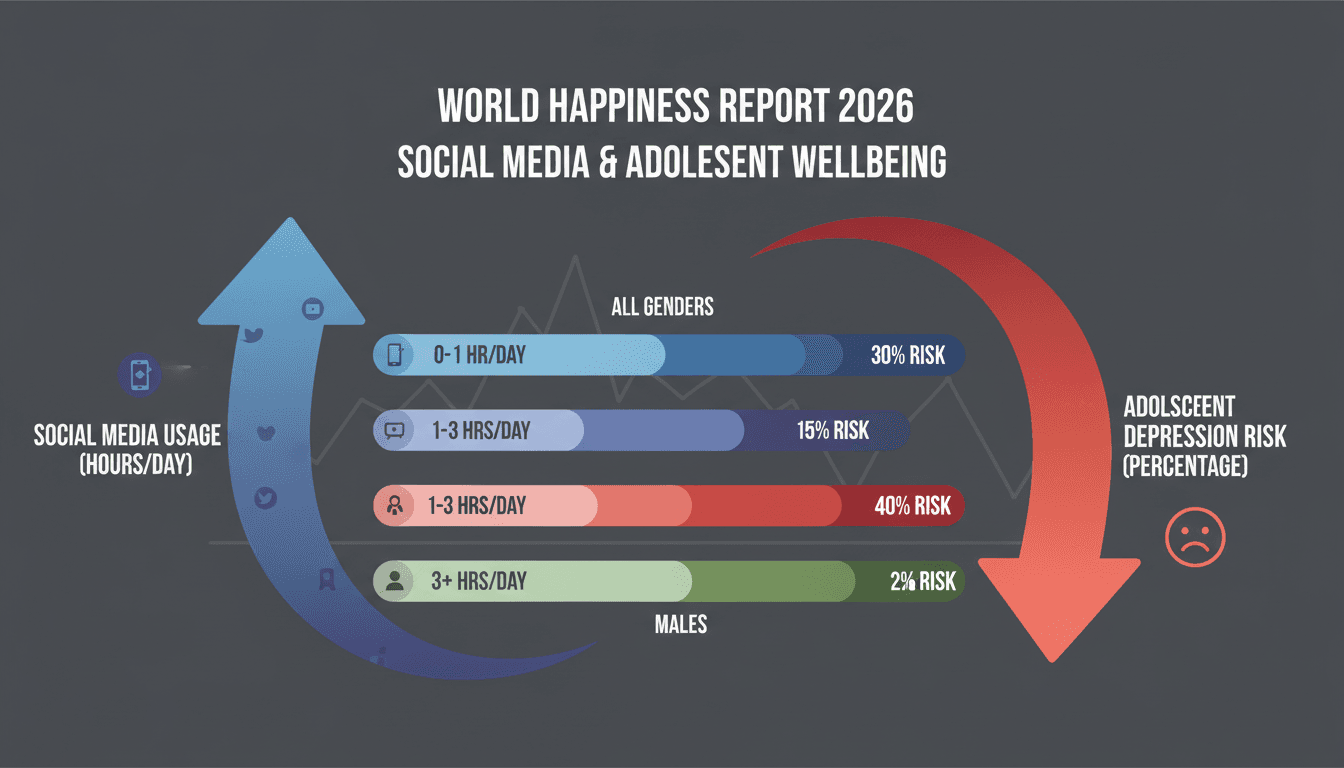
Here's what it means for you.
As a professional navigating youth culture, understanding the implications of social media on mental health can shape your strategies and outreach.
Why it matters
The findings from the World Happiness Report 2026 highlight a critical intersection of technology and mental health, influencing policy, education, and youth engagement strategies.
What happened (in 30 seconds)
- The World Happiness Report 2026 revealed a significant negative correlation between social media use and adolescent wellbeing, particularly in Western countries.
- Heavy users of social media (over 5 hours daily) face a doubled risk of depression, especially among girls, compared to those using it less than an hour.
- Finland remains the happiest nation, while the U.S. and Canada rank lower, with social media proliferation since the 2010s contributing to this disparity.
The context you actually need
- Previous reports since 2012 have documented a widening happiness gap between younger and older cohorts, coinciding with the rise of smartphones and social media.
- Causal evidence from various studies indicates that social media usage beyond 1-3 hours daily sharply declines wellbeing, with distinct impacts based on gender.
- Regulatory scrutiny is increasing globally, with countries like Australia and France considering restrictions on youth social media access in response to these findings.
What's really happening
The World Happiness Report 2026, compiled by the University of Oxford's Wellbeing Research Centre, Gallup, and the UN Sustainable Development Solutions Network, sheds light on the deteriorating mental health of adolescents in Western countries, particularly linked to social media use. The report's findings are based on extensive data analysis, including Gallup World Poll and PISA data, revealing a curvilinear relationship between social media use and life satisfaction.
Adolescents who engage with social media for less than an hour daily report higher life satisfaction, while those who exceed 1-3 hours experience a significant drop in wellbeing. This decline is especially pronounced for girls, who face a 2.65 times higher risk of depression when using social media for over five hours a day compared to those who use it for less than one hour. The report attributes this trend to the proliferation of social media platforms since the early 2010s, which has coincided with rising mental health concerns among youth.
The report also distinguishes between different types of social media platforms. Communication-focused platforms, such as WhatsApp, show positive associations with wellbeing at moderate use levels, while algorithm-driven platforms exhibit negative effects when usage is high. This nuanced understanding of social media's impact is critical as it informs potential regulatory responses, such as age limits and usage restrictions, which are being discussed in various jurisdictions.
The report's release has sparked discussions about the need for regulations to protect youth, with recommendations for age limits on social media access and smartphone bans in schools. Countries like Australia have already implemented measures to restrict access for those under 16, while French lawmakers are considering similar legislation for under-15s. The report's findings are timely, as they coincide with increasing scrutiny of social media companies and their responsibilities toward adolescent users.
Who feels it first (and how)
- Parents: Concerned about their children's mental health and social media habits.
- Educators: Facing challenges in addressing the mental health crisis among students.
- Policymakers: Under pressure to implement regulations that protect youth from harmful social media effects.
- Mental health professionals: Experiencing increased demand for services related to adolescent mental health issues.
What to watch next
- Regulatory changes: Keep an eye on legislation regarding social media usage among minors, as countries may adopt stricter guidelines.
- Mental health trends: Monitor shifts in adolescent mental health statistics in response to social media usage patterns and regulatory measures.
- Platform responses: Watch how social media companies adapt their policies and features in light of these findings, particularly regarding user safety and wellbeing.
Heavy social media use is linked to increased depression risk among adolescents.
Regulatory measures will increase globally as awareness of social media's impact on youth wellbeing grows.
The long-term effects of these regulations on social media usage patterns and adolescent mental health remain uncertain.
Frequently Asked Questions
- Why it matters?
- The findings from the World Happiness Report 2026 highlight a critical intersection of technology and mental health, influencing policy, education, and youth engagement strategies.
- What happened (in 30 seconds)?
- The World Happiness Report 2026 revealed a significant negative correlation between social media use and adolescent wellbeing, particularly in Western countries. Heavy users of social media (over 5 hours daily) face a doubled risk of depression, especially among girls, compared to those using it less than an hour. Finland remains the happiest nation, while the U.S. and Canada rank lower, with social media proliferation since the 2010s contributing to this disparity.
- What's really happening?
- The World Happiness Report 2026, compiled by the University of Oxford's Wellbeing Research Centre, Gallup, and the UN Sustainable Development Solutions Network, sheds light on the deteriorating mental health of adolescents in Western countries, particularly linked to social media use. The report's findings are based on extensive data analysis, including Gallup World Poll and PISA data, revealing a curvilinear relationship between social media use and life satisfaction. Adolescents who engage w
- Who feels it first (and how)?
- Parents: Concerned about their children's mental health and social media habits. Educators: Facing challenges in addressing the mental health crisis among students. Policymakers: Under pressure to implement regulations that protect youth from harmful social media effects. Mental health professionals: Experiencing increased demand for services related to adolescent mental health issues.
- What to watch next?
- Regulatory changes: Keep an eye on legislation regarding social media usage among minors, as countries may adopt stricter guidelines. Mental health trends: Monitor shifts in adolescent mental health statistics in response to social media usage patterns and regulatory measures. Platform responses: Watch how social media companies adapt their policies and features in light of these findings, particularly regarding user safety and wellbeing.
24/7 international news from a French perspective in multiple languages.
"France 24 is viewed as a globally focused outlet with balanced coverage and a European perspective."
— A47 Editor
'Harm at a population level': World Happiness Report flags social media's negative impact
The 2026 edition of the World Happiness Report highlights a significant decline in the wellbeing of young people, attributing this trend to the negative effects of social media use over the past 15 years. Finland continues to hold the title of the wo...
Science and technology stories including AI.
"Longstanding science magazine with thoughtful AI coverage."
— A47 Editor
The world’s happiest countries report calls attention to youth well-being
An annual world happiness ranking for 2026 has been released, highlighting the impact of social media on youth well-being. This report aims to shed light on the factors contributing to happiness among young people globally.
Scientific research, technology, environment, and society.
"Scientific American is one of the oldest and most authoritative science magazines, known for deep dives into science, technology, and society."
— A47 Editor
The world’s happiest countries report calls attention to youth well-being
An annual world happiness ranking for 2026 has been released, highlighting the impact of social media on youth well-being. This report aims to shed light on the factors contributing to happiness among young people globally.
Regional and international reporting focused on Middle Eastern politics, diplomacy, and economics.
"Asharq Al-Awsat is a Saudi-owned international newspaper reflecting mainstream Gulf political perspectives."
— A47 Editor
World Happiness Report Highlights Social Media's Negative Impact
The World Happiness Report has revealed a concerning trend regarding the negative impact of social media on overall happiness levels. This report highlights how social media platforms may contribute to feelings of dissatisfaction and unhappiness amon...