
Tisza Party Wins Supermajority in Hungary, Ending Orbán's 16-Year Rule
Here's what it means for you.
The end of Viktor Orbán's rule signals a potential reconfiguration of EU relations and investment flows in Central Europe.
The Vibe
Hungary's political landscape has dramatically shifted, with the Tisza Party's supermajority victory reflecting a surge in voter engagement and a demand for accountability.
What it signals
This election marks a pivotal moment in Hungary's governance and its relationship with the European Union. The Tisza Party's rise indicates a collective yearning for transparency and reform, which could reshape economic policies and investment opportunities in the region.
Why it's happening now
1. A growing discontent with corruption and economic stagnation has mobilized voters, particularly the youth, who are increasingly demanding change. 2. The withholding of €17 billion in EU funds due to rule-of-law violations has created a pressing need for reform, making the electorate more receptive to anti-corruption platforms. 3. The consolidation of media control under Orbán's regime has backfired, leading to a backlash that empowered opposition voices and galvanized public support for Tisza.
Who it's for (and who it leaves out)
The core beneficiaries are progressive voters and young professionals seeking a transparent and accountable government. Conversely, traditional Fidesz supporters may feel alienated as the political landscape evolves.
What to watch next
1. The implementation of anti-corruption reforms and their impact on EU fund releases will be crucial for Hungary's economic recovery. 2. The internal dynamics within the Fidesz party as they navigate leadership changes and public sentiment will reveal the future of opposition politics in Hungary.
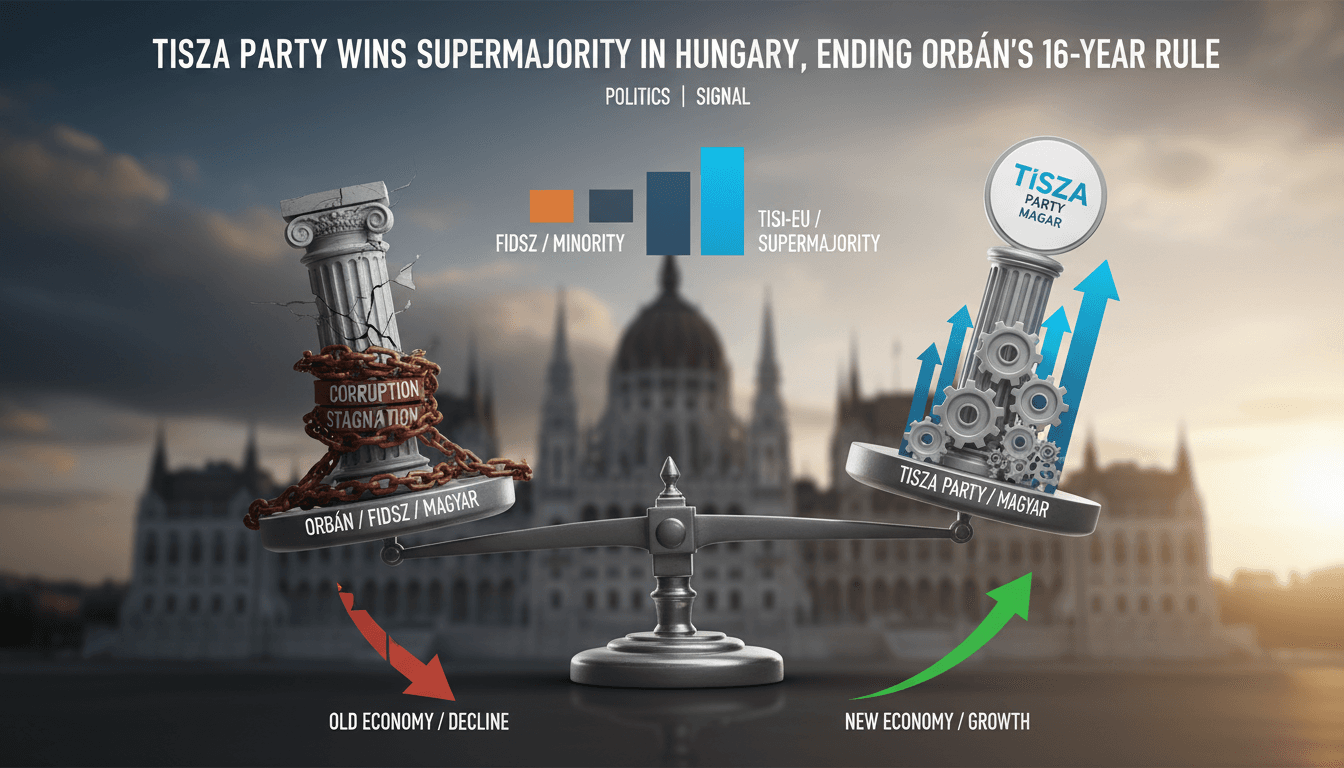
Visual Directive: A bold infographic illustrating the shift in parliamentary power dynamics and potential economic impacts in Hungary.
The Tisza Party has secured a supermajority in Hungary's parliament.
Economic reforms and EU fund releases will be prioritized under the new government.
The long-term stability of the Tisza Party and its ability to maintain public support remains uncertain.
International coverage from The Guardian's global desks.
"The Guardian is known for its progressive editorial stance and in-depth analysis."
— A47 Editor
Hungary’s incoming PM seeks Polish help to renew EU relations
Péter Magyar, the newly elected Prime Minister of Hungary, is seeking to strengthen ties with Poland, particularly with Prime Minister Donald Tusk, to help restore Hungary's relationship with the European Union after years of strained relations under...
International coverage of politics, culture, and current affairs.
"BBC News is widely regarded as a reputable international news organization, known for its impartial tone and public service mandate."
— A47 Editor
Orbán's era was over in a flash and Hungary's next PM is a man in a hurry
Péter Magyar and his Tisza party have achieved a historic victory in Hungary's parliamentary elections, decisively ending Viktor Orbán's 16-year rule. The elections, held on April 12, 2026, saw the Tisza party secure over 52% of the vote, marking a s...
News and current affairs from across Europe.
"The Guardian is known for its progressive editorial stance and in-depth analysis."
— A47 Editor
‘A defeat for Putin’: Ukrainians hope Magyar’s victory will mark new era with Hungary
Péter Magyar's victory in Hungary's parliamentary elections on April 12, 2026, marks the end of Viktor Orbán's 16-year rule, signaling a significant political shift in the country. The election results have been met with enthusiasm in Ukraine, where ...