
Edward Fishman Warns of New Economic Warfare Era Amid Iran's Market Pressure During US-Iran Ceasefire
Here's what it means for you.
As global markets navigate the complexities of geopolitical tensions, your investments and supply chains may face unexpected disruptions.
Why it matters
The ongoing economic pressure from Iran could lead to significant fluctuations in global oil prices and supply chain stability.
What happened (in 30 seconds)
- Edward Fishman declared a new era of economic warfare amid Iran's sustained pressure during a fragile ceasefire with the U.S.
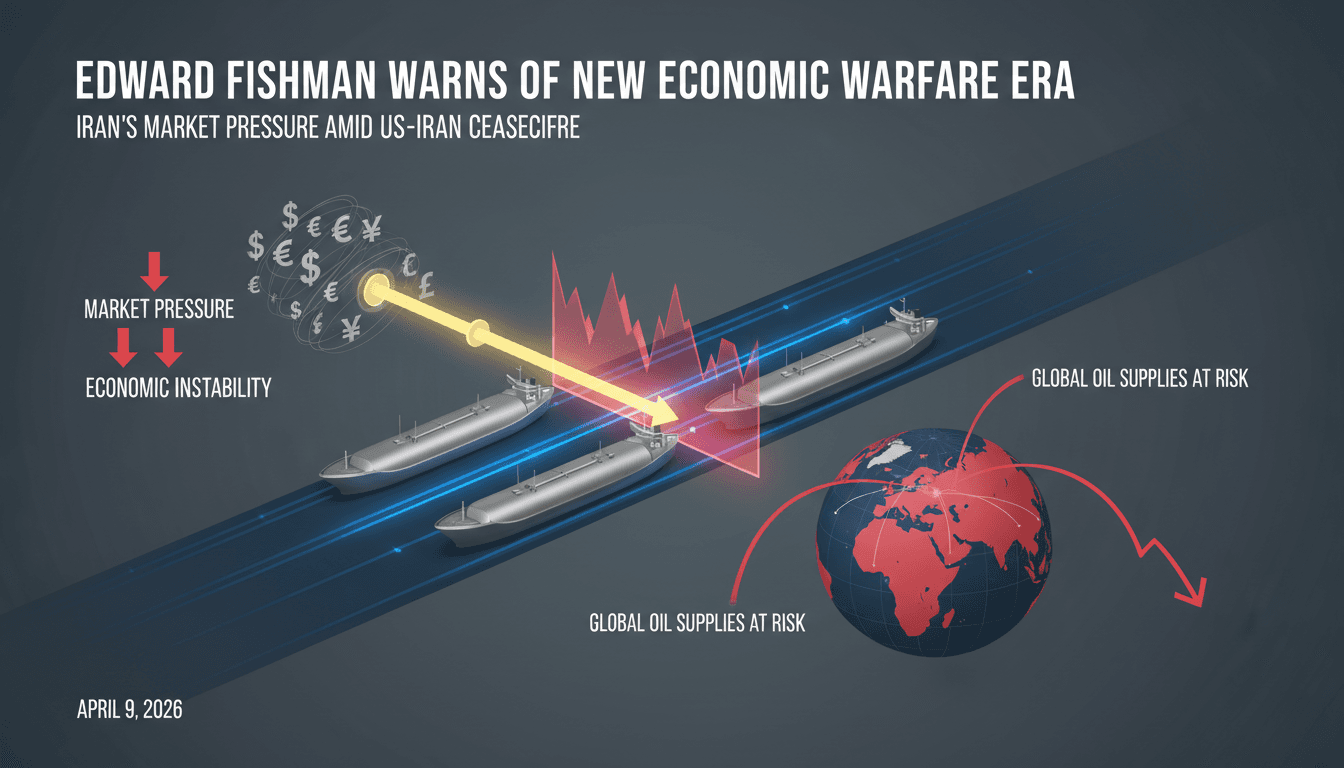
- Iran's blockade of the Strait of Hormuz continues to impact 20% of global oil supplies, despite a ceasefire agreement announced on April 7, 2026.
- Global markets reacted with a rally following the ceasefire, but uncertainties remain regarding compliance and ongoing tensions in the region.
The context you actually need
- The 2026 Iran war began with U.S.-Israeli airstrikes on February 28, leading to Iran's closure of the Strait of Hormuz on March 4.
- Oil prices surged to over $120 per barrel due to the blockade, causing economic strain across Gulf states reliant on the strait for imports.
- The ceasefire is tenuous, with ongoing Israeli offensives in Lebanon and unresolved shipping disruptions, raising concerns about long-term stability.
What's really happening
Edward Fishman's assertion of a new era of economic warfare highlights a significant shift in how nations leverage economic tools in geopolitical conflicts. The ongoing tensions between the U.S. and Iran, particularly surrounding the Strait of Hormuz, underscore the strategic importance of this maritime chokepoint, which facilitates the transit of approximately 20% of the world’s oil. The blockade initiated by Iran in early March has not only driven oil prices to unprecedented levels but has also created a ripple effect across global markets, impacting everything from energy costs to inflation rates.
The fragile ceasefire announced by President Trump on April 7, 2026, was intended to pave the way for peace talks in Pakistan. However, the underlying tensions remain unresolved, particularly with Israel's military actions in Lebanon and Iran's continued economic pressure. Fishman's comments reveal a broader trend where nations may increasingly resort to economic measures as a form of warfare, rather than traditional military engagements. This shift could redefine international relations and economic strategies, as countries assess their vulnerabilities and dependencies on critical resources.
For businesses and investors, the implications are profound. The volatility in oil prices, as seen when Brent crude exceeded $120 per barrel, can lead to increased operational costs and affect profit margins across various sectors. Additionally, the ongoing uncertainty surrounding the Strait of Hormuz could disrupt supply chains, particularly for those reliant on oil and liquefied natural gas (LNG) imports. The situation is further complicated by the interconnectedness of global markets; disruptions in one region can have cascading effects worldwide.
As the ceasefire holds—albeit tenuously—there is a glimmer of hope for stabilization. However, the potential for renewed conflict or further economic sanctions looms large. Companies operating in or trading with the Gulf region must remain vigilant, as the geopolitical landscape continues to evolve. The economic warfare narrative suggests that nations will increasingly use economic tools to exert influence, making it essential for businesses to adapt their strategies accordingly.
Who feels it first (and how)
- Energy sector: Companies reliant on oil and gas may experience price volatility and supply chain disruptions.
- Logistics and shipping: Firms involved in maritime transport could face delays and increased costs due to blocked shipping routes.
- Consumers: Households may see rising prices for goods and services, particularly in regions dependent on imports from the Gulf.
- Investors: Market fluctuations may impact investment portfolios, especially those heavily weighted in energy stocks.
What to watch next
- Compliance with the ceasefire: Monitoring Iran's adherence to the ceasefire terms will be crucial for assessing future market stability.
- Oil price fluctuations: Keep an eye on Brent crude prices as they respond to geopolitical developments and supply chain disruptions.
- U.S.-Iran negotiations: The outcomes of peace talks in Pakistan will be pivotal in determining the trajectory of U.S.-Iran relations and regional stability.
The Strait of Hormuz is critical for global oil supply, and its blockade has significant economic implications.
Continued volatility in oil prices as geopolitical tensions persist and market reactions fluctuate.
The long-term effectiveness of the ceasefire and its impact on broader U.S.-Iran relations.
Frequently Asked Questions
- Why it matters?
- The ongoing economic pressure from Iran could lead to significant fluctuations in global oil prices and supply chain stability.
- What happened (in 30 seconds)?
- Edward Fishman declared a new era of economic warfare amid Iran's sustained pressure during a fragile ceasefire with the U.S. Iran's blockade of the Strait of Hormuz continues to impact 20% of global oil supplies, despite a ceasefire agreement announced on April 7, 2026. Global markets reacted with a rally following the ceasefire, but uncertainties remain regarding compliance and ongoing tensions in the region.
- What's really happening?
- Edward Fishman's assertion of a new era of economic warfare highlights a significant shift in how nations leverage economic tools in geopolitical conflicts. The ongoing tensions between the U.S. and Iran, particularly surrounding the Strait of Hormuz, underscore the strategic importance of this maritime chokepoint, which facilitates the transit of approximately 20% of the world’s oil. The blockade initiated by Iran in early March has not only driven oil prices to unprecedented levels but has als
- Who feels it first (and how)?
- Energy sector: Companies reliant on oil and gas may experience price volatility and supply chain disruptions. Logistics and shipping: Firms involved in maritime transport could face delays and increased costs due to blocked shipping routes. Consumers: Households may see rising prices for goods and services, particularly in regions dependent on imports from the Gulf. Investors: Market fluctuations may impact investment portfolios, especially those heavily weighted in energy stocks.
- What to watch next?
- Compliance with the ceasefire: Monitoring Iran's adherence to the ceasefire terms will be crucial for assessing future market stability. Oil price fluctuations: Keep an eye on Brent crude prices as they respond to geopolitical developments and supply chain disruptions. U.S.-Iran negotiations: The outcomes of peace talks in Pakistan will be pivotal in determining the trajectory of U.S.-Iran relations and regional stability.
Global markets, investing, and macroeconomics from a premier financial newsroom.
"Bloomberg is respected for in-depth financial reporting and data-driven analysis."
— A47 Editor
We're Living In a New Age of Economic Warfare Says Fishman
Wall Street experienced a rebound in stocks as oil prices fell following Israel's agreement to engage in direct talks with Lebanon, which raised hopes for a lasting ceasefire deal involving the US and Iran. This comes after a two-week ceasefire was a...
Market-moving headlines impacting equities, bonds, and related risk assets.
"Real-time catalysts and volatility drivers across indices and sectors."
— A47 Editor
U.S. stocks rise as Iran ceasefire bolstered by Israel, Lebanon negotiations
U.S. stocks experienced a rise following a ceasefire agreement between the United States and Iran, which was bolstered by negotiations involving Israel and Lebanon. This positive market response reflects investor optimism regarding reduced military t...