
BitMEX Research Proposes Canary Fund to Address Bitcoin's Quantum Vulnerability
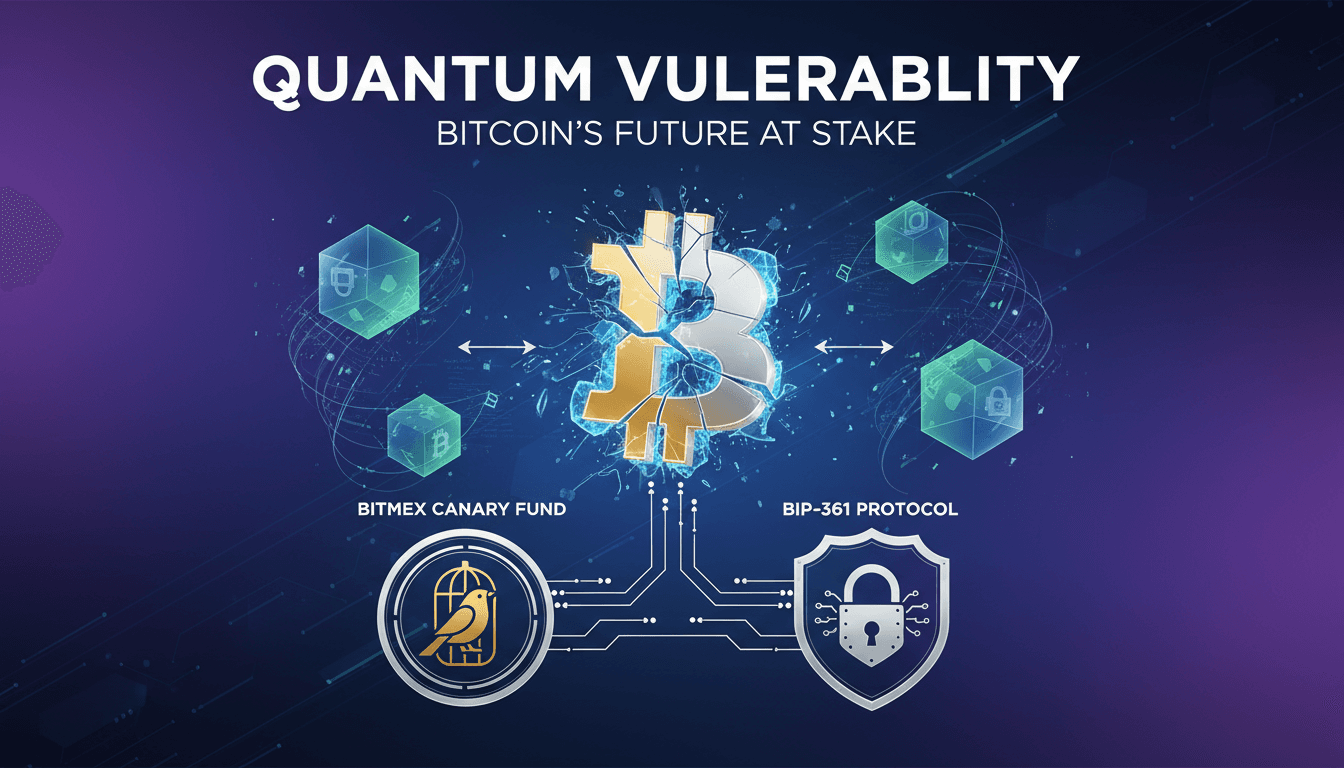
Here's what it means for you.
If you're involved in Bitcoin, understanding the implications of quantum vulnerabilities is crucial for your investments.
Why it matters
The ongoing debate over Bitcoin's quantum resistance directly impacts the security and accessibility of a significant portion of the cryptocurrency market.
What happened (in 30 seconds)
- On April 15, 2026, BitMEX Research proposed a 'canary fund' mechanism as an alternative to BIP-361, which addresses quantum computing vulnerabilities in Bitcoin.
- BIP-361, published just a day earlier, outlines a phased approach to invalidate vulnerable signatures over five years, raising concerns about forced freezes of legacy addresses.
- The community is currently debating the merits of preemptive versus conditional defenses against quantum threats, with no immediate market disruptions reported.
The context you actually need
- Quantum computing advancements pose a significant threat to Bitcoin, with research indicating that approximately 34% of Bitcoin's supply is vulnerable due to exposed public keys.
- BIP-361's approach has faced backlash for potentially freezing funds, including those belonging to early adopters like Satoshi Nakamoto, leading to fears of overreach.
- BitMEX's proposal introduces a reactive mechanism that could allow for normal transactions while addressing quantum threats, emphasizing the need for community consensus on the best path forward.
What's really happening
The emergence of quantum computing has raised alarms within the Bitcoin community, particularly regarding the security of public key cryptography. A recent study by Google highlighted a 20-fold reduction in resources needed to break ECDSA signatures, which are foundational to Bitcoin's security. This vulnerability threatens approximately 34% of Bitcoin's supply, stored in addresses with exposed public keys.
In response, BIP-361 was introduced as a three-phase soft fork aimed at mitigating these risks. The proposal mandates that after three years, new deposits to legacy addresses will be blocked, and after five years, unmigrated funds will be frozen. This approach has sparked significant debate, with critics arguing that it could strand funds and disrupt the ecosystem, particularly for dormant coins.
BitMEX Research's alternative proposal, introduced shortly after BIP-361, suggests a 'canary fund' mechanism. This involves creating a bounty address with an unknown private key, funded with over 1,000 BTC. If this address is ever spent from, it would trigger an emergency soft fork that freezes legacy addresses while allowing normal transactions to continue. This conditional approach aims to provide a safety net against quantum threats without the immediate and potentially disruptive consequences of BIP-361.
The community's response has been mixed. Prominent figures like Jameson Lopp have acknowledged the appeal of the canary fund but raised concerns about the reliance on benevolent actors to manage the process. Others, like Charles Hoskinson, have criticized BIP-361 as a hard fork that could strand significant amounts of Bitcoin, including those belonging to early adopters.
As discussions continue, the Bitcoin community is grappling with the balance between proactive measures and the risks of forced migrations. The outcome of this debate will shape the future of Bitcoin's security and accessibility, particularly as quantum computing technology continues to advance.
Who feels it first (and how)
- Bitcoin holders: Those with funds in legacy addresses are directly impacted by potential freezes.
- Developers and miners: Changes to the protocol affect their operations and the overall network security.
- Investors and traders: Market sentiment and confidence in Bitcoin's security will influence investment decisions.
What to watch next
- Community consensus: Monitor discussions and votes within the Bitcoin developer community regarding BIP-361 and the BitMEX proposal, as this will determine the future direction of Bitcoin's security measures.
- Quantum computing advancements: Keep an eye on breakthroughs in quantum computing that could further impact Bitcoin's vulnerability and the urgency of proposed solutions.
- Market reactions: Watch for any shifts in Bitcoin's price or trading volume as the community debates these proposals, which could signal investor confidence or concern.
Quantum computing poses a real threat to Bitcoin's security.
The community will continue to debate the merits of BIP-361 versus the BitMEX proposal.
The long-term impact of these proposals on Bitcoin's market stability and user trust.
Frequently Asked Questions
- Why it matters?
- The ongoing debate over Bitcoin's quantum resistance directly impacts the security and accessibility of a significant portion of the cryptocurrency market.
- What happened (in 30 seconds)?
- On April 15, 2026, BitMEX Research proposed a 'canary fund' mechanism as an alternative to BIP-361, which addresses quantum computing vulnerabilities in Bitcoin. BIP-361, published just a day earlier, outlines a phased approach to invalidate vulnerable signatures over five years, raising concerns about forced freezes of legacy addresses. The community is currently debating the merits of preemptive versus conditional defenses against quantum threats, with no immediate market disruptions reported.
- What's really happening?
- The emergence of quantum computing has raised alarms within the Bitcoin community, particularly regarding the security of public key cryptography. A recent study by Google highlighted a 20-fold reduction in resources needed to break ECDSA signatures, which are foundational to Bitcoin's security. This vulnerability threatens approximately 34% of Bitcoin's supply, stored in addresses with exposed public keys. In response, BIP-361 was introduced as a three-phase soft fork aimed at mitigating thes
- Who feels it first (and how)?
- Bitcoin holders: Those with funds in legacy addresses are directly impacted by potential freezes. Developers and miners: Changes to the protocol affect their operations and the overall network security. Investors and traders: Market sentiment and confidence in Bitcoin's security will influence investment decisions.
- What to watch next?
- Community consensus: Monitor discussions and votes within the Bitcoin developer community regarding BIP-361 and the BitMEX proposal, as this will determine the future direction of Bitcoin's security measures. Quantum computing advancements: Keep an eye on breakthroughs in quantum computing that could further impact Bitcoin's vulnerability and the urgency of proposed solutions. Market reactions: Watch for any shifts in Bitcoin's price or trading volume as the community debates these proposals, wh
Real-time updates, analysis, and reports on the blockchain and cryptocurrency sectors.
"Crypto News delivers real-time updates, analysis, and reports on the blockchain and cryptocurrency sectors."
— A47 Editor
New BitMEX proposal challenges BIP-361 with reactive “early warning” system
BitMEX Research has introduced a conditional 'canary fund' proposal, which aims to implement a network-wide freeze on older Bitcoin wallets only if a quantum computer successfully steals funds. This strategy challenges the existing BIP-361 proposal, ...
Covers blockchain, cryptocurrency news, project analysis, and market insights.
"CoinDesk is a well-established cryptocurrency and blockchain news provider, offering comprehensive insights, market data, and industry research."
— A47 Editor
Bitcoin devs bet a quantum attacker will play nice with a ‘wait and react’ plan
BitMEX Research has proposed a canary system that offers a bounty to the first quantum attacker, which would trigger a network-wide freeze of Bitcoin, presenting an alternative to a fixed five-year timeline for addressing quantum threats. This initia...
Covers blockchain, cryptocurrency news, project analysis, and market insights.
"Cointelegraph is a leading crypto-focused media outlet known for timely news, analysis, and educational content related to blockchain and digital assets."
— A47 Editor
BitMEX pitches ‘canary fund’ alternative to Bitcoin quantum coin freeze
BitMEX has proposed a 'canary fund' as an alternative strategy to address the potential freezing of Bitcoin quantum coins, suggesting that mitigating the freeze's impact may be necessary despite increased complexity.
Covers blockchain, cryptocurrency news, project analysis, and market insights.
"Cointelegraph is a leading crypto-focused media outlet known for timely news, analysis, and educational content related to blockchain and digital assets."
— A47 Editor
Bitcoiners propose freezing quantum-vulnerable coins in BIP-361
Bitcoiners have proposed a new initiative under BIP-361 aimed at freezing coins that are vulnerable to quantum computing threats, suggesting that this could serve as a private incentive for users to upgrade their wallets. The proposal highlights the ...