
Ukrainian Drone Strikes Disrupt Russian Oil Exports Amid Rising Global Prices
Here's what it means for you.
If you’re in the energy sector or reliant on oil prices, the recent developments in Ukraine and Russia could impact your costs and market strategies.
Why it matters
The ongoing conflict and its effects on oil supply chains are reshaping global energy markets, influencing prices and economic stability.
What happened (in 30 seconds)
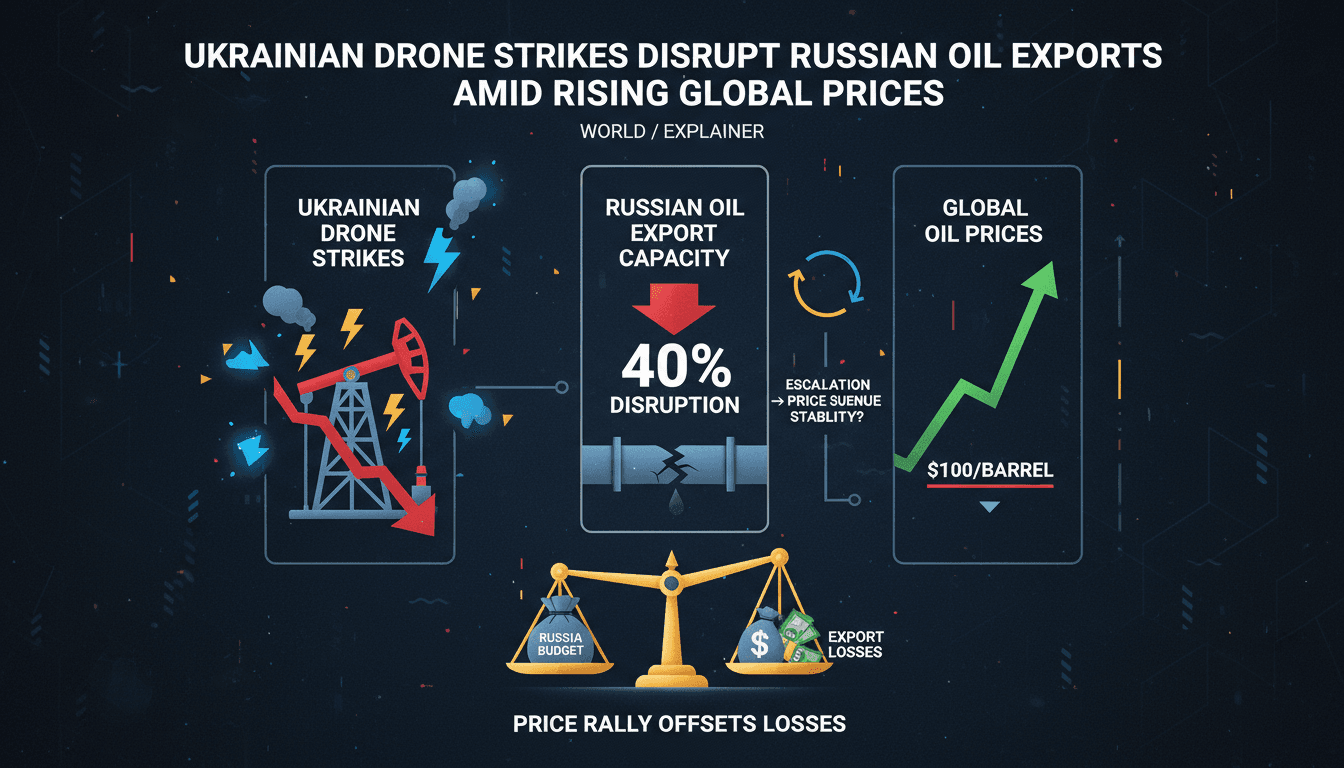
- Ukrainian forces launched drone strikes on Russian oil refineries and export terminals in March–April 2026, disrupting about 40% of Russia's oil export capacity.
- Global oil prices surged to over $100 per barrel, potentially offsetting the financial impact of the strikes on Russia due to fiscal reforms.
- Ukraine aims to weaken Russia's military funding, but analysts suggest the price rally may inadvertently bolster Moscow's budget.
The context you actually need
- The Russo-Ukrainian War has escalated since Russia's invasion in February 2022, with Ukraine targeting Russian energy infrastructure to limit military funding.
- Russia's 2024 fiscal reforms shifted oil taxation to extraction-based levies, insulating its budget from export disruptions and allowing it to benefit from rising global prices.
- Global oil prices have been influenced by various geopolitical factors, including tensions in the Strait of Hormuz, which have driven prices from $56.50 per barrel in February to $85–90 in March 2026.
What's really happening
In late March 2026, Ukraine executed a coordinated drone offensive targeting key Russian oil export terminals, including Primorsk and Ust-Luga, which are critical for Russia's oil export capacity. The strikes aimed to disrupt approximately 2 million barrels per day (bpd) of export capacity, representing a significant blow to Russia's oil revenue. However, the timing of these attacks coincided with a surge in global oil prices, which exceeded $100 per barrel due to a combination of geopolitical tensions and supply chain disruptions.
Russia's fiscal reforms, implemented in January 2024, have shifted its revenue model from export duties to extraction-based taxes. This change means that even with reduced export volumes, Russia can maintain or even increase its revenue through higher prices per barrel. As a result, the drone strikes, while tactically significant, may not achieve their strategic goal of crippling Russia's military funding. Instead, they could inadvertently enhance Moscow's budgetary position, allowing it to sustain military operations in Ukraine.
The strikes have also led to rapid repairs at affected facilities, with Russian officials reporting minimal long-term damage. This resilience is bolstered by the fact that global oil prices are influenced by a variety of factors beyond the conflict, including reduced supplies from the Gulf and ongoing tensions in other regions. Consequently, while Ukraine's military strategy aims to weaken Russia's economic base, the broader market dynamics may counteract these efforts.
As the conflict continues, the implications for global oil markets are profound. Elevated prices benefit oil-producing nations, including members of OPEC+, which may see increased fiscal revenues. For countries like the UAE, this stabilization can support their economies, particularly in sectors like real estate and tourism, while also affecting fuel costs for residents.
Who feels it first (and how)
- Energy sector professionals: Increased volatility in oil prices affects planning and investment strategies.
- Consumers: Rising fuel prices impact transportation costs and overall living expenses.
- Governments: Oil-exporting nations may see budgetary benefits, while importing countries face economic pressures.
- Investors: Market fluctuations create both risks and opportunities in energy stocks and commodities.
What to watch next
- Global oil price trends: Continued fluctuations will indicate how the market is responding to geopolitical tensions and supply chain issues.
- Russia's fiscal health: Monitoring budget reports will reveal how effectively Russia is managing its revenues amid reduced export volumes.
- Ukrainian military strategy: Future operations targeting Russian infrastructure will provide insights into the ongoing conflict's trajectory and its economic implications.
Ukrainian strikes have disrupted a significant portion of Russian oil export capacity.
Global oil prices will remain volatile due to ongoing geopolitical tensions and supply chain disruptions.
The long-term effectiveness of Ukraine's strategy to weaken Russia's military funding through targeted strikes.
Frequently Asked Questions
- Why it matters?
- The ongoing conflict and its effects on oil supply chains are reshaping global energy markets, influencing prices and economic stability.
- What happened (in 30 seconds)?
- Ukrainian forces launched drone strikes on Russian oil refineries and export terminals in March–April 2026, disrupting about 40% of Russia's oil export capacity. Global oil prices surged to over $100 per barrel, potentially offsetting the financial impact of the strikes on Russia due to fiscal reforms. Ukraine aims to weaken Russia's military funding, but analysts suggest the price rally may inadvertently bolster Moscow's budget.
- What's really happening?
- In late March 2026, Ukraine executed a coordinated drone offensive targeting key Russian oil export terminals, including Primorsk and Ust-Luga, which are critical for Russia's oil export capacity. The strikes aimed to disrupt approximately 2 million barrels per day (bpd) of export capacity, representing a significant blow to Russia's oil revenue. However, the timing of these attacks coincided with a surge in global oil prices, which exceeded $100 per barrel due to a combination of geopolitical t
- Who feels it first (and how)?
- Energy sector professionals: Increased volatility in oil prices affects planning and investment strategies. Consumers: Rising fuel prices impact transportation costs and overall living expenses. Governments: Oil-exporting nations may see budgetary benefits, while importing countries face economic pressures. Investors: Market fluctuations create both risks and opportunities in energy stocks and commodities.
- What to watch next?
- Global oil price trends: Continued fluctuations will indicate how the market is responding to geopolitical tensions and supply chain issues. Russia's fiscal health: Monitoring budget reports will reveal how effectively Russia is managing its revenues amid reduced export volumes. Ukrainian military strategy: Future operations targeting Russian infrastructure will provide insights into the ongoing conflict's trajectory and its economic implications.
Arabic-language political and world news coverage for UAE readers.
"Emarat Al Youm world coverage usually presents international developments through a UAE and Arab audience lens."
— A47 Editor
الضربات الأوكرانية على مصافي النفط الروسية تأتي بنتائج عكسية الضربات الأوكرانية على مصافي النفط الروسية تأتي بنتائج عكسية
Ukrainian officials in Kyiv report that each drone strike targeting Russian oil facilities aims to deprive Moscow of crucial resources. The ongoing attacks reflect Ukraine's strategy to undermine Russia's economic capabilities amid the ongoing confli...
Arabic-language UAE newspaper coverage focused on domestic affairs, public institutions, business, society, and regional developments.
"Al Khaleej coverage generally reflects a mainstream UAE editorial lens with strong attention to public affairs, institutions, and regional developments."
— A47 Editor
هجمات متبادلة بين موسكو وكييف تستهدف منشآت طاقة
The intensity of reciprocal attacks between Russia and Ukraine escalated overnight, with drone strikes targeting critical facilities, including energy export ports, industrial sites, and electrical infrastructure. This surge in military activity high...
Pan-Arab news coverage spanning politics, business, sports, and regional affairs.
"Asharq Al-Awsat reflects a broad Arab editorial perspective with strong attention to regional geopolitics."
— A47 Editor
أوكرانيا تقصف مصفاتين روسيتين وميناءً على بحر البلطيق
Ukrainian forces have intensified their attacks on Russian oil depots and refineries, which are key sources of funding for Moscow's military efforts. This escalation includes strikes on two refineries and a port on the Baltic Sea.