
Bitcoin Surges to $78,348 as Iran Reopens Strait of Hormuz
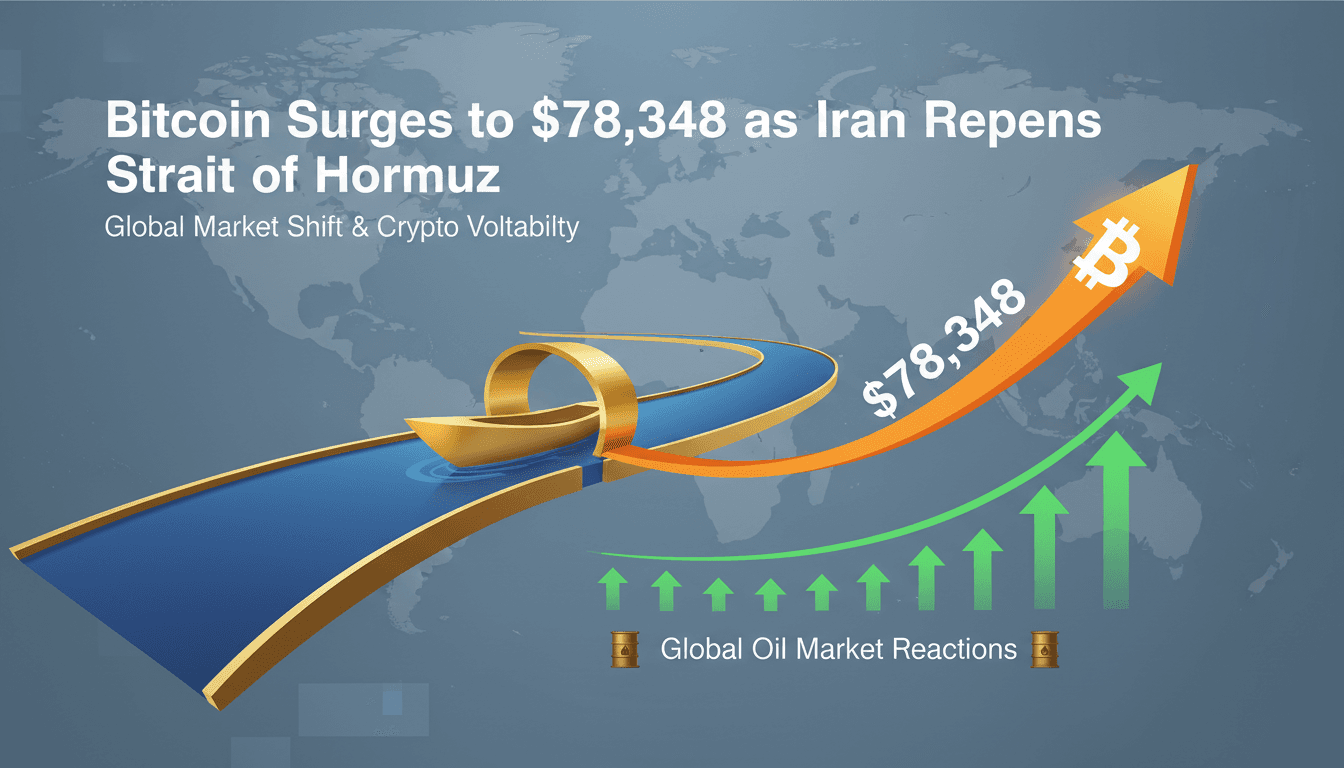
Here's what it means for you.
The reopening of a critical shipping lane has immediate implications for global markets, particularly in energy and cryptocurrency sectors.
Why it matters
The reopening of the Strait of Hormuz alleviates geopolitical tensions, impacting global oil prices and cryptocurrency valuations.
What happened (in 30 seconds)
- Iran's Foreign Minister announced the Strait of Hormuz is open to commercial traffic, following a ceasefire between Israel and Lebanon.
- Bitcoin surged to an intraday high of $78,348, marking a significant recovery in the cryptocurrency market.
- Global markets reacted positively, with Brent crude oil prices dropping below $89/barrel and the S&P 500 rising by 1.5%.
The context you actually need
- The Strait of Hormuz is a vital chokepoint for 20% of global oil transit, making its status crucial for energy markets.
- The crisis began on February 28, 2026, when Iran closed the strait in response to U.S.-Israeli military actions, leading to heightened tensions and military responses.
- The recent ceasefire and diplomatic progress between the U.S. and Iran facilitated the reopening, which has broader implications for international trade and energy security.
What's really happening
The reopening of the Strait of Hormuz on April 17, 2026, marks a significant turning point in a crisis that began with Iran's closure of the strait in late February. This closure was a direct response to U.S.-Israeli airstrikes, including the assassination of Iran's Supreme Leader, which escalated tensions in the region. The U.S. responded with aerial campaigns and a naval blockade, leading to a standoff that threatened global oil supplies and increased energy prices.
The announcement by Iran's Foreign Minister Abbas Araghchi came amid a fragile ceasefire between Israel and Lebanon, which created a conducive environment for diplomatic negotiations. By designating safe lanes for commercial vessels and prohibiting military ships, Iran aimed to restore normalcy in a critical shipping route that affects global oil transit. This move was not just about reopening a waterway; it was a strategic decision to alleviate economic pressures and signal a willingness to engage in dialogue.
The immediate market reaction was swift. Bitcoin, often seen as a hedge against geopolitical instability, surged to $78,348, reflecting a bullish sentiment among investors. This surge was part of a broader relief rally that saw significant liquidations of short positions in the cryptocurrency market, totaling $810 million within 24 hours. The decline in oil prices, with Brent crude falling below $89/barrel, further contributed to easing inflation fears, boosting equities worldwide, including a 1.5% rise in the S&P 500.
However, the U.S. maintains a naval blockade on Iranian ports, indicating that while the strait is open, tensions remain high. Iranian officials have warned of potential re-closure if diplomatic negotiations falter. The situation is fluid, with shipping traffic still limited due to safety concerns, and the UAE closely monitoring developments given its economic reliance on stable trade routes.
In summary, the reopening of the Strait of Hormuz has triggered a complex interplay of market dynamics, with immediate benefits for cryptocurrency investors and broader implications for global energy markets. The situation underscores the interconnectedness of geopolitical events and financial markets, highlighting how quickly investor sentiment can shift in response to changes in the geopolitical landscape.
Who feels it first (and how)
- Cryptocurrency investors: Benefiting from the Bitcoin surge and reduced short positions.
- Energy sector stakeholders: Experiencing fluctuations in oil prices, impacting profitability and operational costs.
- Dubai residents: Anticipating lower fuel prices and reduced inflationary pressures due to falling oil costs.
- Global traders: Adjusting strategies based on the reopening of a critical shipping lane and its implications for trade routes.
What to watch next
- U.S.-Iran negotiations: Continued diplomatic talks will be crucial in determining the stability of the Strait and the potential for further market impacts.
- Oil price trends: Monitoring Brent crude prices will provide insights into inflationary pressures and economic recovery trajectories.
- Cryptocurrency market movements: Watch for volatility in Bitcoin and other cryptocurrencies as market sentiment shifts in response to geopolitical developments.
The Strait of Hormuz is currently open to commercial traffic.
Continued volatility in oil and cryptocurrency markets as geopolitical tensions evolve.
The long-term implications of U.S.-Iran relations on global trade and energy security.
Frequently Asked Questions
- Why it matters?
- The reopening of the Strait of Hormuz alleviates geopolitical tensions, impacting global oil prices and cryptocurrency valuations.
- What happened (in 30 seconds)?
- Iran's Foreign Minister announced the Strait of Hormuz is open to commercial traffic, following a ceasefire between Israel and Lebanon. Bitcoin surged to an intraday high of $78,348, marking a significant recovery in the cryptocurrency market. Global markets reacted positively, with Brent crude oil prices dropping below $89/barrel and the S&P 500 rising by 1.5%.
- What's really happening?
- The reopening of the Strait of Hormuz on April 17, 2026, marks a significant turning point in a crisis that began with Iran's closure of the strait in late February. This closure was a direct response to U.S.-Israeli airstrikes, including the assassination of Iran's Supreme Leader, which escalated tensions in the region. The U.S. responded with aerial campaigns and a naval blockade, leading to a standoff that threatened global oil supplies and increased energy prices. The announcement by Iran's
- Who feels it first (and how)?
- Cryptocurrency investors: Benefiting from the Bitcoin surge and reduced short positions. Energy sector stakeholders: Experiencing fluctuations in oil prices, impacting profitability and operational costs. Dubai residents: Anticipating lower fuel prices and reduced inflationary pressures due to falling oil costs. Global traders: Adjusting strategies based on the reopening of a critical shipping lane and its implications for trade routes.
- What to watch next?
- U.S.-Iran negotiations: Continued diplomatic talks will be crucial in determining the stability of the Strait and the potential for further market impacts. Oil price trends: Monitoring Brent crude prices will provide insights into inflationary pressures and economic recovery trajectories. Cryptocurrency market movements: Watch for volatility in Bitcoin and other cryptocurrencies as market sentiment shifts in response to geopolitical developments.
Covers Bitcoin plus altcoin news, market updates, and educational resources.
"Bitcoin.com provides news, market data, and guides focused on Bitcoin and the wider crypto industry."
— A47 Editor
Bitcoin Hits $78,348 as Strait of Hormuz Reopening Ignites Global Relief Rally
Bitcoin's price surged to $78,348 following the reopening of the Strait of Hormuz, which has alleviated market fears and ignited a global relief rally. This development comes amid a ceasefire agreement between the U.S. and Iran, contributing to a sig...
Covers blockchain, cryptocurrency news, project analysis, and market insights.
"CoinDesk is a well-established cryptocurrency and blockchain news provider, offering comprehensive insights, market data, and industry research."
— A47 Editor
Beaten-down digital asset treasury names lead crypto stock surge as bitcoin hits $78,000
Bitcoin's price surged to $78,000, marking a significant recovery for digital assets as geopolitical tensions in the Strait of Hormuz eased following Iran's commitment to keep the passage open. This development comes amidst fluctuating oil prices and...
News, analysis, and thought leadership focusing exclusively on Bitcoin.
"Bitcoin Magazine is one of the original publications devoted to Bitcoin, offering in-depth news, analysis, and commentary."
— A47 Editor
Bitcoin Price Charges Past $77,000 as Iran Says Strait of Hormuz Fully Open
Bitcoin's price surged past $77,000 following Iran's announcement that the Strait of Hormuz is fully open under a ceasefire, alleviating market fears and contributing to a risk-on rally in cryptocurrency markets.
Covers blockchain, cryptocurrency news, project analysis, and market insights.
"CoinDesk is a well-established cryptocurrency and blockchain news provider, offering comprehensive insights, market data, and industry research."
— A47 Editor
Bitcoin rises past $76,000, aiming at major breakout as oil plunges on Iran cooldown
Bitcoin's price has surged past $76,000, buoyed by positive signals regarding a potential ceasefire between the U.S. and Iran, which has led to a significant boost in market sentiment. Iran's foreign minister confirmed that the Strait of Hormuz will ...
Research, news, and analysis on blockchain startups, DeFi, and regulations.
"Crypto Briefing provides research, news, and analysis on blockchain startups, DeFi, and crypto regulations with investor-focused coverage."
— A47 Editor
Bitcoin hits $75K as US-Iran de-escalation boosts risk appetite
Bitcoin's price has surged to $75,000, driven by a de-escalation in tensions between the U.S. and Iran, which has positively influenced market sentiment and increased risk appetite among investors.
Bitcoin news, technical analysis, and forecasts across crypto markets.
"NewsBTC covers Bitcoin news, technical analysis, and forecasts across crypto markets and major blockchain projects."
— A47 Editor
Why Did The Bitcoin Price Rally Past $75,000 Despite The US-Iran War?
Bitcoin's price has surged past $75,000, reflecting a notable increase of over 12% since the onset of the US-Iran war. This rally is attributed to investors viewing Bitcoin as a viable alternative to traditional assets like gold and stocks amid geopo...
Research, news, and analysis on blockchain startups, DeFi, and regulations.
"Crypto Briefing provides research, news, and analysis on blockchain startups, DeFi, and crypto regulations with investor-focused coverage."
— A47 Editor
Bitcoin holds above $60K amid US-Iran tensions, reinforcing safe-haven status
Bitcoin has maintained a price above $60,000 amid rising geopolitical tensions between the U.S. and Iran, reinforcing its status as a potential safe-haven asset. This stability comes as traders navigate a cautious market environment influenced by ong...
Research, news, and analysis on blockchain startups, DeFi, and regulations.
"Crypto Briefing provides research, news, and analysis on blockchain startups, DeFi, and crypto regulations with investor-focused coverage."
— A47 Editor
Bitcoin surpasses $72K amid US-Israeli airstrikes, Iran tensions escalate
Bitcoin's price has surged past $72,000 amid escalating geopolitical tensions, particularly due to recent U.S.-Israeli airstrikes and the ongoing conflict with Iran. This increase highlights Bitcoin's emerging role as a hedge against instability in t...