
Tesco Issues Profit Warning Amid Iran War Uncertainty
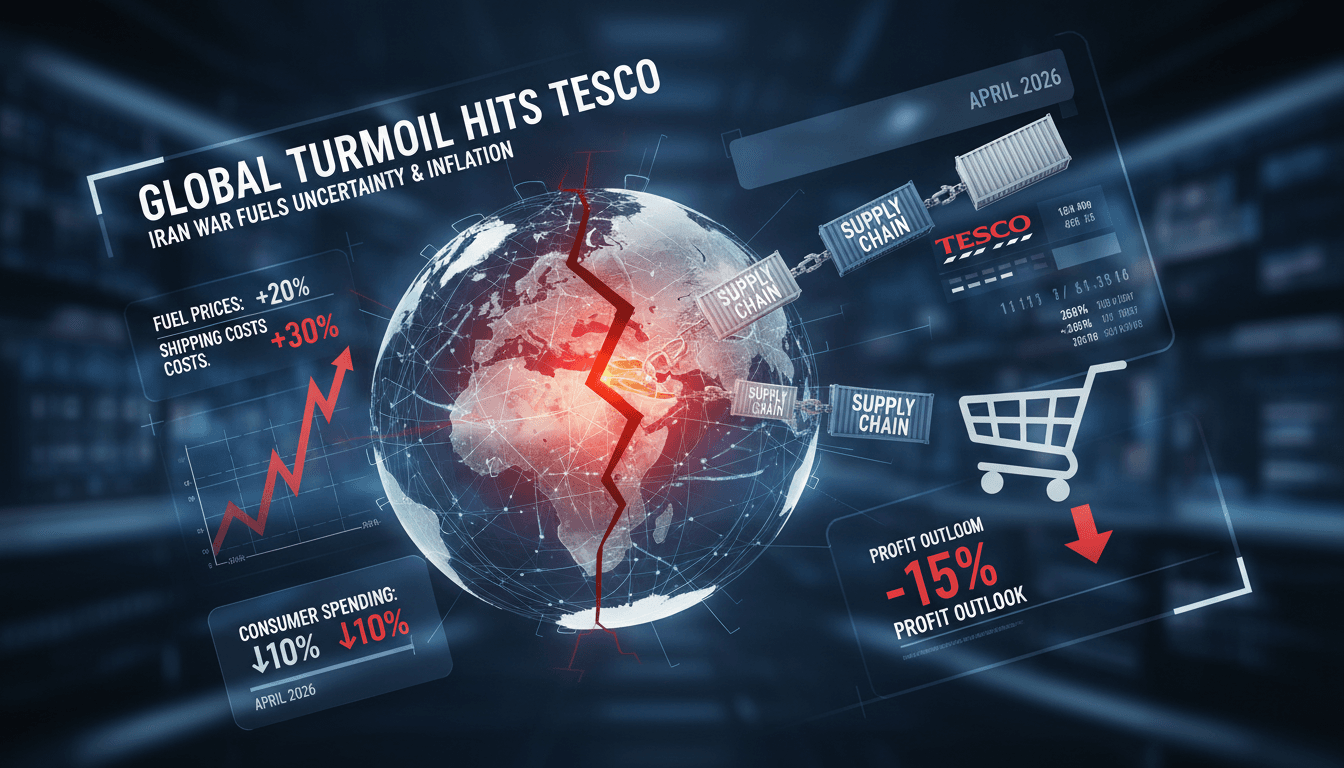
Here's what it means for you.
If you rely on UK supermarkets, expect potential price increases and supply chain disruptions as Tesco navigates geopolitical tensions.
Why it matters
The ongoing Iran war is creating significant inflationary pressures on food and energy imports, impacting consumer prices and supermarket operations.
What happened (in 30 seconds)
- Tesco PLC warned of potential profit declines due to the Iran war, adjusting its fiscal 2026/27 profit guidance to £3.0–3.3 billion.
- Annual pre-tax profits rose to £2.4 billion for the year ending 28 February 2026, an 8.5% increase, with sales up 4.3% to £66.6 billion.
- CEO Ken Murphy cited rising competition, regulatory costs, and the conflict's impact on UK households as key factors influencing the profit outlook.
The context you actually need
- The Iran war, which began on 28 February 2026, has led to regional instability, affecting oil supply and global inflation.
- Tesco's cost-saving measures include £500 million in AI optimizations and price reductions on over 10,000 products to mitigate rising costs.
- UK supermarkets are facing increased supply chain risks and inflation, with competitors like Morrisons and Next also flagging concerns.
What's really happening
The widening of Tesco's profit guidance amid the Iran war reflects a complex interplay of geopolitical tensions and economic realities. The conflict has disrupted supply chains, particularly in the energy sector, which is critical for food production and distribution. As the UK’s largest supermarket chain, Tesco is acutely aware of how these disruptions can ripple through its operations and affect consumer prices.
The Iran war has led to blockades in the Strait of Hormuz, a vital shipping route for oil, causing fluctuations in energy prices that directly impact operational costs for supermarkets. With rising energy prices, Tesco faces increased costs for transportation and logistics, which could lead to higher prices for consumers. This situation is compounded by the ongoing inflationary pressures that have already been affecting the UK economy, particularly in food and energy sectors.
In response to these challenges, Tesco has implemented cost-saving measures, including leveraging AI to optimize operations and reduce prices on thousands of products. However, the company is also contending with intensified competition and new regulatory costs, which further complicate its profit outlook. The adjustments in profit guidance signal that Tesco is preparing for a potentially tougher economic environment, where consumer spending may be constrained due to rising prices and economic uncertainty.
Moreover, the broader market implications are significant. Analysts are warning of potential food shortages and grocery inflation, which could affect consumer confidence and spending habits. As Tesco navigates these challenges, its ability to maintain market share and profitability will be closely watched by investors and consumers alike.
Who feels it first (and how)
- Consumers: Expect higher grocery prices and potential shortages in certain products.
- Migrant workers in Dubai: Face economic vulnerability due to reduced tourism and job losses linked to the Iran war.
- UK supermarkets: Competing retailers like Morrisons and Next will also feel the impact of supply chain disruptions and inflation.
What to watch next
- Consumer spending trends: Monitor how rising prices affect household budgets and spending habits.
- Oil price fluctuations: Keep an eye on global oil prices, as they will influence transportation costs and food prices.
- Regulatory changes: Watch for any new regulations that could impact supermarket operations and costs.
Tesco's profit guidance has been adjusted due to the Iran war's impact.
Increased grocery prices and potential supply chain disruptions will affect consumers.
The long-term effects of the Iran war on global supply chains and consumer confidence remain uncertain.
Frequently Asked Questions
- Why it matters?
- The ongoing Iran war is creating significant inflationary pressures on food and energy imports, impacting consumer prices and supermarket operations.
- What happened (in 30 seconds)?
- Tesco PLC warned of potential profit declines due to the Iran war, adjusting its fiscal 2026/27 profit guidance to £3.0–3.3 billion. Annual pre-tax profits rose to £2.4 billion for the year ending 28 February 2026, an 8.5% increase, with sales up 4.3% to £66.6 billion. CEO Ken Murphy cited rising competition, regulatory costs, and the conflict's impact on UK households as key factors influencing the profit outlook.
- What's really happening?
- The widening of Tesco's profit guidance amid the Iran war reflects a complex interplay of geopolitical tensions and economic realities. The conflict has disrupted supply chains, particularly in the energy sector, which is critical for food production and distribution. As the UK’s largest supermarket chain, Tesco is acutely aware of how these disruptions can ripple through its operations and affect consumer prices. The Iran war has led to blockades in the Strait of Hormuz, a vital shipping route
- Who feels it first (and how)?
- Consumers: Expect higher grocery prices and potential shortages in certain products. Migrant workers in Dubai: Face economic vulnerability due to reduced tourism and job losses linked to the Iran war. UK supermarkets: Competing retailers like Morrisons and Next will also feel the impact of supply chain disruptions and inflation.
- What to watch next?
- Consumer spending trends: Monitor how rising prices affect household budgets and spending habits. Oil price fluctuations: Keep an eye on global oil prices, as they will influence transportation costs and food prices. Regulatory changes: Watch for any new regulations that could impact supermarket operations and costs.
UK and international business news, economics, and corporate coverage.
"The Guardian’s business section covers finance and markets with a progressive editorial tone."
— A47 Editor
Tesco warns profits could fall amid Iran war uncertainty
Tesco has issued a warning that its profits may decline in the upcoming year due to increased uncertainty stemming from the ongoing conflict in the Middle East, particularly the situation in Iran. Despite an 8.5% rise in annual profits to £2.4 billio...
International coverage from The Guardian's global desks.
"The Guardian is known for its progressive editorial stance and in-depth analysis."
— A47 Editor
Tesco warns profits could fall amid Iran war uncertainty
Tesco has issued a warning that its profits may decline in the upcoming year due to increased uncertainty stemming from the ongoing conflict in the Middle East, particularly the situation in Iran. Despite an 8.5% rise in annual profits to £2.4 billio...
U.S. business news, corporate developments, and economy.
"The Wall Street Journal is respected for deep financial and economic reporting with a center-right editorial perspective."
— A47 Editor
Tesco Broadens Guidance as Iran War Uncertainty Clouds Outlook
Tesco has broadened its guidance amid rising inflation and uncertainty stemming from the ongoing conflict in Iran, which is expected to increase costs and impact consumer spending habits.
Global markets, investing, and macroeconomics from a premier financial newsroom.
"Bloomberg is respected for in-depth financial reporting and data-driven analysis."
— A47 Editor
Tesco Says Iran War Is Clouding Outlook for UK Shoppers
Tesco Plc has reported that the ongoing conflict in the Middle East, particularly the war in Iran, is creating significant uncertainty for UK shoppers, which could adversely affect the supermarket's performance.