
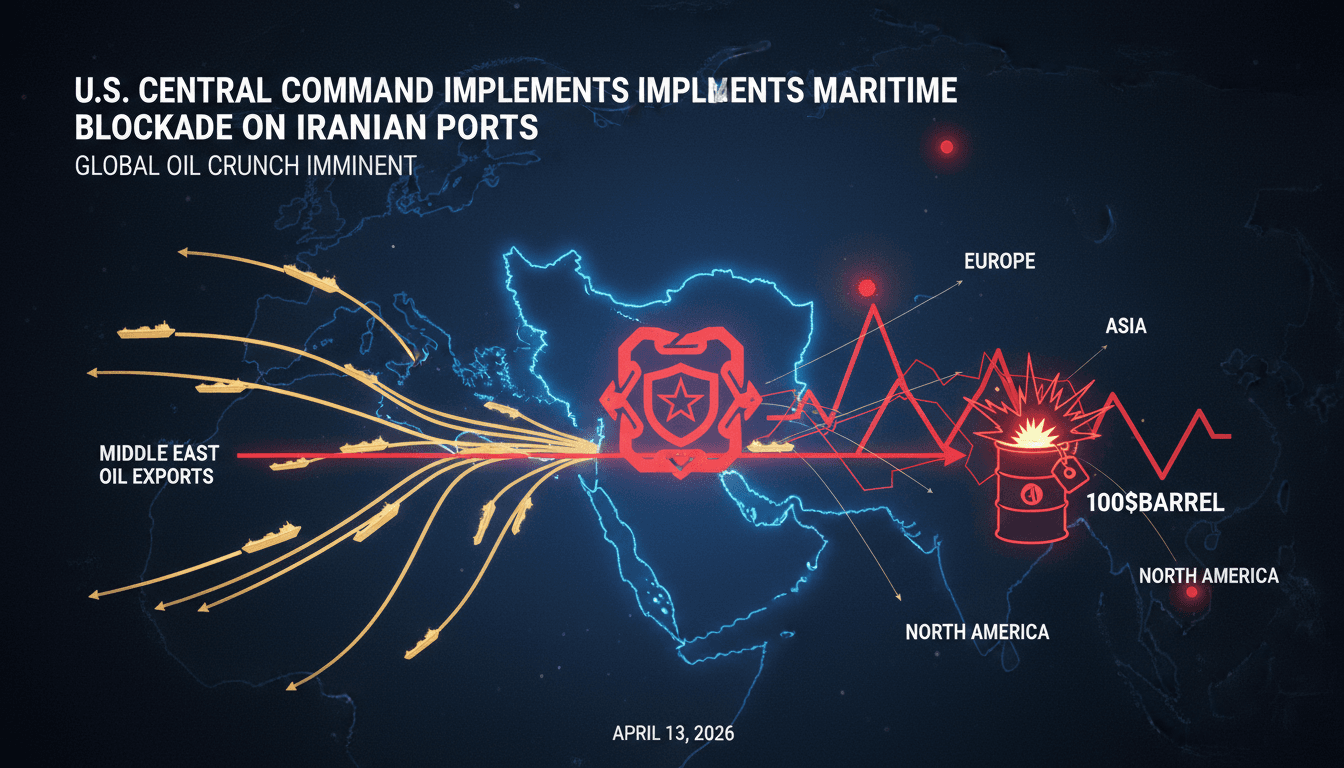
U.S. Central Command Implements Maritime Blockade on Iranian Ports Amid Rising Tensions
Here's what it means for you.
If you rely on oil or goods from the Gulf region, expect rising costs and potential supply chain disruptions.
Why it matters
This blockade escalates tensions in a critical shipping corridor, impacting global oil prices and regional stability.
What happened (in 30 seconds)
- On April 13, 2026, U.S. Central Command enforced a naval blockade on vessels entering or exiting Iranian ports in the Gulf of Oman and Arabian Sea.
- President Trump directed the blockade following failed peace talks, aiming to curb Iranian maritime activities amid rising tensions.
- Global oil prices surged over 8% to near $100 per barrel immediately after the announcement, reflecting fears of supply disruptions.
The context you actually need
- Intensified U.S.-Iran hostilities have included airstrikes and mine clearance operations in the Strait of Hormuz, heightening regional tensions.
- The blockade applies to all vessels, with exceptions for humanitarian shipments, indicating a strict enforcement policy that could disrupt international trade.
- Iran has threatened retaliation, labeling U.S. actions as piracy, which could lead to further military escalation in the region.
What's really happening
The U.S. Central Command's enforcement of a maritime blockade on Iranian ports is a strategic maneuver aimed at curbing Iranian influence and maritime activities in a region critical for global oil supply. This decision follows a series of escalatory actions, including U.S. airstrikes and mine clearance operations, which have heightened tensions between the U.S. and Iran. The blockade is designed to interdict any vessels that do not comply with U.S. directives, effectively creating a no-go zone for ships bound to or from Iranian ports.
The blockade's enforcement is rooted in the U.S. government's broader strategy to exert pressure on Iran following the collapse of peace negotiations. By targeting Iranian maritime activities, the U.S. aims to limit Iran's ability to project power in the region and disrupt its economic activities, particularly those related to oil exports. The Strait of Hormuz, through which a significant portion of the world's oil supply transits, is a focal point of this strategy. The U.S. has positioned naval assets in the region to enforce the blockade, signaling a commitment to maintaining control over this vital shipping lane.
The implications of this blockade extend beyond immediate military concerns. As oil prices surged to approximately $100 per barrel following the announcement, the economic ramifications are significant. Countries reliant on oil imports, particularly those in the Gulf region, are likely to experience increased fuel costs and potential supply chain disruptions. The blockade could lead to preemptive rerouting of tankers, further complicating logistics and increasing shipping costs.
Moreover, the blockade raises questions about the future of U.S.-Iran relations and the potential for further military engagement. Iran's threats of retaliation against Gulf ports could escalate tensions, leading to a cycle of conflict that impacts not only regional players but also global markets. The U.S. has indicated a willingness to maintain its naval presence in the region, suggesting that the blockade may be a long-term strategy rather than a temporary measure.
In summary, the enforcement of this maritime blockade is a calculated move by the U.S. to exert pressure on Iran while simultaneously safeguarding its interests in a region critical to global energy supplies. The economic and geopolitical ramifications of this decision will likely unfold over the coming months, affecting various stakeholders across the globe.
Who feels it first (and how)
- Oil traders: Increased prices and volatility in the oil market will directly impact trading strategies and profit margins.
- Shipping companies: Potential rerouting and delays will affect operational costs and schedules.
- Consumers in the Gulf region: Rising fuel prices will lead to higher costs for goods and services.
- UAE stock market investors: Fluctuations in oil prices may impact market performance and investment strategies.
What to watch next
- Oil price trends: Monitor Brent crude prices for indications of market stability or further volatility, as they reflect supply and demand dynamics.
- Iran's military response: Watch for any retaliatory actions from Iran that could escalate tensions and impact shipping routes.
- International diplomatic efforts: Observe any new negotiations or interventions from global powers aimed at de-escalating the situation.
The blockade is actively enforced, impacting shipping and oil prices.
Increased tensions between the U.S. and Iran may lead to further military actions or diplomatic efforts.
The long-term effectiveness of the blockade in curbing Iranian activities and its impact on global oil supply remains uncertain.
Frequently Asked Questions
- Why it matters?
- This blockade escalates tensions in a critical shipping corridor, impacting global oil prices and regional stability.
- What happened (in 30 seconds)?
- On April 13, 2026, U.S. Central Command enforced a naval blockade on vessels entering or exiting Iranian ports in the Gulf of Oman and Arabian Sea. President Trump directed the blockade following failed peace talks, aiming to curb Iranian maritime activities amid rising tensions. Global oil prices surged over 8% to near $100 per barrel immediately after the announcement, reflecting fears of supply disruptions.
- What's really happening?
- The U.S. Central Command's enforcement of a maritime blockade on Iranian ports is a strategic maneuver aimed at curbing Iranian influence and maritime activities in a region critical for global oil supply. This decision follows a series of escalatory actions, including U.S. airstrikes and mine clearance operations, which have heightened tensions between the U.S. and Iran. The blockade is designed to interdict any vessels that do not comply with U.S. directives, effectively creating a no-go zone
- Who feels it first (and how)?
- Oil traders: Increased prices and volatility in the oil market will directly impact trading strategies and profit margins. Shipping companies: Potential rerouting and delays will affect operational costs and schedules. Consumers in the Gulf region: Rising fuel prices will lead to higher costs for goods and services. UAE stock market investors: Fluctuations in oil prices may impact market performance and investment strategies.
- What to watch next?
- Oil price trends: Monitor Brent crude prices for indications of market stability or further volatility, as they reflect supply and demand dynamics. Iran's military response: Watch for any retaliatory actions from Iran that could escalate tensions and impact shipping routes. International diplomatic efforts: Observe any new negotiations or interventions from global powers aimed at de-escalating the situation.
Arabic-language coverage of Saudi, regional, and international affairs.
"Al Bilad offers mainstream Saudi newspaper coverage across domestic and broader Arab topics."
— A47 Editor
القيادة المركزية الأمريكية: سنفرض سيطرتنا البحرية في خليج عُمان وبحر العرب
The U.S. Central Command has announced that the U.S. military will enforce maritime control in the Gulf of Oman and the Arabian Sea, east of the Strait of Hormuz, affecting all vessels regardless of their flag. This maritime control is set to take ef...
Pan-Arab political news and analysis.
"Al-Quds Al-Arabi is a London-based Arabic newspaper known for political coverage."
— A47 Editor
الجيش الأمريكي: سنبدأ في منع السفن من الدخول إلى إيران أو مغادرتها
The U.S. Central Command (CENTCOM) announced that it will begin enforcing a blockade on Iranian ports starting at 10 AM Eastern Time on Monday, following previous statements from President Donald Trump directing the military to 'clean up' the Strait ...
Arabic-language UAE newspaper coverage focused on domestic affairs, public institutions, business, society, and regional developments.
"Al Khaleej coverage generally reflects a mainstream UAE editorial lens with strong attention to public affairs, institutions, and regional developments."
— A47 Editor
أمريكا تعلن فرض حظر بحري شامل على الموانئ الإيرانية بدءاً من اليوم
The U.S. Central Command (CENTCOM) announced on Monday the implementation of a comprehensive maritime ban on all shipping activities at Iranian ports, effective immediately. This decision marks a significant escalation in U.S. actions against Iran am...
Jordanian news and regional updates.
"Roya News is a Jordanian outlet focused on breaking news and local affairs."
— A47 Editor
القيادة المركزية الأمريكية تعلن فرض حصار بحري على موانئ إيران ابتداءً من العاشرة صباحاً
The U.S. Central Command has announced the implementation of a maritime blockade on all Iranian ports starting at 10 AM. This blockade is expected to impact various shipping activities and trade routes associated with Iran, reflecting heightened tens...
Arabic-language digital news outlet covering UAE, regional, and international developments with broad general-news coverage.
"Al Ain News coverage typically blends UAE-focused reporting with wider Arab regional and international news."
— A47 Editor
أمريكا تطلق عملية لفرض السيطرة على مضيق هرمز.. الموعد والأهداف
The U.S. Central Command has announced plans to launch a military operation aimed at establishing control over the Strait of Hormuz, detailing the timing and objectives of this initiative. This move underscores the strategic importance of the Strait,...
Arabic-language coverage of international news and geopolitics.
"RT Arabic is a Russian state-funded outlet often criticized for promoting Kremlin-aligned narratives."
— A47 Editor
القيادة المركزية الأمريكية تعلن بدء إنشاء ممر آمن جديد في مضيق هرمز
The U.S. Central Command has announced the initiation of a new safe corridor in the Strait of Hormuz, aimed at broader efforts to clear the strategic waterway of naval mines. This development underscores the ongoing commitment to ensuring maritime se...