
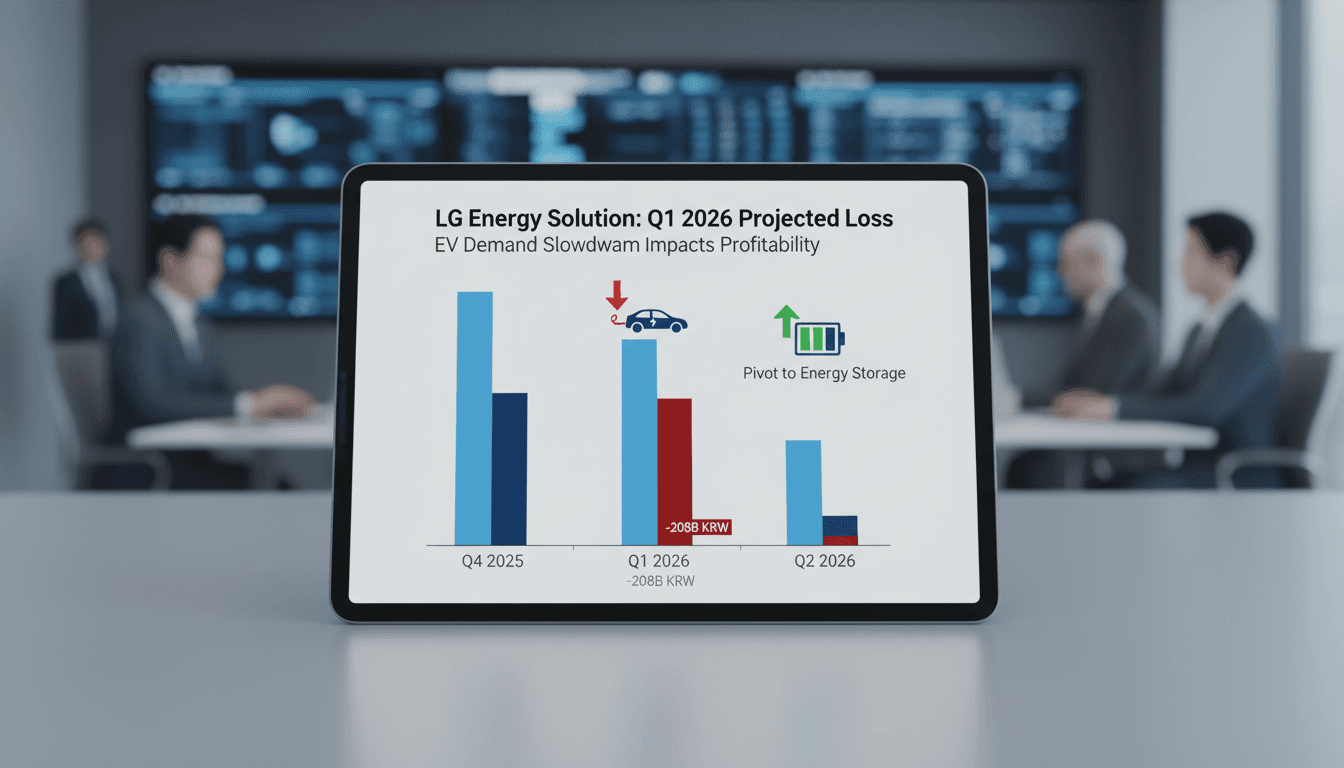
LG Energy Solution Projects Q1 2026 Operating Loss Due to Weak EV Demand
Here's what it means for you.
If you’re in the electric vehicle (EV) sector or related industries, the anticipated losses at LG Energy Solution may signal broader market challenges ahead.
Why it matters
Weak demand for electric vehicles is impacting key suppliers, which could affect innovation and pricing in the EV market.
What happened (in 30 seconds)
- LG Energy Solution announced an expected operating loss of 208 billion won ($138.16 million) for Q1 2026 due to decreased demand from electric vehicle manufacturers.
- Revenue is projected at 6.6 trillion won, a 2.5% decline year-over-year, with the loss narrowing due to U.S. Inflation Reduction Act tax credits.
- Market reaction saw LG Energy Solution's shares decline by 0.97% following the announcement.
The context you actually need
- Persistent challenges: LG Energy Solution has faced ongoing difficulties from a global slowdown in EV sales, leading to operating losses in previous quarters.
- Client adjustments: Major clients like General Motors have made inventory adjustments and production halts, further straining demand for batteries.
- Strategic pivot: The company is shifting focus toward energy storage systems (ESS), aiming to triple ESS revenue in 2026 amid favorable U.S. policy measures.
What's really happening
LG Energy Solution's forecast of a 208 billion won operating loss for Q1 2026 reflects a significant downturn in the electric vehicle market, primarily driven by reduced demand from major automotive clients. This anticipated loss is not only a reflection of LG's operational challenges but also indicative of broader market dynamics affecting the EV sector.
The company’s revenue forecast of 6.6 trillion won represents a 2.5% decline compared to the previous year, underscoring the pressure on battery suppliers as automakers adjust their production strategies in response to fluctuating consumer demand. The decline in revenue is exacerbated by the ongoing inventory adjustments and production halts seen in the industry, particularly with General Motors idling its Detroit EV plant. These adjustments are a direct response to a slowdown in EV sales, which has left battery manufacturers like LG Energy Solution grappling with excess inventory and reduced orders.
Moreover, the anticipated operating loss narrows to 208 billion won after accounting for tax credits from the U.S. Inflation Reduction Act. Without these credits, the loss would have been significantly higher at 398 billion won, highlighting the critical role of government policy in stabilizing the financial outlook for companies in this sector. The Inflation Reduction Act provides incentives that can help mitigate some of the financial pressures faced by battery manufacturers, but it also underscores the dependency of companies like LG on external policy measures.
In response to these challenges, LG Energy Solution is pivoting towards energy storage systems (ESS), which are gaining traction as the demand for renewable energy solutions increases. The company aims to triple its ESS revenue by 2026, capitalizing on U.S. policy measures that restrict Chinese imports of ESS. This strategic shift reflects a broader trend within the industry as companies seek to diversify their product offerings and reduce reliance on the volatile EV market.
As LG Energy Solution navigates these turbulent waters, the implications extend beyond its financial performance. The company's struggles may influence pricing, innovation, and competition in the EV sector, potentially affecting consumers and businesses alike.
Who feels it first (and how)
- Battery manufacturers: Companies like LG Energy Solution may face increased pressure to innovate and reduce costs.
- Automakers: Major clients, particularly those heavily invested in EVs, may experience production delays and inventory issues.
- Consumers: Potential changes in pricing and availability of electric vehicles could impact consumer choices and market dynamics.
What to watch next
- Earnings report on April 30, 2026: This will provide deeper insights into LG Energy Solution's financial health and strategic direction.
- U.S. policy developments: Changes in government incentives for EVs and ESS could significantly impact market conditions and company revenues.
- Market demand trends: Monitoring consumer interest in electric vehicles and energy storage solutions will be crucial for understanding future performance.
LG Energy Solution is facing an operating loss due to weak EV demand.
The company will continue to pivot towards energy storage systems to mitigate losses in the EV segment.
The long-term impact of U.S. policy changes on the EV and ESS markets remains uncertain.
Frequently Asked Questions
- Why it matters?
- Weak demand for electric vehicles is impacting key suppliers, which could affect innovation and pricing in the EV market.
- What happened (in 30 seconds)?
- LG Energy Solution announced an expected operating loss of 208 billion won ($138.16 million) for Q1 2026 due to decreased demand from electric vehicle manufacturers. Revenue is projected at 6.6 trillion won, a 2.5% decline year-over-year, with the loss narrowing due to U.S. Inflation Reduction Act tax credits. Market reaction saw LG Energy Solution's shares decline by 0.97% following the announcement.
- What's really happening?
- LG Energy Solution's forecast of a 208 billion won operating loss for Q1 2026 reflects a significant downturn in the electric vehicle market, primarily driven by reduced demand from major automotive clients. This anticipated loss is not only a reflection of LG's operational challenges but also indicative of broader market dynamics affecting the EV sector. The company’s revenue forecast of 6.6 trillion won represents a 2.5% decline compared to the previous year, underscoring the pressure on batt
- Who feels it first (and how)?
- Battery manufacturers: Companies like LG Energy Solution may face increased pressure to innovate and reduce costs. Automakers: Major clients, particularly those heavily invested in EVs, may experience production delays and inventory issues. Consumers: Potential changes in pricing and availability of electric vehicles could impact consumer choices and market dynamics.
- What to watch next?
- Earnings report on April 30, 2026: This will provide deeper insights into LG Energy Solution's financial health and strategic direction. U.S. policy developments: Changes in government incentives for EVs and ESS could significantly impact market conditions and company revenues. Market demand trends: Monitoring consumer interest in electric vehicles and energy storage solutions will be crucial for understanding future performance.
Market-moving headlines impacting equities, bonds, and related risk assets.
"Real-time catalysts and volatility drivers across indices and sectors."
— A47 Editor
LG Energy Solution flags Q1 operating loss on weak EV demand
LG Energy Solution has reported an operating loss for the first quarter, attributing this downturn to weak demand for electric vehicles (EVs). This financial setback highlights the challenges faced by the company in a competitive market where consume...
Global markets, investing, and macroeconomics from a premier financial newsroom.
"Bloomberg is respected for in-depth financial reporting and data-driven analysis."
— A47 Editor
LG Energy Posts Bigger-Than-Expected Loss as EV Aid Fades
LG Energy Solution Ltd. reported preliminary first-quarter earnings that fell short of analyst expectations, primarily due to declining electric-vehicle support in major markets such as the US, despite strong demand for energy storage systems.