
Bitcoin Drops as Trump Issues Ultimatum to Iran Ahead of Deadline
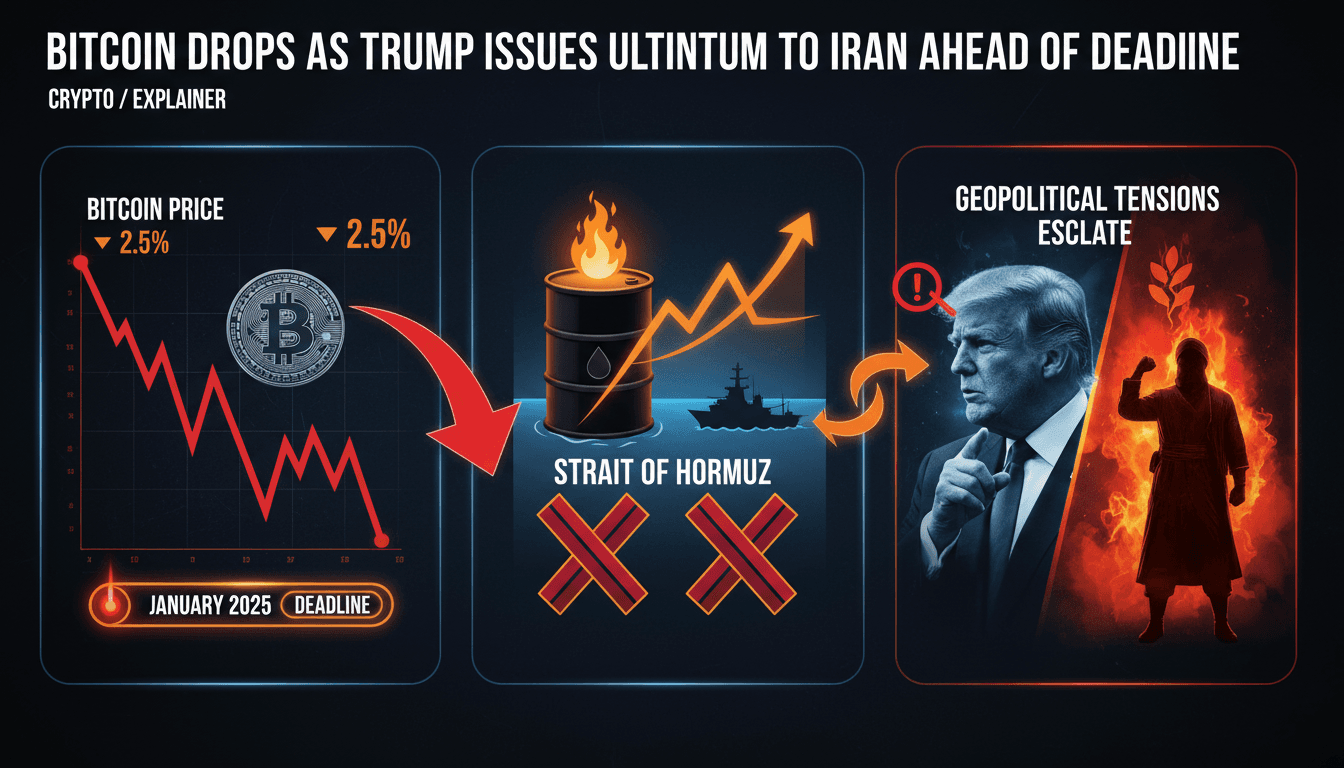
Here's what it means for you.
If you’re involved in cryptocurrency or global markets, the volatility stemming from geopolitical tensions could impact your investments.
Why it matters
The intertwining of geopolitical risks and market dynamics highlights the fragility of investor confidence in risk assets, including cryptocurrencies.
What happened (in 30 seconds)
- Bitcoin dropped 2.5% on April 7, 2026, as geopolitical tensions escalated with President Trump's ultimatum to Iran.
- The ultimatum deadline is set for April 8, 2026, with Trump threatening military action if Iran does not comply.
- Other risk assets also retreated, including Ether, which fell over 3%, while oil prices surged due to the ongoing conflict.
The context you actually need
- The U.S.-Iran conflict began in late February 2026, leading to significant disruptions in oil markets and a surge in Brent crude prices by 50%.
- Bitcoin has fluctuated between $60,000 and $75,000 since the conflict started, reflecting investor caution amid rising geopolitical risks.
- The closure of the Strait of Hormuz, a critical oil transit route, has heightened market volatility, impacting both traditional and cryptocurrency markets.
What's really happening
As tensions between the U.S. and Iran escalate, the financial markets are reacting to the uncertainty surrounding the ultimatum issued by President Trump. The ultimatum demands that Iran reopen the Strait of Hormuz, a vital chokepoint for global oil supplies. This geopolitical pressure has caused a ripple effect across various asset classes, particularly risk assets like Bitcoin and Ether, which are often viewed as speculative investments.
Bitcoin's recent decline of 2.5% is emblematic of a broader market correction influenced by geopolitical events. Investors are increasingly cautious, leading to a sell-off in cryptocurrencies and equities as the deadline approaches. The volatility in Bitcoin, which had briefly exceeded $70,000, indicates that traders are responding to the heightened risks associated with the Iran conflict. The market's reaction is compounded by the fact that Bitcoin has been trading within a narrow range since the onset of the conflict, suggesting that investor sentiment is fragile.
Moreover, the closure of the Strait of Hormuz has not only impacted oil prices—surging by 50% since late February—but has also created a climate of uncertainty that permeates through various sectors. As oil prices rise, the economic implications for countries reliant on oil imports become pronounced, while oil-exporting nations like those in the Gulf region may benefit economically. However, this economic gain comes with the risk of further military escalation, which could destabilize the region and lead to more significant disruptions.
The broader market is in a state of "suspended animation," as analysts describe it, with many investors adopting a wait-and-see approach. This behavior is evident in the recent inflows into U.S. spot Bitcoin ETFs, which recorded $471.3 million in net inflows on April 6, reversing previous outflows. This indicates that while some investors are looking to capitalize on potential price rebounds, many remain wary of the geopolitical landscape.
As the ultimatum deadline approaches, the potential for a relief rally exists if a ceasefire is reached. Conversely, further escalation could lead to deeper market corrections across risk assets, including cryptocurrencies. The current situation underscores the interconnectedness of geopolitical events and market dynamics, emphasizing the need for investors to remain vigilant and adaptable.
Who feels it first (and how)
- Cryptocurrency traders: Immediate exposure to price volatility and market sentiment shifts.
- Investors in oil markets: Directly impacted by fluctuating oil prices and geopolitical stability.
- Residents of Dubai: As a cryptocurrency hub, local traders face amplified market volatility and economic implications from rising oil prices.
What to watch next
- Iran's response to the ultimatum: How Iran reacts could significantly influence market stability and investor sentiment.
- Oil price movements: Continued fluctuations in oil prices will impact broader market dynamics and could lead to further corrections in risk assets.
- Market reactions post-deadline: Observing how markets respond after April 8 will provide insights into investor confidence and potential recovery or further declines.
Bitcoin and other risk assets are currently experiencing volatility due to geopolitical tensions.
Further market corrections may occur if the ultimatum leads to military action or continued instability.
The long-term impact on cryptocurrency markets and investor sentiment following the resolution of the ultimatum.
Frequently Asked Questions
- Why it matters?
- The intertwining of geopolitical risks and market dynamics highlights the fragility of investor confidence in risk assets, including cryptocurrencies.
- What happened (in 30 seconds)?
- Bitcoin dropped 2.5% on April 7, 2026, as geopolitical tensions escalated with President Trump's ultimatum to Iran. The ultimatum deadline is set for April 8, 2026, with Trump threatening military action if Iran does not comply. Other risk assets also retreated, including Ether, which fell over 3%, while oil prices surged due to the ongoing conflict.
- What's really happening?
- As tensions between the U.S. and Iran escalate, the financial markets are reacting to the uncertainty surrounding the ultimatum issued by President Trump. The ultimatum demands that Iran reopen the Strait of Hormuz, a vital chokepoint for global oil supplies. This geopolitical pressure has caused a ripple effect across various asset classes, particularly risk assets like Bitcoin and Ether, which are often viewed as speculative investments. Bitcoin's recent decline of 2.5% is emblematic of a bro
- Who feels it first (and how)?
- Cryptocurrency traders: Immediate exposure to price volatility and market sentiment shifts. Investors in oil markets: Directly impacted by fluctuating oil prices and geopolitical stability. Residents of Dubai: As a cryptocurrency hub, local traders face amplified market volatility and economic implications from rising oil prices.
- What to watch next?
- Iran's response to the ultimatum: How Iran reacts could significantly influence market stability and investor sentiment. Oil price movements: Continued fluctuations in oil prices will impact broader market dynamics and could lead to further corrections in risk assets. Market reactions post-deadline: Observing how markets respond after April 8 will provide insights into investor confidence and potential recovery or further declines.
Corporate leadership, finance, technology, and market trends.
"Fortune covers financial trends, leadership, and innovation with a pragmatic editorial approach."
— A47 Editor
Bitcoin slides with risk assets as Trump’s Iran ultimatum looms
Bitcoin experienced a significant decline, erasing previous gains after briefly surpassing $70,000, as market volatility heightened due to President Trump's escalating threats against Iran. This situation has created uncertainty among investors, part...
News, analysis, and thought leadership focusing exclusively on Bitcoin.
"Bitcoin Magazine is one of the original publications devoted to Bitcoin, offering in-depth news, analysis, and commentary."
— A47 Editor
Bitcoin Price Slides Below $68,000 as Trump, Iran Tensions Rattle Markets
Bitcoin's price has fallen below $68,000 amid rising geopolitical tensions between the U.S. and Iran, largely influenced by former President Donald Trump's recent warnings. This decline reflects a volatile market environment where investors are react...