
BBC Plans Major Job Cuts Amid Financial Pressures
Here's what it means for you.
If you rely on BBC content, expect potential changes in programming and service delivery as the broadcaster restructures.
Why it matters
This significant workforce reduction reflects broader challenges in the media landscape, impacting content quality and availability.
What happened (in 30 seconds)
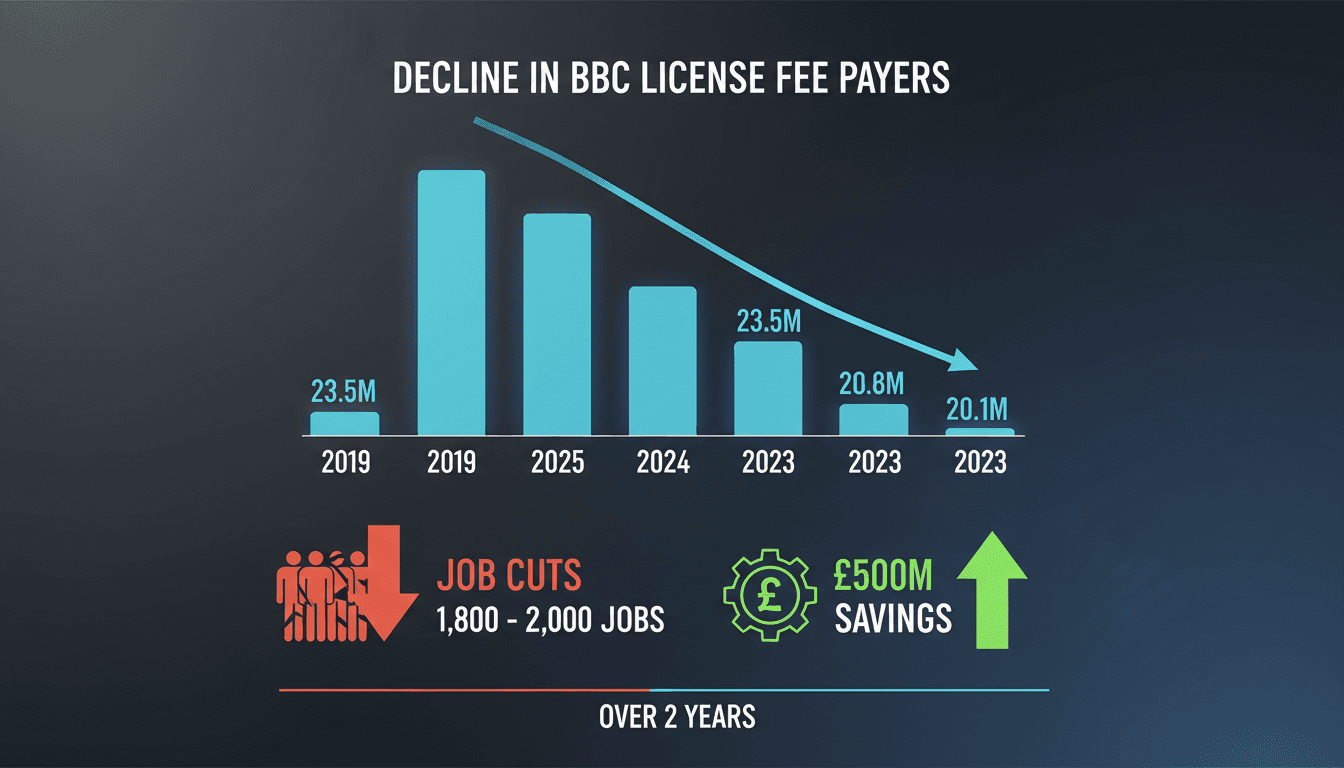
- The BBC announced plans to cut 1,800 to 2,000 jobs, about 10% of its workforce, to save £500 million over two years.
- Interim Director-General Rhodri Talfan Davies communicated the cuts during an all-staff call, citing financial pressures from declining revenues.
- Trade unions condemned the decision, warning of negative impacts on public service delivery and employee morale.
The context you actually need
- Declining licence fee revenues: The BBC has lost 300,000 licence fee payers annually, exacerbated by shifts to streaming platforms.
- High production inflation: Rising costs in content production have strained the BBC's budget, necessitating drastic measures.
- Royal charter negotiations: Ongoing discussions for the renewal of the BBC's royal charter by the end of 2027 add urgency to the cost-cutting strategy.
What's really happening
The BBC's decision to cut jobs is a response to a confluence of financial pressures that have been building over several years. The broadcaster has traditionally relied on licence fees as its primary source of income, but this revenue stream has been steadily declining. With 300,000 fewer households paying the annual fee, the BBC faces a significant shortfall. This trend is compounded by the rise of streaming platforms like YouTube, which have shifted audience attention away from traditional broadcasting.
In February 2026, outgoing Director-General Tim Davie outlined a broader £600 million cost-cutting strategy aimed at reducing the BBC's annual budget by 10%. The current job cuts are part of this strategy, targeting £500 million in savings over the next two years. The bulk of these reductions will occur in the fiscal year starting April 2027, indicating a long-term restructuring plan rather than a quick fix.
The immediate measures announced include tighter controls on recruitment, travel, consultancies, and events, which are designed to stem the financial bleed while consultations with staff and unions take place. The BBC's interim leadership is under pressure to stabilize the organization amid these cuts, with incoming Director-General Matt Brittin set to take over on 18 May 2026.
Trade unions, including Bectu and the National Union of Journalists (NUJ), have expressed strong opposition to the scale of the cuts, warning that they could severely impact public service delivery and employee morale. The unions argue that such reductions threaten the BBC's ability to fulfill its public service mandate, which is to provide high-quality, impartial news and entertainment to the public.
As the BBC navigates these turbulent waters, the implications for its programming and service delivery are significant. The cuts could lead to reduced staffing in key areas, potentially affecting the quality and breadth of content available to viewers. This is particularly concerning in a media landscape where competition for audience attention is fierce, and the need for high-quality content is paramount.
Who feels it first (and how)
- BBC employees: Job losses will directly impact staff morale and job security.
- Content creators: Freelancers and contractors may face reduced opportunities as production budgets tighten.
- Viewers: Audiences may experience changes in programming quality and availability, particularly in public service content.
What to watch next
- Staff consultations: Monitor the outcomes of ongoing discussions between the BBC and trade unions, which will shape the final implementation of job cuts.
- Royal charter negotiations: The outcome of these negotiations will influence the BBC's funding model and operational framework moving forward.
- Public response: Watch for audience reactions and potential shifts in viewership as programming changes take effect.
The BBC plans to cut 1,800 to 2,000 jobs to save £500 million.
Programming changes and potential declines in content quality as a result of reduced staffing.
The long-term impact on the BBC's public service mandate and audience trust.
Frequently Asked Questions
- Why it matters?
- This significant workforce reduction reflects broader challenges in the media landscape, impacting content quality and availability.
- What happened (in 30 seconds)?
- The BBC announced plans to cut 1,800 to 2,000 jobs, about 10% of its workforce, to save £500 million over two years. Interim Director-General Rhodri Talfan Davies communicated the cuts during an all-staff call, citing financial pressures from declining revenues. Trade unions condemned the decision, warning of negative impacts on public service delivery and employee morale.
- What's really happening?
- The BBC's decision to cut jobs is a response to a confluence of financial pressures that have been building over several years. The broadcaster has traditionally relied on licence fees as its primary source of income, but this revenue stream has been steadily declining. With 300,000 fewer households paying the annual fee, the BBC faces a significant shortfall. This trend is compounded by the rise of streaming platforms like YouTube, which have shifted audience attention away from traditional bro
- Who feels it first (and how)?
- BBC employees: Job losses will directly impact staff morale and job security. Content creators: Freelancers and contractors may face reduced opportunities as production budgets tighten. Viewers: Audiences may experience changes in programming quality and availability, particularly in public service content.
- What to watch next?
- Staff consultations: Monitor the outcomes of ongoing discussions between the BBC and trade unions, which will shape the final implementation of job cuts. Royal charter negotiations: The outcome of these negotiations will influence the BBC's funding model and operational framework moving forward. Public response: Watch for audience reactions and potential shifts in viewership as programming changes take effect.
National headlines across the United States including breaking stories and societal issues.
"NBC News is a mainstream media outlet known for comprehensive national and international news coverage with a centrist to slightly left-leaning editorial tone."
— A47 Editor
BBC plans to cut 2,000 jobs to save 10% of its budget
The BBC has announced plans to cut 2,000 jobs as part of an effort to save 10% of its budget. This decision comes amid ongoing financial pressures faced by the organization, which is seeking to streamline operations and reduce costs.
Corporate leadership, finance, technology, and market trends.
"Fortune covers financial trends, leadership, and innovation with a pragmatic editorial approach."
— A47 Editor
BBC plans to cut up to 2,000 jobs to save 10% of annual budget
The BBC has announced plans to cut up to 2,000 jobs, representing approximately 10% of its workforce, as part of efforts to save 10% of its annual budget. This decision marks the largest downsizing in 15 years and comes as the organization faces ongo...
RT is a Russian state-funded network covering global events from a Russian perspective.
"RT is widely criticized for promoting pro-Kremlin narratives and is considered by many to be a state propaganda outlet."
— A47 Editor
‘Hunger Games’ at the BBC: State broadcaster to shed 10% of workers
<img alt="Preview" align="left" style="margin-right: 10px;" src="https://mf.b37mrtl.ru/files/2026.04/thumbnail/69e098f385f540553b2b3826.jpg" /> The BBC plans to eliminate up to 2,000 jobs as part of a sweeping cost-reduction effort <br/><a href="http...