
European Union Implements Jet Fuel Contingency Plans Amid Supply Crisis
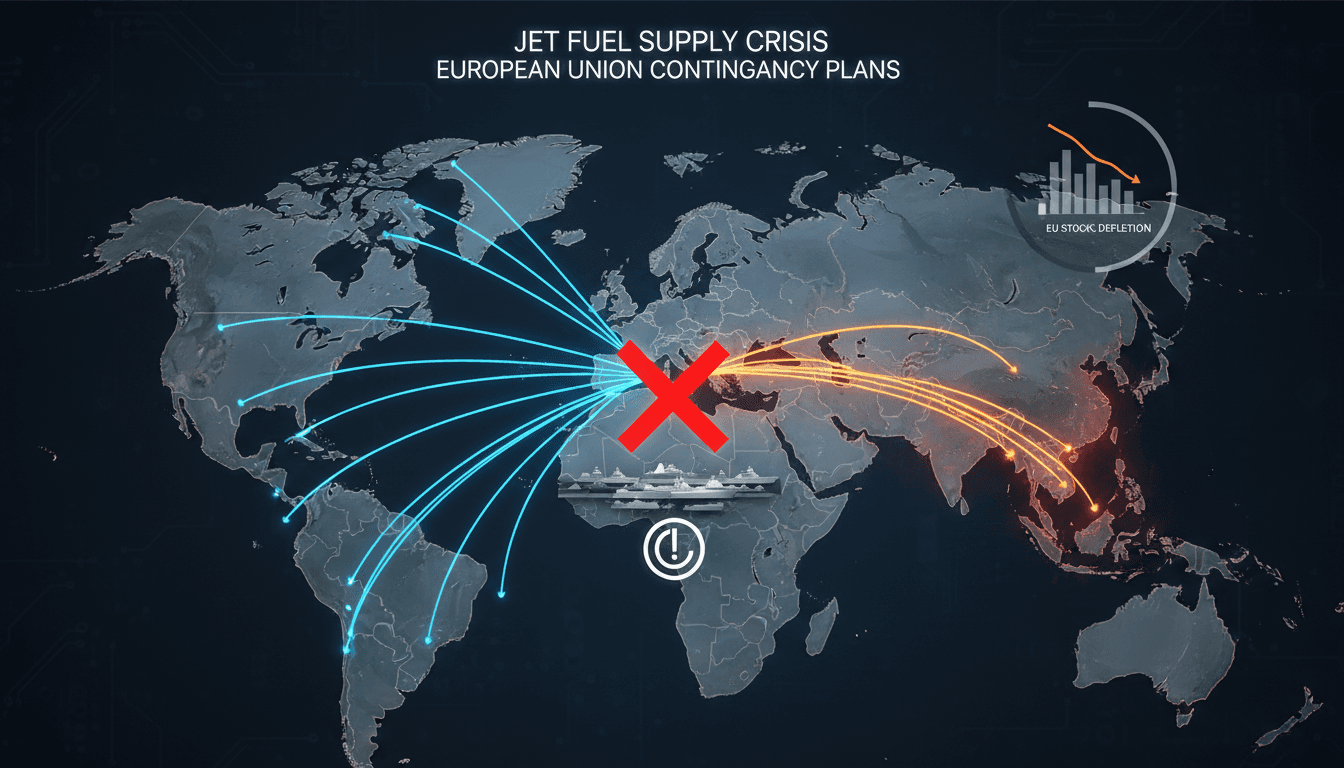
Here's what it means for you.
If you’re traveling to or from Europe this summer, expect potential flight disruptions and rising ticket prices.
Why it matters
The European Union's jet fuel supply security initiative could significantly impact air travel and ticket prices across the continent.
What happened (in 30 seconds)
- April 16, 2026: The European Commission proposed contingency measures to secure jet fuel supplies amid disruptions from the Iran conflict.
- Shortages anticipated: The International Energy Agency warns that Europe could face jet fuel shortages within six weeks due to a naval blockade of the Strait of Hormuz.
- Airlines respond: Major airlines are implementing fuel surcharges and adjusting schedules in anticipation of rising costs and limited availability.
The context you actually need
- Dependence on imports: Europe relies on the Middle East for 75% of its jet fuel, making it vulnerable to geopolitical tensions.
- Previous disruptions: The 2022 Russia-Ukraine war highlighted the EU's energy vulnerabilities, leading to mandates for oil reserves that did not include aviation fuel.
- Current refinery capacity: With refineries operating at peak capacity, compensatory imports from other regions are unlikely to meet the full demand.
What's really happening
The European Commission's recent draft proposals for jet fuel contingency plans stem from escalating military tensions in the Middle East, particularly the conflict involving the United States, Israel, and Iran. Since late February 2026, military actions have led to a blockade of the Strait of Hormuz, a critical route for jet fuel exports. This blockade has raised alarms about the stability of fuel supplies, prompting the Commission to act swiftly.
As of mid-April 2026, the International Energy Agency (IEA) has assessed that Europe has approximately six weeks of jet fuel stocks remaining. This precarious situation has resulted in a surge in jet fuel prices, which have increased by over 120% since March. Airlines are now facing the dual challenge of rising operational costs and the potential for flight cancellations due to fuel shortages. In response, they are implementing fuel surcharges and adjusting flight schedules to mitigate the impact on their operations.
The Commission's initiative includes a national refining capacity survey set to begin in May 2026, aimed at maximizing domestic production. This is crucial as refineries across Europe are already operating at full capacity, and any additional imports from Africa or the United States are projected to be insufficient to cover the anticipated shortfall. The EU's previous mandates for oil reserves, established in response to the Russia-Ukraine war, did not account for aviation-specific kerosene stockpiles, leaving the aviation sector particularly exposed.
Airlines for Europe (A4E) has called for joint kerosene procurement and enhanced monitoring to ensure a more coordinated response to the crisis. The Airports Council International Europe has also warned of systemic depletion of jet fuel supplies within three weeks if the situation does not improve. The Commission's draft proposals are a direct response to these warnings, emphasizing the need for proactive measures to secure fuel supplies and prevent widespread flight cancellations during the peak summer travel season.
Who feels it first (and how)
- Airlines: Facing increased operational costs and potential flight cancellations.
- Travelers: Likely to experience higher ticket prices and possible disruptions in flight schedules.
- Airport operators: Preparing for rationing protocols and managing supply chain challenges.
- Refineries: Under pressure to maximize output amid rising demand and limited imports.
What to watch next
- Refinery capacity surveys: The results of the May 2026 surveys will indicate how effectively Europe can ramp up domestic production.
- Jet fuel prices: Monitor fluctuations in jet fuel prices, which will directly impact airline operational costs and ticket prices.
- Geopolitical developments: Any changes in the Iran conflict or related tensions could further influence supply stability and pricing.
Europe is facing a potential jet fuel shortage due to geopolitical tensions.
Airlines will continue to implement fuel surcharges and adjust schedules in response to rising costs.
The long-term effectiveness of the EU's contingency measures in stabilizing jet fuel supplies.
Frequently Asked Questions
- Why it matters?
- The European Union's jet fuel supply security initiative could significantly impact air travel and ticket prices across the continent.
- What happened (in 30 seconds)?
- April 16, 2026: The European Commission proposed contingency measures to secure jet fuel supplies amid disruptions from the Iran conflict. Shortages anticipated: The International Energy Agency warns that Europe could face jet fuel shortages within six weeks due to a naval blockade of the Strait of Hormuz. Airlines respond: Major airlines are implementing fuel surcharges and adjusting schedules in anticipation of rising costs and limited availability.
- What's really happening?
- The European Commission's recent draft proposals for jet fuel contingency plans stem from escalating military tensions in the Middle East, particularly the conflict involving the United States, Israel, and Iran. Since late February 2026, military actions have led to a blockade of the Strait of Hormuz, a critical route for jet fuel exports. This blockade has raised alarms about the stability of fuel supplies, prompting the Commission to act swiftly. As of mid-April 2026, the International Energy
- Who feels it first (and how)?
- Airlines: Facing increased operational costs and potential flight cancellations. Travelers: Likely to experience higher ticket prices and possible disruptions in flight schedules. Airport operators: Preparing for rationing protocols and managing supply chain challenges. Refineries: Under pressure to maximize output amid rising demand and limited imports.
- What to watch next?
- Refinery capacity surveys: The results of the May 2026 surveys will indicate how effectively Europe can ramp up domestic production. Jet fuel prices: Monitor fluctuations in jet fuel prices, which will directly impact airline operational costs and ticket prices. Geopolitical developments: Any changes in the Iran conflict or related tensions could further influence supply stability and pricing.
Pan-Arab news coverage spanning politics, business, sports, and regional affairs.
"Asharq Al-Awsat reflects a broad Arab editorial perspective with strong attention to regional geopolitics."
— A47 Editor
أوروبا تتحرك لتأمين وقود الطائرات وتفادي أزمة صيفية
The European Union is formulating urgent emergency plans to address an impending crisis in aircraft fuel supplies. This initiative comes in response to concerns over potential shortages that could affect air travel during the summer months.
International news coverage curated for readers in the UAE and Gulf region.
"Emirates 24|7 world coverage presents global developments through a UAE-facing and Gulf-relevant editorial lens."
— A47 Editor
EU warns of prolonged energy shock, forced cuts if Iran issue continues EU warns of prolonged energy shock, forced cuts if Iran issue continues
The European Union has warned its member states that ongoing conflicts involving Iran could lead to a prolonged energy supply shock, potentially forcing cuts in fuel consumption. This warning comes amid rising oil and gas prices and the threat of jet...
Breaking news, politics, business, and entertainment from the U.S. and around the world.
"The New York Post is a tabloid-format newspaper known for its sensationalist headlines and conservative-leaning editorial tone."
— A47 Editor
European Union insists there is no shortage of jet fuel as war in Iran rages on
The European Commission stated on Tuesday that there is currently no shortage of jet fuel in the European Union, despite ongoing concerns related to the war in Iran. However, the Commission acknowledged that supply issues could arise in the future, m...