
United Airlines Projects Oil Prices at $175 per Barrel Amid US-Israel-Iran Conflict
Here's what it means for you.
Rising oil prices could lead to increased travel costs and disruptions in air travel, affecting both business and leisure plans.
Why it matters
The escalation of geopolitical tensions has direct implications for global oil supply and airline operations, impacting travel costs and availability.
What happened (in 30 seconds)
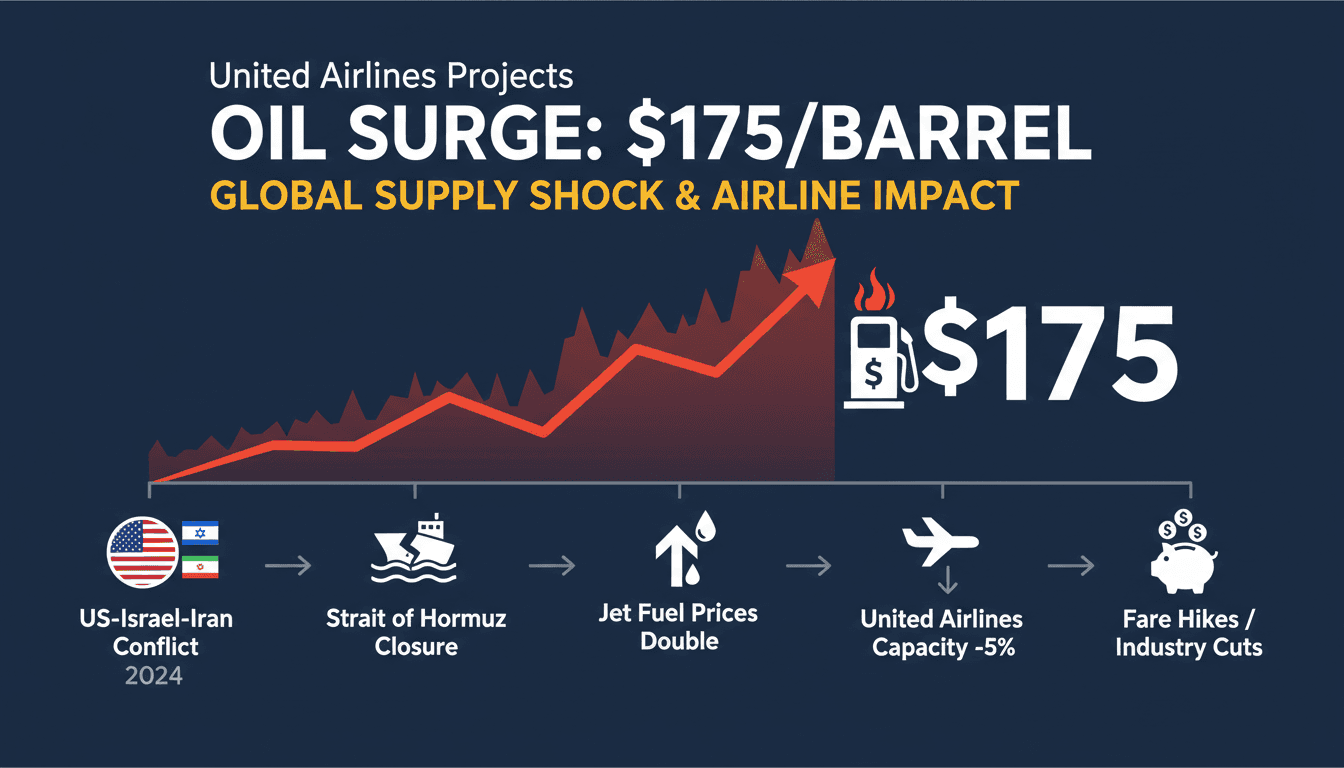
- March 20, 2026: United Airlines CEO Scott Kirby announced plans for oil prices to potentially reach $175 per barrel due to the US-Israel conflict with Iran.
- Capacity cuts: The airline will reduce capacity by approximately 5% in response to soaring jet fuel prices, which have doubled in just three weeks.
- Industry-wide impact: An estimated additional $11 billion in annual costs is expected for United Airlines, marking the most significant disruption since the COVID-19 pandemic.
The context you actually need
- Escalation of conflict: The US-Israel military actions against Iran began on February 28, 2026, leading to the closure of the Strait of Hormuz, a crucial oil transit route.
- Oil price surge: Crude oil prices jumped from around $90 to over $112 per barrel, significantly affecting jet fuel costs and airline operations.
- Global airline response: Other airlines, including SAS and Air France-KLM, are also adjusting their operations, with some canceling flights and evaluating route reductions.
What's really happening
The current geopolitical landscape has created a perfect storm for the airline industry, particularly due to the US-Israel conflict with Iran. The closure of the Strait of Hormuz, a vital passage for approximately 20% of the world's oil supply, has caused immediate disruptions in oil availability. This has led to a rapid increase in crude oil prices, which have surged from around $90 to over $112 per barrel in a matter of weeks. As a result, jet fuel prices have doubled, imposing significant financial strain on airlines.
United Airlines, facing an estimated additional $11 billion in annual costs due to these rising fuel prices, has taken proactive measures to mitigate the impact. The decision to cut capacity by approximately 5% in the second and third quarters of 2026 is aimed at low-margin routes, including off-peak flights and specific international routes like Chicago O'Hare and Tel Aviv/Dubai. This strategic move is designed to preserve profitability while navigating the turbulent market conditions.
The airline industry is particularly sensitive to fuel price fluctuations, as fuel costs represent a significant portion of operational expenses. The current situation is reminiscent of the challenges faced during the COVID-19 pandemic, where airlines had to adapt quickly to survive. However, unlike the pandemic, which saw a drastic drop in demand, the current crisis is characterized by high demand coupled with soaring costs, creating a different set of challenges.
Moreover, the repercussions extend beyond United Airlines. Other carriers are also feeling the pressure, with SAS planning to cancel around 1,000 flights and Air France-KLM reevaluating its Asia routes. This indicates a broader industry trend where airlines are forced to adapt to a volatile environment, leading to fare hikes and potential service disruptions.
As the situation evolves, the interconnectedness of global markets means that these developments will have ripple effects beyond the airline industry, impacting consumers, businesses, and economies worldwide.
Who feels it first (and how)
- Travelers: Increased airfares and potential flight cancellations will directly affect leisure and business travelers.
- Airline employees: While United Airlines has stated there will be no furloughs, job security may be a concern in the broader industry.
- Global businesses: Companies relying on air travel for logistics and meetings may face higher costs and operational delays.
- Consumers in Dubai: Residents may experience up to a 30% increase in airfares due to fuel surcharges and disruptions at Dubai International Airport.
What to watch next
- Fuel price trends: Monitor crude oil prices and jet fuel costs, as sustained high prices will influence airline operations and ticket prices.
- Airline capacity adjustments: Keep an eye on further capacity cuts or flight cancellations from major airlines, which could affect travel availability.
- Geopolitical developments: Watch for any changes in the US-Israel-Iran conflict that could impact oil supply and prices, influencing the airline industry.
United Airlines has announced a 5% capacity cut and projected $11 billion in additional fuel costs.
Other airlines will follow suit with capacity reductions and fare increases.
The duration of the conflict and its long-term impact on global oil prices and airline operations.
Frequently Asked Questions
- Why it matters?
- The escalation of geopolitical tensions has direct implications for global oil supply and airline operations, impacting travel costs and availability.
- What happened (in 30 seconds)?
- March 20, 2026: United Airlines CEO Scott Kirby announced plans for oil prices to potentially reach $175 per barrel due to the US-Israel conflict with Iran. Capacity cuts: The airline will reduce capacity by approximately 5% in response to soaring jet fuel prices, which have doubled in just three weeks. Industry-wide impact: An estimated additional $11 billion in annual costs is expected for United Airlines, marking the most significant disruption since the COVID-19 pandemic.
- What's really happening?
- The current geopolitical landscape has created a perfect storm for the airline industry, particularly due to the US-Israel conflict with Iran. The closure of the Strait of Hormuz, a vital passage for approximately 20% of the world's oil supply, has caused immediate disruptions in oil availability. This has led to a rapid increase in crude oil prices, which have surged from around $90 to over $112 per barrel in a matter of weeks. As a result, jet fuel prices have doubled, imposing significant fin
- Who feels it first (and how)?
- Travelers: Increased airfares and potential flight cancellations will directly affect leisure and business travelers. Airline employees: While United Airlines has stated there will be no furloughs, job security may be a concern in the broader industry. Global businesses: Companies relying on air travel for logistics and meetings may face higher costs and operational delays. Consumers in Dubai: Residents may experience up to a 30% increase in airfares due to fuel surcharges and disruptions at Dub
- What to watch next?
- Fuel price trends: Monitor crude oil prices and jet fuel costs, as sustained high prices will influence airline operations and ticket prices. Airline capacity adjustments: Keep an eye on further capacity cuts or flight cancellations from major airlines, which could affect travel availability. Geopolitical developments: Watch for any changes in the US-Israel-Iran conflict that could impact oil supply and prices, influencing the airline industry.
Corporate leadership, finance, technology, and market trends.
"Fortune covers financial trends, leadership, and innovation with a pragmatic editorial approach."
— A47 Editor
United Airlines plans for oil hitting $175 a barrel and staying above $100 next year as industry faces worst shock since COVID
United Airlines CEO Scott Kirby has warned that jet fuel prices could soar to $175 per barrel and remain above $100 throughout the next year, marking a significant increase in operational costs for the airline. This surge in fuel prices has already m...
Global markets, investing, and macroeconomics from a premier financial newsroom.
"Bloomberg is respected for in-depth financial reporting and data-driven analysis."
— A47 Editor
United Air Sees Risk of Surging Fuel Cost, Says Airline Is Ready
United Airlines Holdings Inc. CEO Scott Kirby has raised concerns about the potential for jet fuel prices to reach $175 per barrel, which could significantly increase operational costs for the airline. This warning comes amid a period of record trave...
Market-moving headlines impacting equities, bonds, and related risk assets.
"Real-time catalysts and volatility drivers across indices and sectors."
— A47 Editor
United Airlines to cut more flights as it eyes oil above $100 through 2027
United Airlines has announced plans to cut more flights as it anticipates oil prices to remain above $100 per barrel through 2027, significantly impacting its operational strategy.
Stock market news, investing ideas, and trading analysis.
"TheStreet provides market news and retail-investor-focused analysis."
— A47 Editor
American Airlines CEO gives stark warning about fuel and ticket prices
American Airlines CEO has issued a warning regarding the potential rise in fuel and ticket prices, attributing these increases to the ongoing conflict triggered by the U.S.-Israeli strike on Iran. This situation has led to heightened fuel costs, whic...