
NATO Allies Decline U.S. Naval Blockade Participation in Strait of Hormuz
Here's what it means for you.
If you rely on global oil markets, the ongoing tensions could lead to higher prices and supply chain disruptions.
Why it matters
This blockade could significantly impact global oil supply, affecting prices and availability for consumers and businesses alike.
What happened (in 30 seconds)
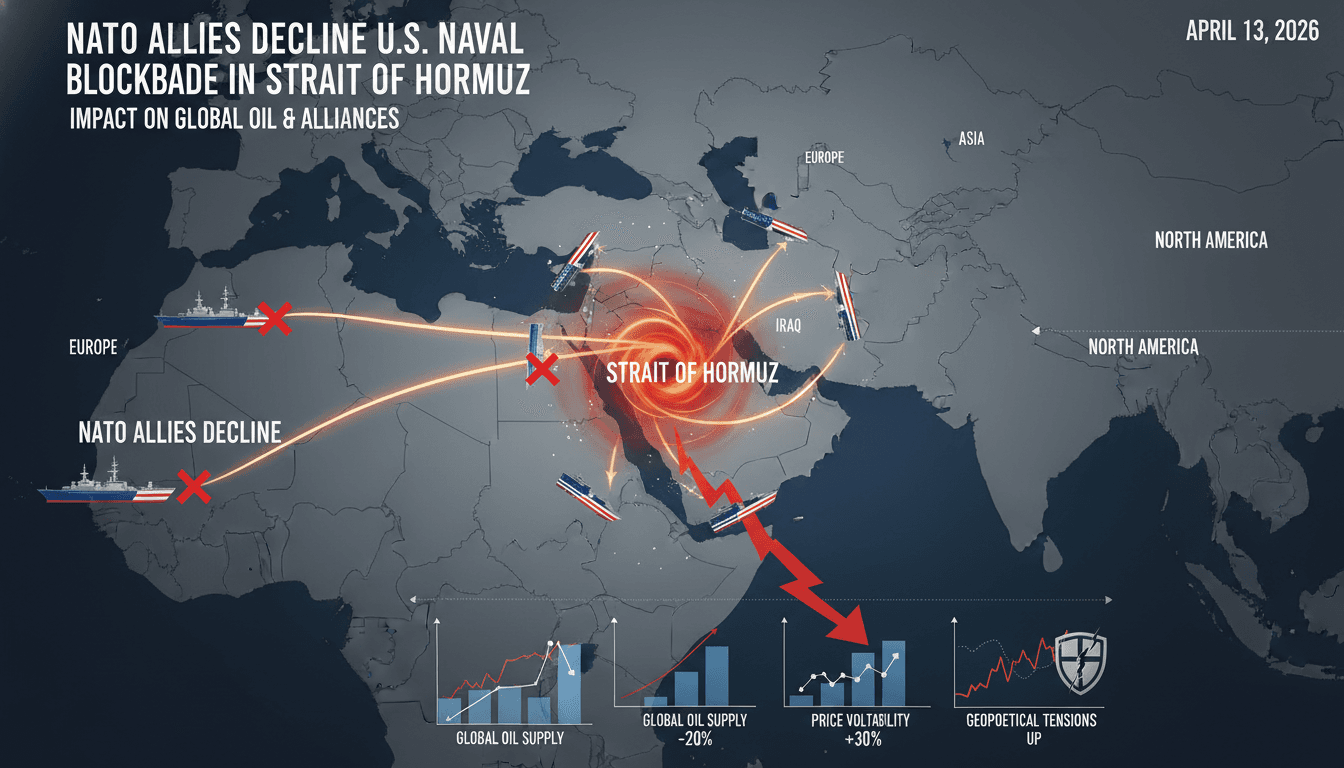
- On April 13, 2026, NATO allies, including Britain and France, declined to participate in a U.S. naval blockade of the Strait of Hormuz, announced by President Trump.
- The blockade targets Iranian ports, allowing neutral transit to non-Iranian destinations under inspection amid a backdrop of escalating U.S.-Iran conflict.
- Oil prices surged over 7%, with U.S. gasoline prices exceeding $4 per gallon, as European nations expressed reluctance to escalate military involvement.
The context you actually need
- The U.S.-Iran conflict escalated in late February 2026, disrupting about 20% of global seaborne oil trade due to Iranian restrictions on the Strait of Hormuz.
- A two-week ceasefire was announced on April 8, but traffic remained limited, with U.S.-Iran negotiations collapsing shortly before the blockade was announced.
- NATO tensions have been exacerbated by U.S. criticisms of European defense spending, leading to reluctance among allies to engage in military actions.
What's really happening
The refusal of NATO allies to join the U.S. naval blockade of the Strait of Hormuz underscores a significant rift within the alliance, driven by diverging national interests and strategic priorities. The U.S. has been increasingly assertive in its military posture in the Middle East, particularly against Iran, which it views as a destabilizing force. However, European nations, still reeling from the economic impacts of previous conflicts, are hesitant to escalate their involvement in what they perceive as a U.S.-led initiative that may not align with their own security interests.
The Strait of Hormuz is a critical chokepoint for global oil supply, with approximately 20% of the world's petroleum liquids passing through it. The blockade aims to restrict Iranian access to the strait, but it also risks further destabilizing the region and escalating military tensions. European nations, particularly those heavily reliant on oil imports, are wary of the potential backlash from Iran, which has threatened retaliation against Gulf ports.
The backdrop of this decision is a series of failed diplomatic efforts between the U.S. and Iran, culminating in the collapse of talks in Pakistan just days before the blockade announcement. The NATO Secretary-General's briefing to European leaders about U.S. demands for security commitments in the strait highlighted the growing divide within the alliance. European leaders are concerned that joining the blockade could lead to direct military confrontation, which they are keen to avoid.
Moreover, the economic implications of the blockade are significant. The surge in oil prices following the blockade announcement reflects market anxiety over supply disruptions. For consumers, this translates into higher gasoline prices and increased costs for goods reliant on oil for transportation. The situation is particularly acute for regions like Dubai, where elevated fuel prices and supply chain delays are already being felt.
In summary, the NATO allies' refusal to participate in the U.S. blockade is not just a military decision; it reflects deeper strategic calculations about national interests, economic implications, and the desire to avoid further entanglement in Middle Eastern conflicts.
Who feels it first (and how)
- Consumers: Higher gasoline prices and increased costs for goods.
- Oil companies: Fluctuating prices affecting profit margins and operational costs.
- European governments: Increased pressure to manage energy security and public sentiment regarding military involvement.
- Middle Eastern nations: Potential for escalated conflict and economic instability in the region.
What to watch next
- Oil price fluctuations: Continued volatility in oil markets will indicate the extent of the blockade's impact on supply.
- Diplomatic efforts: Watch for any renewed negotiations between the U.S. and Iran, which could alter the current dynamics.
- NATO's internal discussions: Future meetings may reveal shifts in alliance strategy regarding military commitments in the Middle East.
Oil prices have surged as a direct result of the blockade announcement.
Continued tensions between the U.S. and Iran will affect global oil supply and prices.
The long-term implications for NATO unity and collective defense strategies in the face of diverging national interests.
Frequently Asked Questions
- Why it matters?
- This blockade could significantly impact global oil supply, affecting prices and availability for consumers and businesses alike.
- What happened (in 30 seconds)?
- On April 13, 2026, NATO allies, including Britain and France, declined to participate in a U.S. naval blockade of the Strait of Hormuz, announced by President Trump. The blockade targets Iranian ports, allowing neutral transit to non-Iranian destinations under inspection amid a backdrop of escalating U.S.-Iran conflict. Oil prices surged over 7%, with U.S. gasoline prices exceeding $4 per gallon, as European nations expressed reluctance to escalate military involvement.
- What's really happening?
- The refusal of NATO allies to join the U.S. naval blockade of the Strait of Hormuz underscores a significant rift within the alliance, driven by diverging national interests and strategic priorities. The U.S. has been increasingly assertive in its military posture in the Middle East, particularly against Iran, which it views as a destabilizing force. However, European nations, still reeling from the economic impacts of previous conflicts, are hesitant to escalate their involvement in what they p
- Who feels it first (and how)?
- Consumers: Higher gasoline prices and increased costs for goods. Oil companies: Fluctuating prices affecting profit margins and operational costs. European governments: Increased pressure to manage energy security and public sentiment regarding military involvement. Middle Eastern nations: Potential for escalated conflict and economic instability in the region.
- What to watch next?
- Oil price fluctuations: Continued volatility in oil markets will indicate the extent of the blockade's impact on supply. Diplomatic efforts: Watch for any renewed negotiations between the U.S. and Iran, which could alter the current dynamics. NATO's internal discussions: Future meetings may reveal shifts in alliance strategy regarding military commitments in the Middle East.
Global business headlines with AI angles.
"General business outlet that frequently covers AI."
— A47 Editor
U.S. NATO Allies Won't Join Blockade Of Strait Of Hormuz As Alliance Tensions Continue
Two key NATO members have declined to participate in the U.S. blockade of the Strait of Hormuz, highlighting ongoing tensions between Washington and several alliance members. This decision follows President Trump's announcement of the blockade after ...
Regional and international reporting focused on Middle Eastern politics, diplomacy, and economics.
"Asharq Al-Awsat is a Saudi-owned international newspaper reflecting mainstream Gulf political perspectives."
— A47 Editor
NATO Allies Refuse to Join Trump's Strait of Hormuz Blockade
NATO allies have declined to support President Donald Trump's proposed blockade of the Strait of Hormuz, a vital maritime route for global oil shipments, following the collapse of U.S.-Iran ceasefire negotiations. This decision reflects significant d...
Regional coverage and analysis focused on politics, diplomacy, and business across the Middle East.
"Al-Monitor is known for analytical reporting on Middle East politics and policy developments."
— A47 Editor
NATO allies refuse to join Trump's Strait of Hormuz blockade
NATO allies have declined to participate in President Donald Trump's plan to blockade the Strait of Hormuz, a strategic maritime route, following the collapse of U.S.-Iran peace talks. This decision has heightened tensions within NATO and raised conc...
Oil, metals, and agriculture: supply/demand headlines, OPEC chatter, inventories, and price action.
"Solid tape for energy and metals traders tracking macro and micro catalysts."
— A47 Editor
NATO allies refuse to join Trump’s Strait of Hormuz blockade
NATO allies have declined to participate in President Trump's announced blockade of the Strait of Hormuz, a vital maritime route for global oil shipments, following the breakdown of peace negotiations with Iran. This blockade is characterized by Trum...