
Essex Police Halts Live Facial Recognition Use After Study Reveals Ethnic Bias
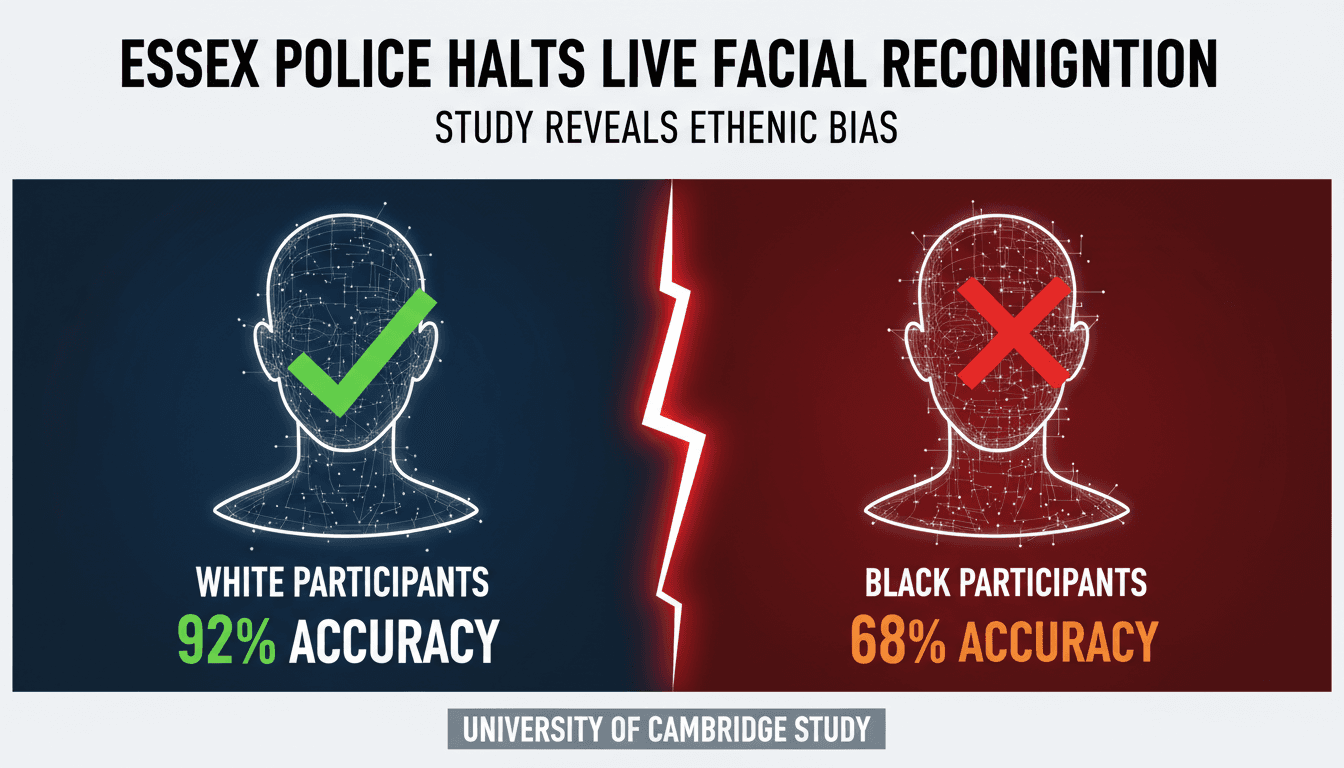
Here's what it means for you.
As facial recognition technology evolves, understanding its implications on privacy and bias is crucial for professionals navigating the digital landscape.
What happened
Essex Police paused live facial recognition technology deployments after a study revealed significant ethnic disparities in identification accuracy.
The Context
- Bias Concerns: The University of Cambridge study highlighted that Black participants were identified with 60.3% accuracy, compared to 53.0% for White participants.
- Operational Adjustments: Following the findings, Essex Police updated their algorithms and policies, resuming operations with enhanced monitoring.
- Ongoing Scrutiny: The Information Commissioner's Office has recommended regular bias testing and governance improvements for police forces using this technology.
The Number
— This is the true positive identification rate for Black participants at the operational threshold, underscoring the critical need for fairness in technology applications.
Takeaway
With continuous monitoring and algorithm updates, the future of facial recognition technology in policing will hinge on balancing effectiveness with ethical considerations.
Biting coverage of AI/ML software and vendors.
"Known for skeptical, incisive reporting on enterprise tech."
— A47 Editor
UK police force presses pause on live facial recognition after study finds racial bias
A UK police force has halted its use of live facial recognition (LFR) technology following a study that indicated a statistical bias in identifying Black individuals on a watchlist database. The findings raised concerns about the fairness and reliabi...
UK politics, business, and social stories.
"Sky News is a UK-based 24-hour channel known for fast-breaking news and political coverage."
— A47 Editor
Essex Police pauses use of facial recognition cameras due to racial bias concerns
Essex Police has suspended the use of live facial recognition cameras following a study that revealed the technology disproportionately identified more black individuals compared to other ethnic groups. The cameras, which were intended to help locate...
News and features on AI from The Guardian.
"Progressive-leaning international outlet with critical AI coverage."
— A47 Editor
Essex police pause facial recognition camera use after study finds racial bias
Essex police have suspended the use of live facial recognition technology following a study that revealed a significant racial bias, with black individuals being disproportionately targeted compared to other ethnic groups. This decision was disclosed...
Tech culture, product news, and critical takes on the tech industry's social impact.
"The Guardian's tech coverage blends mainstream news, critical analysis, and cultural commentary on emerging technologies and digital trends."
— A47 Editor
Essex police pause facial recognition camera use after study finds racial bias
Essex police have suspended the use of live facial recognition technology following a study that revealed a significant racial bias, with black individuals being disproportionately targeted compared to other ethnic groups. This decision was disclosed...