
World Bank Group Launches Water Forward Initiative to Address Global Water Scarcity
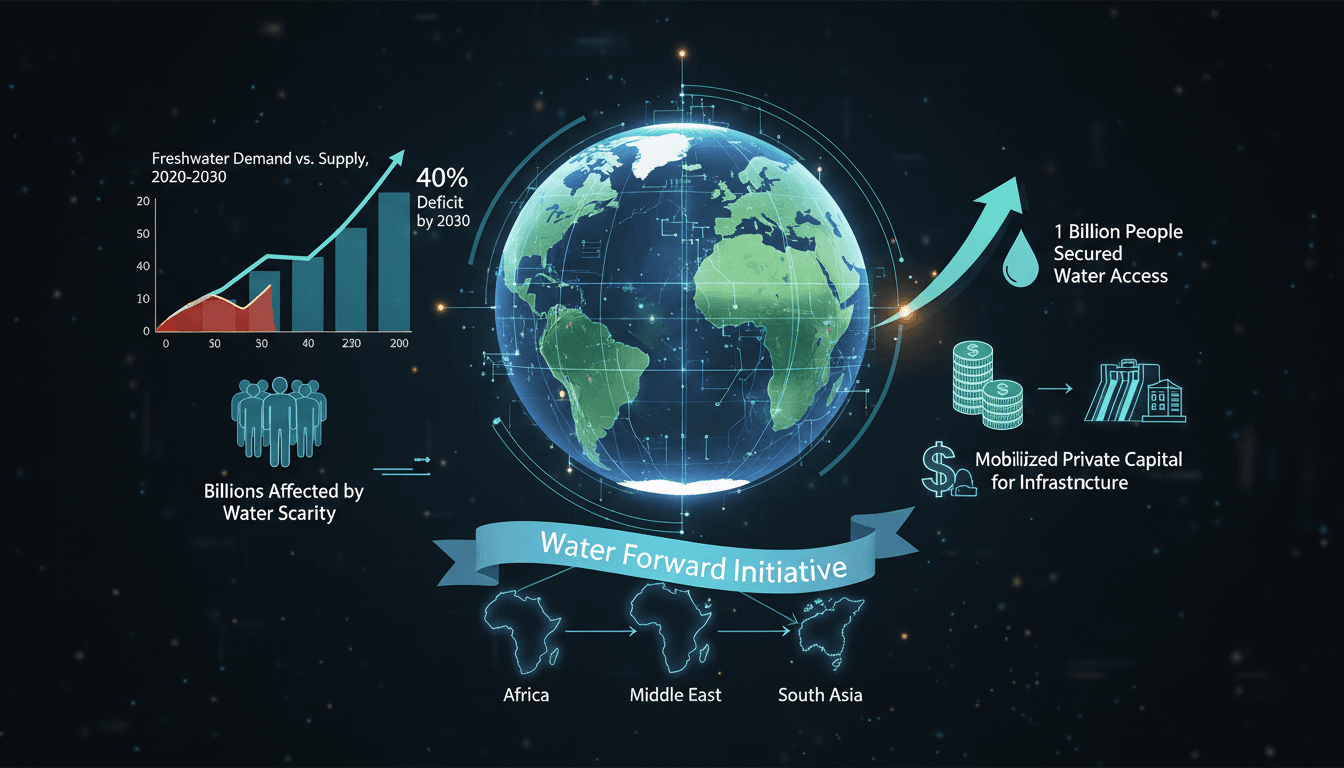
Here's what it means for you.
If you rely on stable water access for your livelihood or community, this initiative could reshape your future.
Why it matters
Water scarcity affects billions globally, impacting economies and livelihoods, making this initiative crucial for sustainable development.
What happened (in 30 seconds)
- On April 15, 2026, the World Bank Group launched the Water Forward initiative to tackle global water stress.
- The initiative aims to provide reliable water services to 1 billion people by 2030, starting with 14 water-stressed countries.
- Key participants include multilateral development banks, national governments, and private sector partners, all committing resources to improve water access.
The context you actually need
- Global water scarcity impacts 4 billion people seasonally, affecting jobs across agriculture, industry, and services.
- Climate change exacerbates water-related challenges, leading to increased droughts and floods that threaten economic stability.
- Investment barriers stem from unclear policies and financially unsustainable utilities, hindering necessary infrastructure improvements.
What's really happening
The Water Forward initiative, launched during the World Bank's Spring Meetings, represents a coordinated effort to address the escalating global water crisis. With projections indicating that freshwater demand could exceed supply by 40% by 2030, the urgency for action has never been greater. The initiative is designed to mobilize resources and align financing across multiple stakeholders, including multilateral development banks (MDBs), national governments, and private sector partners.
At the heart of this initiative are 14 national water compacts, which serve as frameworks for country-led reforms aimed at improving water management and infrastructure. These compacts prioritize institutional strengthening, investment pipelines, and projects that target urban water leakage, modernize irrigation systems, and enhance wastewater reuse. The World Bank has committed to providing reliable water access for 400 million people, while partners like the European Investment Bank (EIB) and the Asian Development Bank (ADB) have pledged to cover additional populations in their respective regions.
The initiative's focus on water-stressed countries in Africa, the Middle East, and South Asia highlights the regions most vulnerable to water scarcity. For instance, in the UAE, where water withdrawal rates exceed available resources, the initiative supports critical reforms in desalination and wastewater reuse. This is particularly relevant for urban centers like Dubai, where a significant portion of the population relies on imported and treated water.
The coalition's approach is not just about immediate relief; it aims to create a sustainable framework for long-term water security. By addressing the underlying issues of policy clarity and financial sustainability, the initiative seeks to attract private capital for infrastructure development in high-stress areas. This could lead to a ripple effect, improving economic resilience and job security in sectors heavily dependent on water.
As the initiative gains traction, it will be essential to monitor the commitments made by participating countries and the effectiveness of the reforms implemented. The success of Water Forward will depend on the ability of these nations to align their policies with the initiative's goals and to mobilize the necessary resources for impactful change.
Who feels it first (and how)
- Agricultural workers in water-stressed regions will benefit from improved irrigation and water management practices.
- Urban residents in cities like Dubai will see enhanced water supply reliability and infrastructure upgrades.
- Governments in participating countries will experience economic resilience through better water management and reduced water-related shocks.
What to watch next
- Implementation of national water compacts: Monitoring how quickly and effectively countries adopt and execute their commitments will indicate the initiative's success.
- Private sector investment trends: Increased private capital mobilization for water infrastructure will signal confidence in the initiative's framework.
- Impact assessments: Evaluating the initiative's effects on water access and economic stability in targeted regions will provide insights into its long-term viability.
The World Bank and partners have committed to improving water access for 1 billion people by 2030.
Increased collaboration among multilateral development banks and national governments will lead to more effective water management strategies.
The extent to which private sector investment will materialize and how quickly reforms will be implemented in participating countries.
Frequently Asked Questions
- Why it matters?
- Water scarcity affects billions globally, impacting economies and livelihoods, making this initiative crucial for sustainable development.
- What happened (in 30 seconds)?
- On April 15, 2026, the World Bank Group launched the Water Forward initiative to tackle global water stress. The initiative aims to provide reliable water services to 1 billion people by 2030, starting with 14 water-stressed countries. Key participants include multilateral development banks, national governments, and private sector partners, all committing resources to improve water access.
- What's really happening?
- The Water Forward initiative, launched during the World Bank's Spring Meetings, represents a coordinated effort to address the escalating global water crisis. With projections indicating that freshwater demand could exceed supply by 40% by 2030, the urgency for action has never been greater. The initiative is designed to mobilize resources and align financing across multiple stakeholders, including multilateral development banks (MDBs), national governments, and private sector partners. At the
- Who feels it first (and how)?
- Agricultural workers in water-stressed regions will benefit from improved irrigation and water management practices. Urban residents in cities like Dubai will see enhanced water supply reliability and infrastructure upgrades. Governments in participating countries will experience economic resilience through better water management and reduced water-related shocks.
- What to watch next?
- Implementation of national water compacts: Monitoring how quickly and effectively countries adopt and execute their commitments will indicate the initiative's success. Private sector investment trends: Increased private capital mobilization for water infrastructure will signal confidence in the initiative's framework. Impact assessments: Evaluating the initiative's effects on water access and economic stability in targeted regions will provide insights into its long-term viability.
Regional coverage and analysis focused on politics, diplomacy, and business across the Middle East.
"Al-Monitor is known for analytical reporting on Middle East politics and policy developments."
— A47 Editor
World Bank launches 'Water Forward' programme to tackle global water stress
The World Bank, alongside other major development lenders, has launched the 'Water Forward' programme, aiming to enhance secure water access for one billion people over the next four years. This initiative emphasizes the importance of treating water ...
Macro commentary, policy analysis, growth/inflation themes, and global outlooks.
"Contextual macro coverage that complements day-to-day market headlines."
— A47 Editor
World Bank launches ’Water Forward’ programme to tackle global water stress
The World Bank has launched the 'Water Forward' programme aimed at addressing global water stress, a critical issue affecting numerous countries. This initiative is part of the institution's broader efforts to enhance water security and sustainabilit...
UAE-based English-language newspaper covering regional politics, economics, and global affairs.
"The National reflects Emirati policy perspectives while maintaining international editorial standards."
— A47 Editor
World Bank taps private capital to build water economy and protect 1.7 billion jobs
The World Bank has initiated a new program aimed at leveraging private capital to enhance water security, targeting the protection of 1.7 billion jobs globally. This initiative is part of a broader strategy to address critical water access issues, pa...