
U.S. Naval Blockade on Iranian Ports Begins with Minimal Impact on Strait of Hormuz Traffic
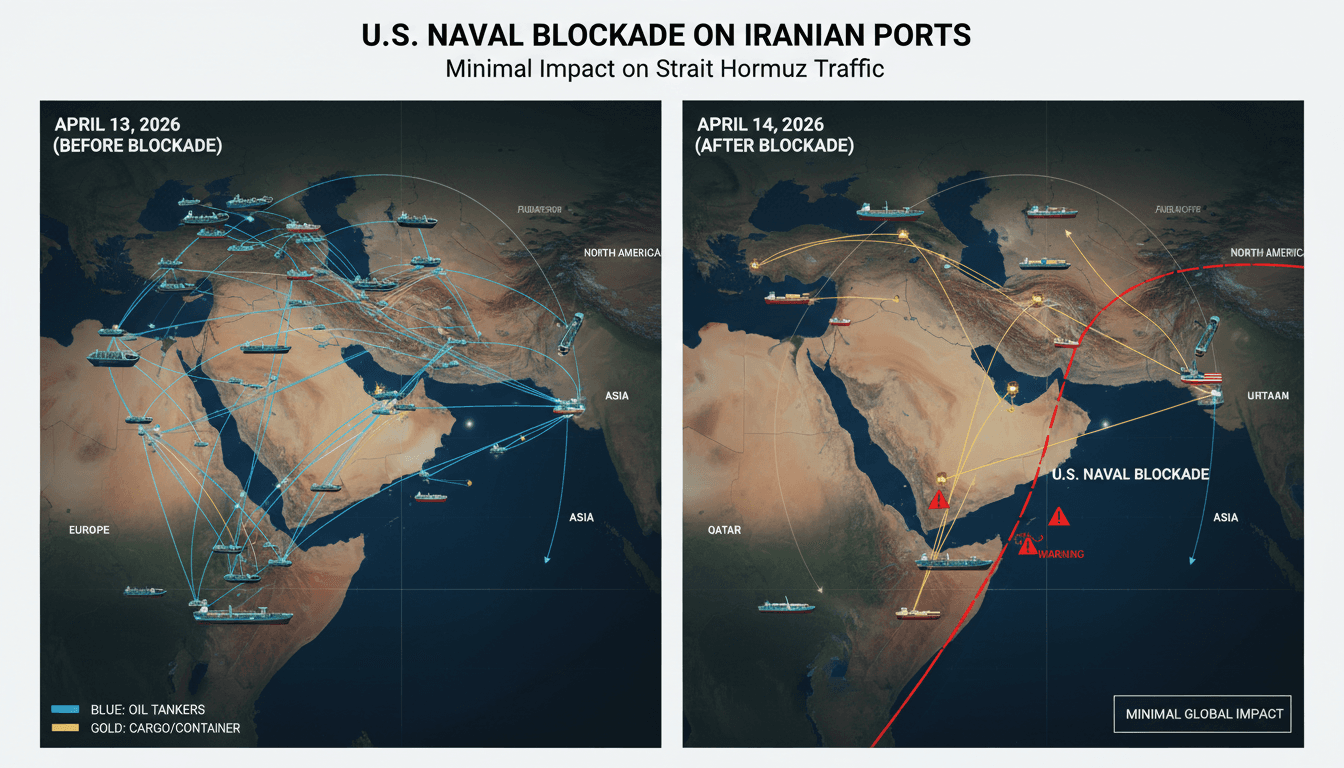
Here's what it means for you.
If you rely on global shipping routes, the U.S. blockade could affect shipping costs and oil prices, impacting your expenses.
Why it matters
The blockade aims to disrupt Iran's oil export revenues, influencing global oil markets and shipping dynamics.
What happened (in 30 seconds)
- April 13, 2026: President Trump announced a U.S. naval blockade targeting Iranian ports following failed peace talks.
- April 14, 2026: The blockade activated, yet at least eight vessels, including three linked to Iran, successfully transited the Strait of Hormuz.
- Current Status: Minimal disruption reported, with ongoing enforcement and potential implications for oil prices and shipping costs.
The context you actually need
- Geopolitical Tensions: The U.S.-Israel war against Iran began on February 28, 2026, leading to increased Iranian disruptions in the Strait of Hormuz.
- Blockade Enforcement: U.S. warships are enforcing the blockade by diverting vessels rather than outright interdiction, allowing some traffic to continue.
- Economic Impact: Elevated war-risk insurance premiums and rising oil prices above $100/barrel could incrementally increase costs for consumers, particularly in regions reliant on oil imports.
What's really happening
The U.S. blockade of Iranian ports is a strategic maneuver aimed at crippling Iran's oil export capabilities amid escalating geopolitical tensions. Following the collapse of ceasefire negotiations in Islamabad on April 13, President Trump ordered the blockade to commence the next day at 1400 GMT. This decision reflects a broader strategy to exert economic pressure on Iran, which has been accused of destabilizing the region through its support of proxy groups and military actions.
Despite the blockade's intent, initial reports indicate that maritime traffic through the Strait of Hormuz has experienced minimal disruption. Data from shipping trackers LSEG and Kpler revealed that at least eight vessels, including three linked to Iran, successfully navigated the strait on the first full day of the blockade. This contrasts sharply with U.S. Central Command's claims of no vessels passing through. The blockade's enforcement strategy focuses on diverting vessels rather than outright stopping them, which may explain the continued transit of certain ships.
The blockade is designed to target Iran's oil revenues, a critical source of funding for its government and military operations. By limiting access to international shipping lanes, the U.S. aims to reduce Iran's ability to export oil, thereby impacting its economy. However, the blockade also raises questions about the enforcement's effectiveness and the potential for unintended consequences, such as increased tensions in the region and retaliatory actions from Iran.
As the situation unfolds, the implications for global oil markets are significant. Oil prices have already surged above $100 per barrel, reflecting concerns over supply disruptions. Additionally, shipping companies are facing elevated war-risk insurance premiums, which could lead to higher costs for consumers and businesses reliant on oil imports. The ambiguity surrounding the blockade's enforcement may also create uncertainty in shipping routes, further complicating global trade dynamics.
Who feels it first (and how)
- Shipping Companies: Increased operational costs due to elevated war-risk insurance premiums.
- Oil Importers: Higher prices for crude oil, impacting overall import costs.
- Consumers in Dubai: Potentially rising costs for goods as shipping expenses increase.
- Geopolitical Analysts: Heightened scrutiny of U.S.-Iran relations and regional stability.
What to watch next
- Oil Price Trends: Monitor fluctuations in oil prices as the blockade continues, which could affect global markets and consumer costs.
- Shipping Traffic Reports: Keep an eye on shipping data for changes in vessel transits through the Strait of Hormuz, indicating the blockade's effectiveness.
- Iran's Response: Watch for potential retaliatory actions from Iran, which could escalate tensions and further disrupt shipping routes.
The blockade is currently in effect, with minimal disruption reported in maritime traffic.
Oil prices will remain volatile as the situation develops, impacting global markets.
The long-term effectiveness of the blockade and its potential for escalation in regional conflicts remain uncertain.
Frequently Asked Questions
- Why it matters?
- The blockade aims to disrupt Iran's oil export revenues, influencing global oil markets and shipping dynamics.
- What happened (in 30 seconds)?
- April 13, 2026: President Trump announced a U.S. naval blockade targeting Iranian ports following failed peace talks. April 14, 2026: The blockade activated, yet at least eight vessels, including three linked to Iran, successfully transited the Strait of Hormuz. Current Status: Minimal disruption reported, with ongoing enforcement and potential implications for oil prices and shipping costs.
- What's really happening?
- The U.S. blockade of Iranian ports is a strategic maneuver aimed at crippling Iran's oil export capabilities amid escalating geopolitical tensions. Following the collapse of ceasefire negotiations in Islamabad on April 13, President Trump ordered the blockade to commence the next day at 1400 GMT. This decision reflects a broader strategy to exert economic pressure on Iran, which has been accused of destabilizing the region through its support of proxy groups and military actions. Despite the bl
- Who feels it first (and how)?
- Shipping Companies: Increased operational costs due to elevated war-risk insurance premiums. Oil Importers: Higher prices for crude oil, impacting overall import costs. Consumers in Dubai: Potentially rising costs for goods as shipping expenses increase. Geopolitical Analysts: Heightened scrutiny of U.S.-Iran relations and regional stability.
- What to watch next?
- Oil Price Trends: Monitor fluctuations in oil prices as the blockade continues, which could affect global markets and consumer costs. Shipping Traffic Reports: Keep an eye on shipping data for changes in vessel transits through the Strait of Hormuz, indicating the blockade's effectiveness. Iran's Response: Watch for potential retaliatory actions from Iran, which could escalate tensions and further disrupt shipping routes.
Oil, metals, and agriculture: supply/demand headlines, OPEC chatter, inventories, and price action.
"Solid tape for energy and metals traders tracking macro and micro catalysts."
— A47 Editor
Strait of Hormuz traffic barely affected on first day of US blockade, data shows
On the first day of the U.S. blockade in the Strait of Hormuz, traffic remained largely unaffected, with data indicating minimal disruption to maritime activities. The blockade, announced amid escalating tensions following the collapse of peace negot...
Global markets, investing, and macroeconomics from a premier financial newsroom.
"Bloomberg is respected for in-depth financial reporting and data-driven analysis."
— A47 Editor
US-Sanctioned Tanker Linked To China Tests Trump Blockade
A US-sanctioned tanker linked to China, known as Rich Starry, has sailed out of the Strait of Hormuz and into the Gulf of Oman, testing the naval blockade imposed by President Donald Trump. This tanker was blacklisted in 2023 for assisting Iran in ev...
Breaking news, politics, business, and entertainment from the U.S. and around the world.
"The New York Post is a tabloid-format newspaper known for its sensationalist headlines and conservative-leaning editorial tone."
— A47 Editor
Iran-linked ships transit through Strait of Hormuz — in defiance of President Trump’s blockade
At least four Iran-linked ships, including a Chinese tanker, were observed transiting the Strait of Hormuz on Tuesday, shortly after President Trump's blockade took effect, indicating a defiance of U.S. maritime restrictions.
Arabic-language coverage of political affairs and current events.
"Okaz political coverage typically follows mainstream Saudi framing on national and regional affairs."
— A47 Editor
أعلن مرور 34 سفينة.. ترمب: تلقيت اتصالات لإبرام صفقة مع إيران
U.S. President Donald Trump announced that 34 ships passed through the Strait of Hormuz, marking the highest number recorded since what he termed the 'foolish closure' of the shipping lane. He emphasized that the main point of contention with Iran is...
Arabic-language UAE newspaper coverage focused on domestic affairs, public institutions, business, society, and regional developments.
"Al Khaleej coverage generally reflects a mainstream UAE editorial lens with strong attention to public affairs, institutions, and regional developments."
— A47 Editor
ترامب: 34 سفينة عبرت من مضيق هرمز أمس
U.S. President Donald Trump announced on Truth Social that 34 ships passed through the Strait of Hormuz on Sunday. The U.S. military threat to control shipping movements in and out of Iranian ports took effect on Monday, following Iran's effective cl...
Arabic-language UAE newspaper coverage focused on domestic affairs, public institutions, business, society, and regional developments.
"Al Khaleej coverage generally reflects a mainstream UAE editorial lens with strong attention to public affairs, institutions, and regional developments."
— A47 Editor
الصين تنفي تسليح إيران وتطالب بحرية الملاحة في مضيق هرمز
On Monday, China called for the unhindered navigation in the Strait of Hormuz following threats from U.S. President Donald Trump. The statement comes amid rising tensions in the region, highlighting China's stance on maritime security and its diploma...
Global markets, investing, and macroeconomics from a premier financial newsroom.
"Bloomberg is respected for in-depth financial reporting and data-driven analysis."
— A47 Editor
Two Oil Tankers Attempt Hormuz Exit After US Announces Blockade
Two fuel tankers are attempting to exit the Persian Gulf via the Strait of Hormuz by sailing close to the Iranian coast, marking the first vessels to navigate this critical waterway since the United States announced a blockade. This move comes amid h...
Global markets, investing, and macroeconomics from a premier financial newsroom.
"Bloomberg is respected for in-depth financial reporting and data-driven analysis."
— A47 Editor
Ships With Iran Oil Anchor Off India as Trump Announces Blockade
Two supertankers carrying Iranian crude oil have anchored off Indian ports, marking a significant event as it is potentially the first delivery of Iranian oil to India in nearly seven years, coinciding with heightened U.S. efforts to restrict Iran's ...