
France and UK Plan Multinational Conference for Peaceful Mission in Strait of Hormuz
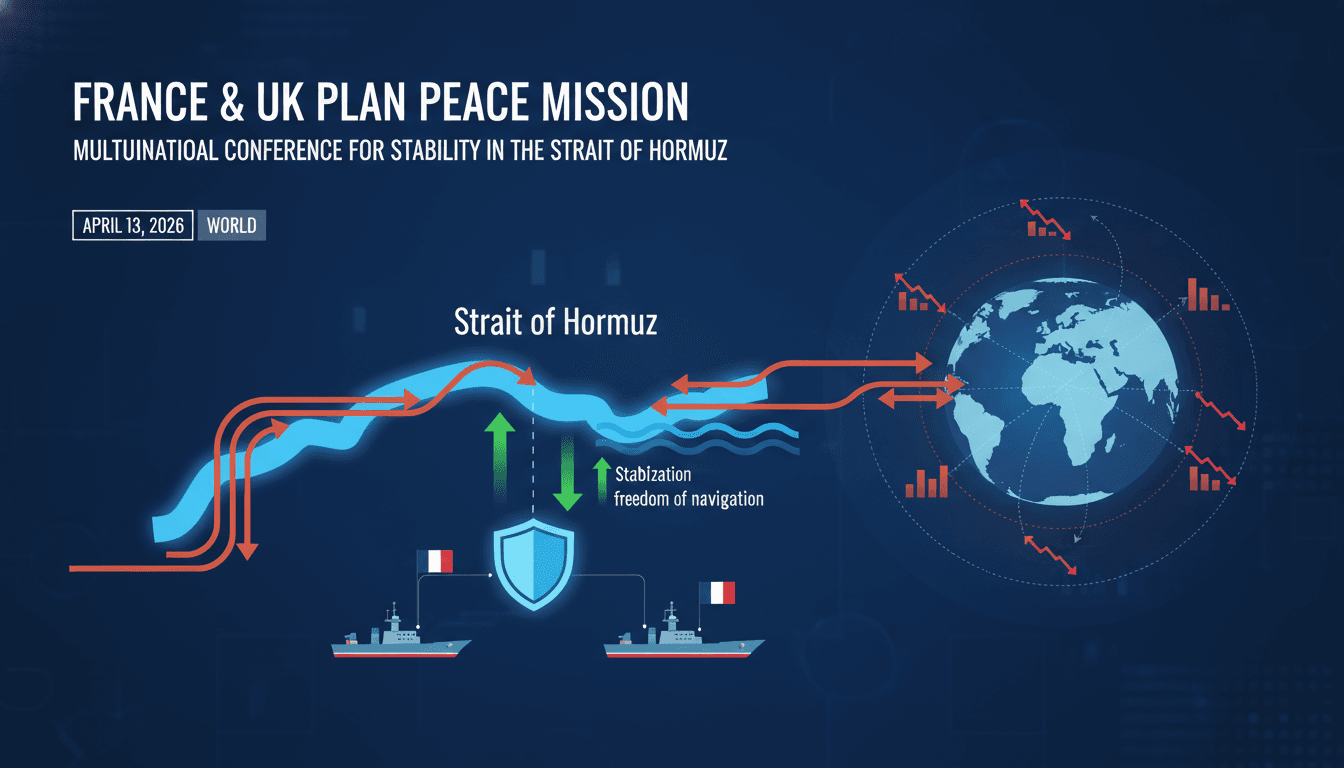
Here's what it means for you.
Rising oil prices and shipping disruptions could impact your daily expenses and business operations.
Why it matters
The Strait of Hormuz is a critical chokepoint for global oil supply, with 20% of the world's oil consumption transiting through it annually.
What happened (in 30 seconds)
- On April 13, 2026, French President Emmanuel Macron and British Prime Minister Keir Starmer announced plans for a multinational conference to establish a peaceful mission in the Strait of Hormuz.
- The mission aims to restore freedom of navigation and protect international shipping, distinguishing itself from the U.S. naval blockade of Iranian ports.
- The conference will involve over 40 countries and is scheduled for the week of April 13, 2026.
The context you actually need
- The Strait of Hormuz has faced significant disruptions since early 2026 due to escalating tensions between the U.S. and Iran, affecting global oil prices.
- Previous diplomatic efforts included France reaching out to 35 countries and the UK convening discussions with over 40 nations to explore non-military solutions.
- Oil prices have surged above $100 per barrel, creating inflationary pressures on transport, energy, and groceries, particularly impacting regions like Dubai.
What's really happening
The announcement of a multinational peace mission in the Strait of Hormuz reflects a strategic pivot by France and the UK away from U.S.-led military interventions. With the U.S. imposing a naval blockade on Iranian ports, tensions have escalated, leading to significant disruptions in one of the world's most vital maritime corridors. The Strait of Hormuz is not just a regional concern; it is a global oil lifeline, with 20% of the world's oil consumption passing through it annually.
The proposed mission is strictly defensive, aiming to ensure the safe passage of vessels and restore confidence in maritime trade. This approach is particularly relevant as oil prices have surged, exceeding $100 per barrel, which has direct implications for economies reliant on oil imports and exports. The conference, set to involve over 40 nations, signals a collective effort to address the crisis without resorting to military action, which could further destabilize the region.
The backdrop of this initiative includes a series of diplomatic overtures by France and the UK, who have sought to build a coalition of nations focused on maintaining navigation freedom. This coalition-building effort is crucial as it seeks to exclude combatants from the discussions, thereby fostering a more stable environment for negotiations. The rejection of U.S. participation in the blockade by both France and the UK indicates a desire to carve out a European-led response to the crisis, which could reshape international relations in the region.
As the situation evolves, the implications for global oil markets are significant. Disruptions in the Strait of Hormuz can lead to volatility in oil prices, affecting everything from transportation costs to consumer prices. For countries like the UAE, which rely heavily on oil exports, the stability of this waterway is paramount. The ongoing diplomatic efforts may help to de-escalate tensions and restore normalcy, but the path forward remains fraught with challenges.
Who feels it first (and how)
- Consumers: Higher fuel prices and increased costs for goods due to inflation.
- Businesses: Companies reliant on oil imports face rising operational costs, impacting profit margins.
- Shipping companies: Increased insurance costs and potential delays in shipping schedules.
- Governments: Economic pressures from rising oil prices may lead to public discontent and policy shifts.
What to watch next
- Conference outcomes: The effectiveness of the multinational conference in establishing a cohesive strategy for navigation safety will be critical.
- Oil price fluctuations: Monitor how oil prices respond to developments in the Strait of Hormuz and the success of diplomatic efforts.
- Regional stability: Watch for any changes in U.S.-Iran relations that could affect the security environment in the Gulf.
The Strait of Hormuz is vital for global oil transit, with 20% of consumption passing through it.
Oil prices will remain volatile as geopolitical tensions fluctuate.
The long-term effectiveness of the proposed multinational mission in ensuring navigation safety.
Frequently Asked Questions
- Why it matters?
- The Strait of Hormuz is a critical chokepoint for global oil supply, with 20% of the world's oil consumption transiting through it annually.
- What happened (in 30 seconds)?
- On April 13, 2026, French President Emmanuel Macron and British Prime Minister Keir Starmer announced plans for a multinational conference to establish a peaceful mission in the Strait of Hormuz. The mission aims to restore freedom of navigation and protect international shipping, distinguishing itself from the U.S. naval blockade of Iranian ports. The conference will involve over 40 countries and is scheduled for the week of April 13, 2026.
- What's really happening?
- The announcement of a multinational peace mission in the Strait of Hormuz reflects a strategic pivot by France and the UK away from U.S.-led military interventions. With the U.S. imposing a naval blockade on Iranian ports, tensions have escalated, leading to significant disruptions in one of the world's most vital maritime corridors. The Strait of Hormuz is not just a regional concern; it is a global oil lifeline, with 20% of the world's oil consumption passing through it annually. The propose
- Who feels it first (and how)?
- Consumers: Higher fuel prices and increased costs for goods due to inflation. Businesses: Companies reliant on oil imports face rising operational costs, impacting profit margins. Shipping companies: Increased insurance costs and potential delays in shipping schedules. Governments: Economic pressures from rising oil prices may lead to public discontent and policy shifts.
- What to watch next?
- Conference outcomes: The effectiveness of the multinational conference in establishing a cohesive strategy for navigation safety will be critical. Oil price fluctuations: Monitor how oil prices respond to developments in the Strait of Hormuz and the success of diplomatic efforts. Regional stability: Watch for any changes in U.S.-Iran relations that could affect the security environment in the Gulf.
Arabic-language political and world news coverage for UAE readers.
"Emarat Al Youm world coverage usually presents international developments through a UAE and Arab audience lens."
— A47 Editor
فرنسا وبريطانيا تعدّان لمحاثات بشأن مهمة "سلمية" لمضيق هرمز فرنسا وبريطانيا تعدّان لمحاثات بشأن مهمة "سلمية" لمضيق هرمز
France and Britain announced on Monday that they are preparing for discussions this week to explore the establishment of a multinational mission aimed at facilitating the safe passage of vessels through the Strait of Hormuz. This initiative comes ami...
Arabic-language coverage of political affairs and current events.
"Okaz political coverage typically follows mainstream Saudi framing on national and regional affairs."
— A47 Editor
ماكرون يعلن تنظيم مؤتمر دولي حول «هرمز» لاستعادة حرية الملاحة
French President Emmanuel Macron announced that France, in collaboration with the United Kingdom, will organize an international conference in the coming days focused on the Strait of Hormuz. The conference aims to gather countries interested in cont...
Pan-Arab news coverage spanning politics, business, sports, and regional affairs.
"Asharq Al-Awsat reflects a broad Arab editorial perspective with strong attention to regional geopolitics."
— A47 Editor
ماكرون: فرنسا وبريطانيا تعدّان لمحاثات بشأن مهمة «سلمية» لمضيق هرمز
French President Emmanuel Macron announced that Paris and London will hold talks aimed at establishing a 'multinational mission' to assist in restoring navigation through the Strait of Hormuz. This initiative reflects ongoing concerns about maritime ...
Regional coverage and analysis focused on politics, diplomacy, and business across the Middle East.
"Al-Monitor is known for analytical reporting on Middle East politics and policy developments."
— A47 Editor
UK and France to co-host talks this week on possible defensive naval mission for Hormuz
This week, the UK and France will co-host talks focused on restoring freedom of navigation in the Strait of Hormuz, with discussions on a potential strictly defensive naval mission as proposed by French President Emmanuel Macron. The initiative aims ...
Regional and international reporting focused on Middle Eastern politics, diplomacy, and economics.
"Asharq Al-Awsat is a Saudi-owned international newspaper reflecting mainstream Gulf political perspectives."
— A47 Editor
France, UK to Work on ‘Peaceful Multinational Mission’ for Hormuz
France and the UK are collaborating to establish a peaceful multinational mission aimed at securing the Strait of Hormuz, a vital maritime route for global oil transport. This initiative comes amid rising tensions in the region, particularly concerni...