
World Aquatics Allows Russian and Belarusian Athletes to Compete Under National Flags
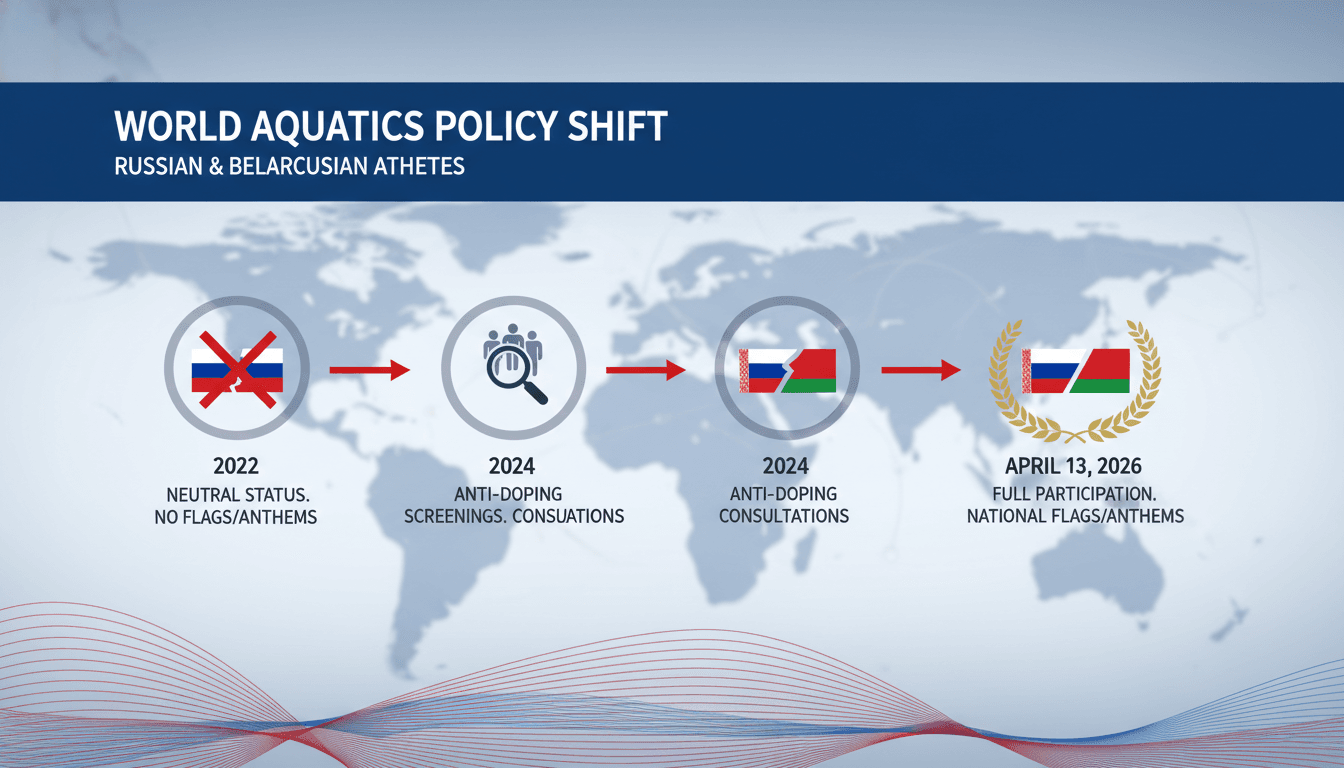
Here's what it means for you.
This policy shift could reshape international sports dynamics, impacting athletes and events globally.
Why it matters
This decision reflects ongoing geopolitical tensions and the complexities of maintaining competitive integrity in sports.
What happened (in 30 seconds)
- April 13, 2026: World Aquatics announced that senior athletes from Russia and Belarus can now compete under their national flags and anthems.
- Anti-doping measures: Athletes must pass four anti-doping controls and background checks to participate.
- Policy evolution: This marks the end of the neutral status imposed in 2023, following Russia's invasion of Ukraine.
The context you actually need
- Historical bans: Following the 2022 invasion of Ukraine, Russian and Belarusian athletes were barred from international competitions, reflecting a broader response to geopolitical conflicts.
- Gradual easing: Individual neutral participation was allowed in September 2023, and junior athletes regained national symbol rights in February 2026, indicating a trend towards normalization.
- International precedents: The decision aligns with the International Paralympic Committee's approach, suggesting a potential shift in how sports organizations navigate political conflicts.
What's really happening
The World Aquatics Bureau's decision to allow Russian and Belarusian athletes to compete under their national flags is a significant pivot in the landscape of international sports. This policy change comes after extensive consultations with the Aquatics Integrity Unit and the Athletes' Committee, emphasizing a commitment to maintaining competitive integrity while navigating complex geopolitical realities.
The backdrop of this decision is rooted in the ongoing tensions following Russia's invasion of Ukraine in 2022, which led to a comprehensive ban on athletes from both nations. This ban was not merely a punitive measure but a reflection of the broader international community's stance against aggression and the desire to uphold the values of peace and fairness in sports. However, as time progressed, the landscape began to shift. By September 2023, World Aquatics allowed individual athletes from these countries to compete as neutrals, provided they passed rigorous vetting processes. This gradual easing of restrictions indicated a willingness to reintegrate athletes into the global sports community, albeit under strict conditions.
The recent amendment, effective from April 2026, signifies a further step towards normalization. Athletes must now undergo four successive anti-doping controls and background checks, a move designed to ensure that the integrity of the sport is maintained. This requirement reflects a dual commitment: to uphold anti-doping standards while also acknowledging the athletes' rights to represent their nations.
The implications of this decision extend beyond the immediate realm of competitive swimming. It sets a precedent for other sports organizations grappling with similar dilemmas. The International Paralympic Committee's earlier decisions to allow Russian athletes to compete under neutral flags may have influenced World Aquatics' approach, highlighting a trend towards re-evaluating the balance between political considerations and the spirit of competition.
Moreover, this policy shift could have ripple effects on international sporting events, particularly in regions like the Middle East, where sports diplomacy plays a crucial role in fostering relationships. The involvement of World Aquatics President Husain Al-Musallam, who has regional ties and has praised the UAE's aquatic development, suggests that this decision may also be viewed through the lens of regional sports development and collaboration.
As the world watches how this decision unfolds, it raises questions about the future of international sports governance and the potential for further policy shifts in response to geopolitical events. The balance between maintaining competitive integrity and addressing political realities will continue to be a delicate dance for sports organizations worldwide.
Who feels it first (and how)
- Athletes: Russian and Belarusian athletes regain the ability to compete under their national flags, impacting their careers and national pride.
- Sports organizations: International federations must navigate the complexities of athlete representation and geopolitical implications.
- Event organizers: Hosts of international competitions may face pressure and scrutiny regarding participation policies and athlete safety.
- Fans and sponsors: Public sentiment may influence sponsorship decisions and fan engagement, particularly in regions with strong political views.
What to watch next
- Upcoming competitions: Monitor how many Russian and Belarusian athletes participate in major events and the public's reaction to their presence.
- Anti-doping compliance: Watch for any violations or controversies arising from the new anti-doping requirements, which could impact athlete eligibility.
- Geopolitical responses: Observe how other nations and sports organizations react to this policy change, particularly in light of ongoing tensions in Eastern Europe.
The policy allows Russian and Belarusian athletes to compete under their national flags, contingent on anti-doping compliance.
Other sports organizations may follow suit, leading to a broader normalization of Russian and Belarusian participation in international competitions.
The long-term impact on international relations and athlete sentiment remains uncertain, particularly in light of ongoing geopolitical tensions.
This article was generated by AI from 4 verified sources and reviewed by A47 editorial systems.
Breaking news, scores, player stats, and analysis across all major sports.
"Yahoo Sports is a comprehensive digital sports destination known for stats, fantasy sports, and real-time updates."
— A47 Editor
Russian, Belarusian swimmers free to compete under own flag
Athletes from Russia and Belarus are now permitted to compete under their own flags in senior World Aquatics events, following the lifting of a ban by the global governing body. This decision allows these athletes to participate with their national u...
Global news coverage with extensive reporting on Middle Eastern conflicts and geopolitics.
"Al Jazeera is a Qatar-based broadcaster known for wide regional coverage and alternative perspectives."
— A47 Editor
Flag, anthem restrictions dropped for Russian, Belarusian swimmers
Sports-governing bodies have announced the removal of restrictions on the display of flags and anthems for Russian and Belarusian swimmers, signaling a significant shift in policy towards athletes from these countries. This decision reflects a broade...
Comprehensive coverage of Middle Eastern and global issues.
"Al Jazeera is a prominent voice from the Global South, especially the Middle East, with an emphasis on underreported stories."
— A47 Editor
Flag, anthem restrictions dropped for Russian, Belarusian swimmers
Sports-governing bodies have announced the removal of restrictions on the display of flags and anthems for Russian and Belarusian swimmers, signaling a significant shift in policy towards athletes from these countries. This decision reflects a broade...
Regional and international reporting focused on Middle Eastern politics, diplomacy, and economics.
"Asharq Al-Awsat is a Saudi-owned international newspaper reflecting mainstream Gulf political perspectives."
— A47 Editor
Russian Swimmers to be Allowed to Compete with Flag and Anthem after Restrictions Dropped
Russian swimmers will now be permitted to compete under their national flag and anthem following the lifting of previous restrictions. This decision marks a significant change in the competitive landscape for these athletes, allowing them to represen...
Pan-Arab news coverage spanning politics, business, sports, and regional affairs.
"Asharq Al-Awsat reflects a broad Arab editorial perspective with strong attention to regional geopolitics."
— A47 Editor
السماح للسباحين الروس والبيلاروس بالمشاركة في البطولات «دون قيود»
The International Swimming Federation announced on Monday the lifting of all restrictions on Russian and Belarusian swimmers, allowing them to participate in international competitions without limitations. This decision marks a significant change in ...