
UAE, Kuwait, and Bahrain Intercept Iranian Missiles and Drones Following US-Iran Ceasefire Announcement
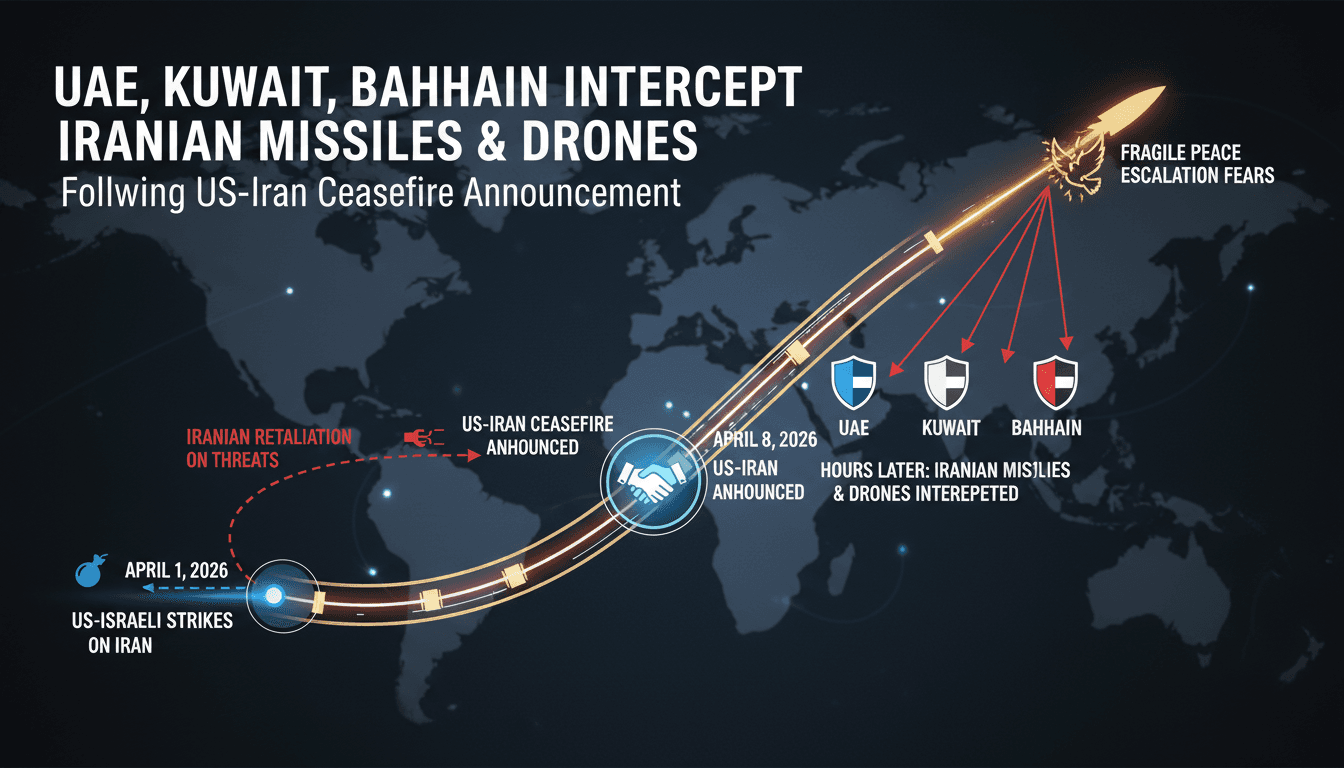
Here's what it means for you.
If you rely on global oil supplies or are involved in international trade, the escalating tensions in the Gulf could impact prices and availability.
Why it matters
The ongoing conflict in the Gulf region threatens global oil supply chains and could lead to increased energy prices.
What happened (in 30 seconds)
- Iran launched drone and missile attacks on the UAE, Kuwait, and Bahrain just hours after a US-Iran ceasefire was announced.
- 28 drones were intercepted by Kuwaiti defenses, causing damage to critical infrastructure but resulting in limited casualties.
- Iran retaliated by claiming an attack on its Lavan Island oil refinery, further escalating tensions in the region.
The context you actually need
- Escalation timeline: The conflict intensified on February 28, 2026, when US and Israeli forces struck Iranian targets, leading to Iranian counterattacks on Gulf states.
- Ceasefire announcement: A two-week ceasefire was brokered by Pakistan, but it was quickly undermined by the missile strikes.
- Infrastructure vulnerability: The Gulf states' reliance on oil and water desalination makes them particularly susceptible to drone and missile attacks, raising concerns about regional stability.
What's really happening
The recent missile and drone strikes from Iran are a direct response to the ongoing military actions by the US and Israel against Iranian targets. The conflict has escalated significantly since late February 2026, when the US and its allies initiated a series of strikes aimed at crippling Iran's military capabilities. This has led to a cycle of retaliation, with Iran targeting the critical infrastructure of Gulf states, which are seen as allies of the US.
The announcement of a ceasefire on April 8, 2026, was intended to provide a temporary respite in hostilities, but the rapid succession of attacks indicates a fragile peace. The intercepted drones and missiles targeted vital installations such as oil facilities, power stations, and desalination plants, which are essential for the functioning of these Gulf economies. The fact that 28 drones were intercepted highlights the scale of the threat posed by Iran's military capabilities and the urgency for Gulf states to bolster their defense systems.
Moreover, the attacks underscore the geopolitical stakes involved. The Strait of Hormuz, a crucial chokepoint for global oil transit, remains a focal point of tension. Iran's previous threats to close the strait have already disrupted one-fifth of the world's oil supply, leading to heightened concerns among global markets. The US's ultimatum to Iran to reopen the strait or face severe consequences has only added to the volatility.
The implications of these developments extend beyond immediate military concerns. The ongoing conflict affects global energy prices, trade routes, and diplomatic relations. As Gulf states increase their military readiness, there is a risk of further escalation, which could lead to broader regional instability. Additionally, the potential for retaliatory strikes from Gulf states against Iranian interests could spiral into a larger conflict, drawing in other regional and global powers.
In summary, the situation is precarious, with the potential for further military actions and economic repercussions. The fragile ceasefire may not hold, and the cycle of violence could continue, impacting not only the Gulf states but also global markets and international relations.
Who feels it first (and how)
- Oil and gas companies: Increased operational risks and potential supply chain disruptions.
- International traders: Fluctuations in oil prices could affect trade costs and logistics.
- Local populations in Gulf states: Increased military presence and potential for civilian casualties or infrastructure damage.
- Global consumers: Rising energy prices could lead to higher costs for goods and services.
What to watch next
- Oil price fluctuations: Monitor how global oil prices respond to ongoing tensions, as they could rise sharply with further escalations.
- Military readiness in Gulf states: Watch for announcements regarding increased military spending or defense collaborations among Gulf nations.
- Diplomatic negotiations: Keep an eye on any new peace talks or mediation efforts, particularly involving Pakistan or other regional players.
The US-Iran ceasefire is fragile, and tensions remain high in the Gulf region.
Further military engagements could occur if the ceasefire fails, impacting global oil supply.
The long-term effects on global energy markets and regional stability remain uncertain.
Frequently Asked Questions
- Why it matters?
- The ongoing conflict in the Gulf region threatens global oil supply chains and could lead to increased energy prices.
- What happened (in 30 seconds)?
- Iran launched drone and missile attacks on the UAE, Kuwait, and Bahrain just hours after a US-Iran ceasefire was announced. 28 drones were intercepted by Kuwaiti defenses, causing damage to critical infrastructure but resulting in limited casualties. Iran retaliated by claiming an attack on its Lavan Island oil refinery, further escalating tensions in the region.
- What's really happening?
- The recent missile and drone strikes from Iran are a direct response to the ongoing military actions by the US and Israel against Iranian targets. The conflict has escalated significantly since late February 2026, when the US and its allies initiated a series of strikes aimed at crippling Iran's military capabilities. This has led to a cycle of retaliation, with Iran targeting the critical infrastructure of Gulf states, which are seen as allies of the US. The announcement of a ceasefire on Apri
- Who feels it first (and how)?
- Oil and gas companies: Increased operational risks and potential supply chain disruptions. International traders: Fluctuations in oil prices could affect trade costs and logistics. Local populations in Gulf states: Increased military presence and potential for civilian casualties or infrastructure damage. Global consumers: Rising energy prices could lead to higher costs for goods and services.
- What to watch next?
- Oil price fluctuations: Monitor how global oil prices respond to ongoing tensions, as they could rise sharply with further escalations. Military readiness in Gulf states: Watch for announcements regarding increased military spending or defense collaborations among Gulf nations. Diplomatic negotiations: Keep an eye on any new peace talks or mediation efforts, particularly involving Pakistan or other regional players.
Global news coverage with extensive reporting on Middle Eastern conflicts and geopolitics.
"Al Jazeera is a Qatar-based broadcaster known for wide regional coverage and alternative perspectives."
— A47 Editor
UAE, Kuwait, Bahrain report attacks despite Iran-US ceasefire
Despite a newly announced two-week ceasefire between the United States and Iran, reports of attacks have emerged from the UAE, Kuwait, and Bahrain, indicating ongoing tensions in the Gulf region. These strikes occurred just hours after the ceasefire ...
24/7 international news from a French perspective in multiple languages.
"France 24 is viewed as a globally focused outlet with balanced coverage and a European perspective."
— A47 Editor
Gulf countries report attacks despite Iran ceasefire
Gulf countries, including Qatar, the United Arab Emirates, and Saudi Arabia, reported missile attacks attributed to Iran, despite a recently announced ceasefire between Iran, the US, and Israel. Interceptions occurred in Qatar and the UAE, while sire...