
Macron Condemns Israeli Airstrikes on Lebanon Amid US-Iran Ceasefire Tensions
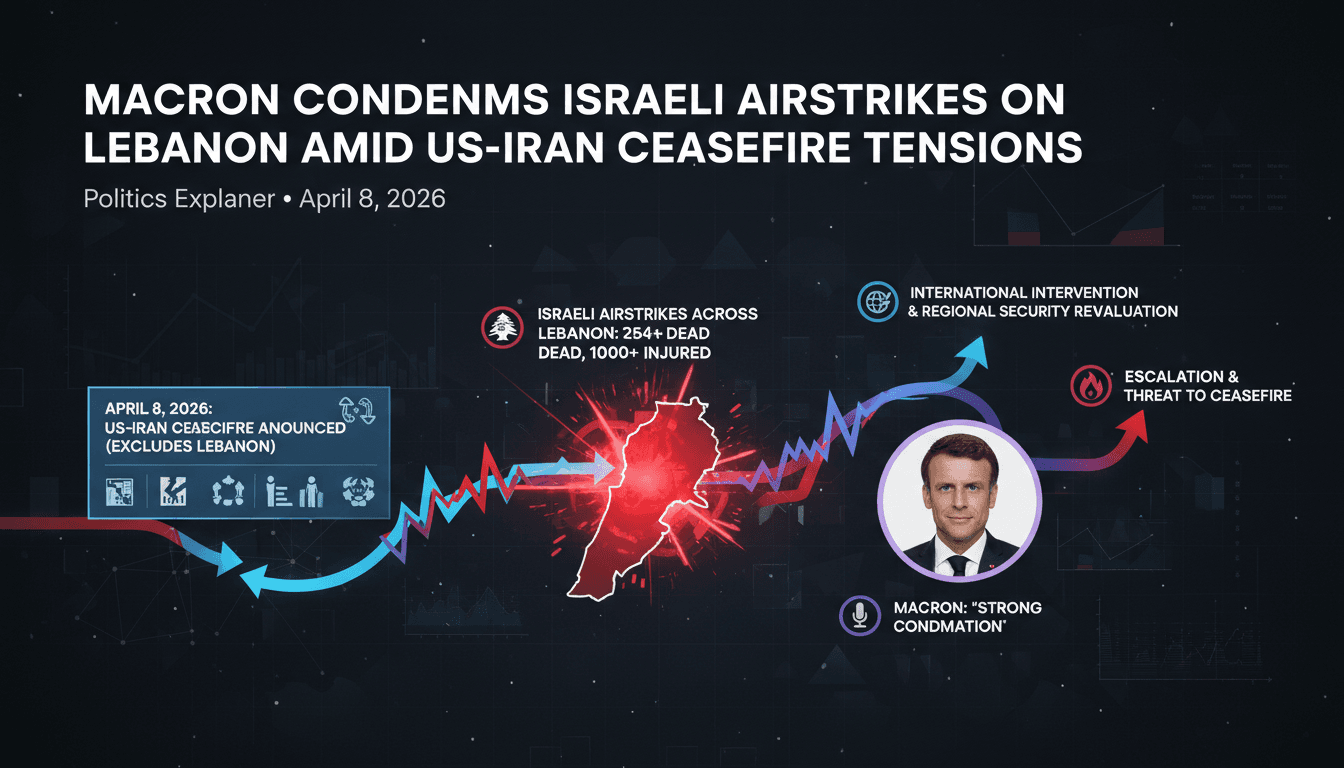
Here's what it means for you.
Heightened tensions in the Middle East could disrupt global markets and travel, impacting your professional landscape.
Why it matters
The Israeli airstrikes threaten the fragile US-Iran ceasefire, potentially escalating regional conflicts that affect global stability.
What happened (in 30 seconds)
- Macron condemned Israeli airstrikes on Lebanon that killed at least 254 people and injured over 1,000.
- Israel targeted over 100 Hezbollah sites amid ongoing conflict, claiming it was a necessary preemptive measure.
- Lebanese officials labeled the strikes as war crimes, calling for international intervention and support for Lebanese sovereignty.
The context you actually need
- Escalating conflict: The airstrikes are part of a broader Israel-Hezbollah conflict that has persisted since 2024, despite previous ceasefires.
- Ceasefire implications: The newly announced US-Iran ceasefire excluded Lebanon, prompting Israel's preemptive strikes on Hezbollah infrastructure.
- International reactions: Global leaders, including Macron, have condemned the strikes, highlighting the need for de-escalation and protection of Lebanese sovereignty.
What's really happening
On April 8, 2026, Israel launched a significant military operation against Hezbollah in Lebanon, executing over 100 airstrikes in a rapid succession that resulted in substantial civilian casualties. This operation was framed by Israeli officials as a necessary response to perceived threats from Hezbollah, particularly in light of a recent US-Iran ceasefire announcement that did not include Lebanon. The strikes targeted key Hezbollah infrastructure, including command centers located in civilian areas, which Israel claimed was essential to weaken the group’s military capabilities.
French President Emmanuel Macron's condemnation of the airstrikes underscores the international community's concern over the potential for escalating violence in the region. Macron's calls for solidarity with Lebanon and his insistence that the ceasefire should encompass Lebanon reflect a growing recognition that the ongoing conflict poses a significant risk not only to regional stability but also to broader international peace efforts. The strikes have been described as the most significant military action against Hezbollah since "Operation Beepers," indicating a strategic shift in Israel's military posture.
The aftermath of the airstrikes has seen a flurry of diplomatic activity, with Lebanon's government labeling the strikes as war crimes and urging international intervention. The United Nations has called for an immediate halt to hostilities, emphasizing the need for adherence to UN Resolution 1701, which aims to maintain peace in the region. The potential for retaliation from Hezbollah adds another layer of complexity to the situation, as the group has vowed to respond to the strikes, which could further escalate tensions.
The economic implications of this conflict are also noteworthy. While immediate market shifts were not reported, the heightened tensions have historically led to volatility in oil prices and disruptions in air travel, particularly affecting routes to and from Lebanon and Israel. Airlines such as Wizz Air have previously canceled routes amid regional escalations, and the ongoing conflict could prompt similar actions, impacting travel plans and economic activities in the region.
Who feels it first (and how)
- Travelers: Increased flight cancellations and disruptions to travel plans to Lebanon and Israel.
- Investors: Potential volatility in oil prices and regional markets, affecting investment strategies.
- Businesses in the UAE: Heightened tensions may lead to airspace closures, impacting logistics and supply chains.
What to watch next
- International diplomatic efforts: Watch for developments in peace talks and international responses to the airstrikes, as these will influence regional stability.
- Hezbollah's response: Monitor Hezbollah's actions in the aftermath of the strikes, as retaliation could escalate the conflict further.
- Market reactions: Keep an eye on oil prices and airline stocks, as increased tensions may lead to volatility in these sectors.
The airstrikes resulted in significant civilian casualties and international condemnation.
Increased diplomatic efforts to de-escalate tensions in the region will emerge.
The long-term impact on the US-Iran ceasefire and its implications for Lebanon remain uncertain.
Frequently Asked Questions
- Why it matters?
- The Israeli airstrikes threaten the fragile US-Iran ceasefire, potentially escalating regional conflicts that affect global stability.
- What happened (in 30 seconds)?
- Macron condemned Israeli airstrikes on Lebanon that killed at least 254 people and injured over 1,000. Israel targeted over 100 Hezbollah sites amid ongoing conflict, claiming it was a necessary preemptive measure. Lebanese officials labeled the strikes as war crimes, calling for international intervention and support for Lebanese sovereignty.
- What's really happening?
- On April 8, 2026, Israel launched a significant military operation against Hezbollah in Lebanon, executing over 100 airstrikes in a rapid succession that resulted in substantial civilian casualties. This operation was framed by Israeli officials as a necessary response to perceived threats from Hezbollah, particularly in light of a recent US-Iran ceasefire announcement that did not include Lebanon. The strikes targeted key Hezbollah infrastructure, including command centers located in civilian a
- Who feels it first (and how)?
- Travelers: Increased flight cancellations and disruptions to travel plans to Lebanon and Israel. Investors: Potential volatility in oil prices and regional markets, affecting investment strategies. Businesses in the UAE: Heightened tensions may lead to airspace closures, impacting logistics and supply chains.
- What to watch next?
- International diplomatic efforts: Watch for developments in peace talks and international responses to the airstrikes, as these will influence regional stability. Hezbollah's response: Monitor Hezbollah's actions in the aftermath of the strikes, as retaliation could escalate the conflict further. Market reactions: Keep an eye on oil prices and airline stocks, as increased tensions may lead to volatility in these sectors.
English-language reporting on Saudi politics, policy, and society.
"Saudi Gazette reflects mainstream Saudi institutional perspectives."
— A47 Editor
France's Macron strongly condemns Israel's strikes on Lebanon
French President Emmanuel Macron condemned the recent Israeli airstrikes on Lebanon during phone calls with Lebanese leaders, expressing solidarity following the attacks that resulted in significant civilian casualties. At least 254 people were repor...
English-language news from Qatar covering domestic and regional affairs.
"Gulf Times reflects Qatari perspectives on regional developments."
— A47 Editor
French President working on securing a ceasefire in Lebanon
French President Emmanuel Macron has engaged in discussions with Lebanese Prime Minister Nawaf Salam, focusing on efforts to secure a ceasefire in Lebanon amid escalating tensions in the region. This communication underscores France's active diplomat...
Capitol Hill news, legislation, and policy insight.
"The Hill specializes in U.S. politics and policy, with a focus on Capitol Hill developments and a reputation for insider reporting."
— A47 Editor
Emmanuel Macron condemns Lebanon strikes, says he's spoken with country's leaders
French President Emmanuel Macron condemned recent Israeli strikes in Lebanon, emphasizing the need for dialogue with Lebanese leaders, including President Joseph Aoun and Prime Minister Nawaf Salam, amid escalating tensions following a fragile U.S.-I...