
US and Iran Agree to Conditional Two-Week Ceasefire Amid Ongoing Conflict
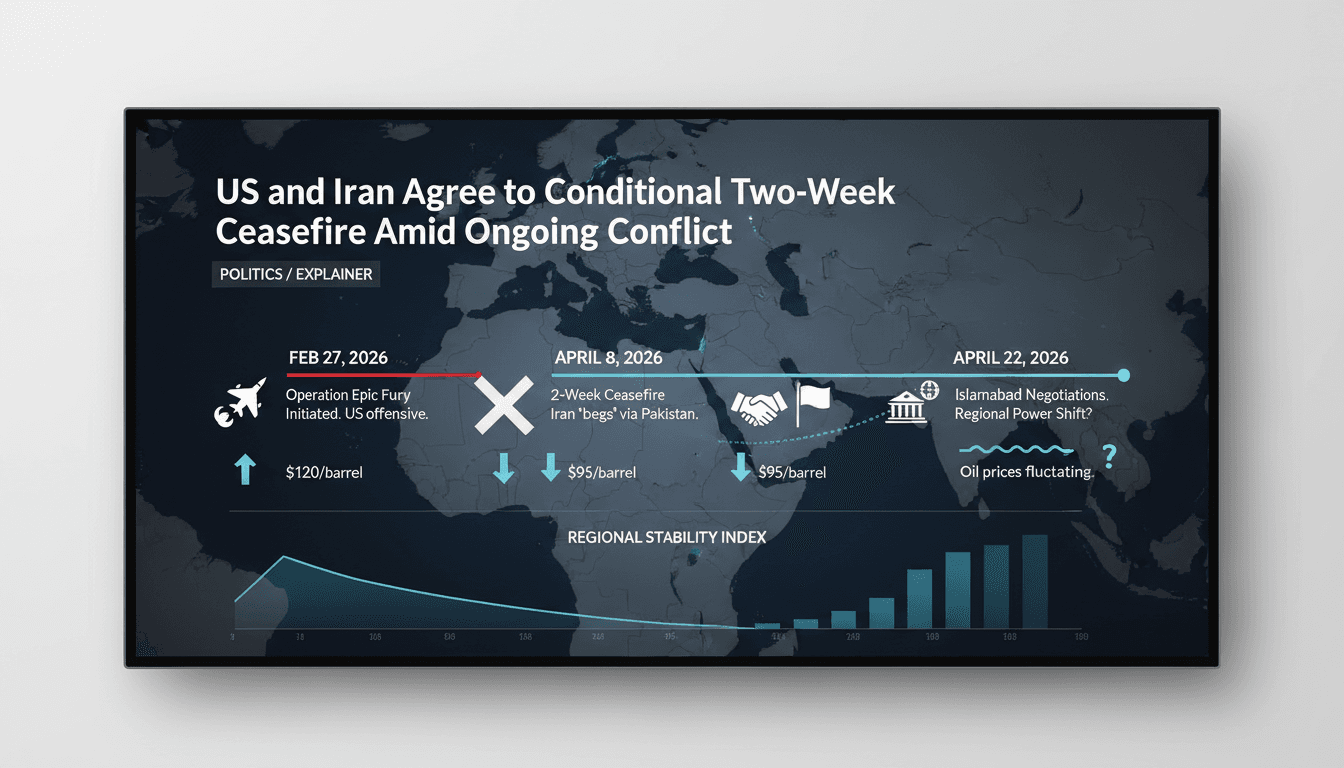
Here's what it means for you.
The recent US-Iran ceasefire could stabilize oil prices and enhance economic conditions in the Gulf region, impacting global markets.
Why it matters
This ceasefire agreement signals a potential de-escalation in Middle Eastern tensions, which can influence global energy markets and economic stability.
What happened (in 30 seconds)
- April 8, 2026: US Secretary of Defense Pete Hegseth claimed Iran 'begged' for a ceasefire during a Pentagon briefing, following a two-week pause agreement mediated by Pakistan.
- Operation Epic Fury: This military operation, which began on February 28, 2026, resulted in significant damage to Iran's military capabilities, including the death of Supreme Leader Ali Khamenei.
- Ceasefire terms: The agreement requires Iran to reopen the Strait of Hormuz and suspends US strikes, paving the way for negotiations in Islamabad.
The context you actually need
- Conflict initiation: The US-Iran conflict escalated rapidly, with nearly 900 strikes conducted by US and Israeli forces on the first day, targeting Iranian military infrastructure.
- Economic impact: The conflict led to significant economic losses in the UAE, with market losses estimated at $120 billion, and oil prices spiking above $110 per barrel.
- Regional dynamics: The ceasefire has implications for regional players, including Israel and the Gulf states, as it alters the military and economic landscape in the Middle East.
What's really happening
The recent ceasefire between the US and Iran, announced on April 7, 2026, marks a critical juncture in Middle Eastern geopolitics. Following a month-long conflict that began with the US and Israel launching a coordinated military operation against Iran, the situation escalated quickly, resulting in significant casualties and infrastructure damage. The operation, known as Epic Fury, was characterized by nearly 900 airstrikes in the first 12 hours alone, targeting key military installations and leadership figures, including the assassination of Supreme Leader Ali Khamenei.
The ceasefire agreement, mediated by Pakistan, requires Iran to reopen the strategically vital Strait of Hormuz, a critical chokepoint for global oil shipments. In exchange, the US has agreed to suspend military strikes, creating a temporary pause in hostilities. This conditional agreement reflects the dire situation on the ground, where Iran's military capabilities have been severely compromised, prompting claims from US officials that Iran 'begged' for a ceasefire.
The implications of this ceasefire extend beyond immediate military concerns. The reopening of the Strait of Hormuz is expected to stabilize oil prices, which had surged during the conflict, affecting global markets. The UAE, which faced repeated missile and drone attacks from Iran, has already seen its equity markets respond positively to the ceasefire announcement, with gains reported in the Dubai index.
Moreover, the ceasefire opens the door for diplomatic negotiations in Islamabad, where both US and Iranian officials are expected to engage in discussions regarding future relations and regional stability. However, the situation remains precarious, as Iran has asserted its war objectives were achieved and warned of a forceful response to any provocations. Israel has also indicated that its military operations in Lebanon remain unaffected by the ceasefire, highlighting the complex dynamics at play.
In summary, while the ceasefire represents a significant step towards de-escalation, the underlying tensions between regional powers and the potential for future conflict remain unresolved. The international community will be closely monitoring the developments in the coming weeks as negotiations unfold.
Who feels it first (and how)
- Oil traders: Fluctuations in oil prices will directly impact traders and investors in the energy sector.
- Gulf residents: Citizens in the UAE and surrounding areas will experience immediate effects from reduced military tensions and potential economic recovery.
- International businesses: Companies with interests in the Middle East will benefit from a more stable environment for trade and investment.
What to watch next
- Oil price trends: Monitor how oil prices react to the reopening of the Strait of Hormuz, as stability in this region can influence global energy markets.
- Diplomatic negotiations: Watch for developments from the talks in Islamabad, as successful negotiations could lead to a more permanent resolution and reshape regional alliances.
- Military movements: Keep an eye on any changes in military posturing from Israel and Iran, as these could indicate whether the ceasefire is holding or if tensions are escalating again.
The ceasefire is currently in effect, and Iran has dispatched a delegation for negotiations.
Oil prices will stabilize as the Strait of Hormuz reopens, benefiting global markets.
The long-term effectiveness of the ceasefire and its impact on regional security dynamics remains uncertain.
Frequently Asked Questions
- Why it matters?
- This ceasefire agreement signals a potential de-escalation in Middle Eastern tensions, which can influence global energy markets and economic stability.
- What happened (in 30 seconds)?
- April 8, 2026: US Secretary of Defense Pete Hegseth claimed Iran 'begged' for a ceasefire during a Pentagon briefing, following a two-week pause agreement mediated by Pakistan. Operation Epic Fury: This military operation, which began on February 28, 2026, resulted in significant damage to Iran's military capabilities, including the death of Supreme Leader Ali Khamenei. Ceasefire terms: The agreement requires Iran to reopen the Strait of Hormuz and suspends US strikes, paving the way for neg
- What's really happening?
- The recent ceasefire between the US and Iran, announced on April 7, 2026, marks a critical juncture in Middle Eastern geopolitics. Following a month-long conflict that began with the US and Israel launching a coordinated military operation against Iran, the situation escalated quickly, resulting in significant casualties and infrastructure damage. The operation, known as Epic Fury, was characterized by nearly 900 airstrikes in the first 12 hours alone, targeting key military installations and le
- Who feels it first (and how)?
- Oil traders: Fluctuations in oil prices will directly impact traders and investors in the energy sector. Gulf residents: Citizens in the UAE and surrounding areas will experience immediate effects from reduced military tensions and potential economic recovery. International businesses: Companies with interests in the Middle East will benefit from a more stable environment for trade and investment.
- What to watch next?
- Oil price trends: Monitor how oil prices react to the reopening of the Strait of Hormuz, as stability in this region can influence global energy markets. Diplomatic negotiations: Watch for developments from the talks in Islamabad, as successful negotiations could lead to a more permanent resolution and reshape regional alliances. Military movements: Keep an eye on any changes in military posturing from Israel and Iran, as these could indicate whether the ceasefire is holding or if tensions a
News from the United States including domestic politics, society, and culture.
"The Guardian is known for its progressive editorial stance and in-depth analysis, often advocating for social justice, environmental issues, and liberal values."
— A47 Editor
Hegseth claims Iran ‘begged’ for ceasefire after US and Tehran agree to two-week pause
U.S. Defense Secretary Pete Hegseth announced a two-week ceasefire with Iran, claiming that Iran had 'begged' for the pause after a prolonged military campaign that left its military severely weakened. This ceasefire follows a series of threats from ...
Comprehensive coverage of Middle Eastern and global issues.
"Al Jazeera is a prominent voice from the Global South, especially the Middle East, with an emphasis on underreported stories."
— A47 Editor
Hegseth: Iran ‘begged’ for ceasefire, claims ‘historic victory’
U.S. Defense Secretary Pete Hegseth announced a two-week ceasefire with Iran, claiming that Iran had 'begged' for the pause after a prolonged military campaign that left its military severely weakened. This ceasefire follows intense military exchange...
Global news coverage with extensive reporting on Middle Eastern conflicts and geopolitics.
"Al Jazeera is a Qatar-based broadcaster known for wide regional coverage and alternative perspectives."
— A47 Editor
Hegseth: Iran ‘begged’ for ceasefire, claims ‘historic victory’
U.S. Defense Secretary Pete Hegseth announced a two-week ceasefire with Iran, claiming that Iran had 'begged' for the pause after a prolonged military campaign that left its military severely weakened. This ceasefire follows intense military exchange...
24/7 international news from a French perspective in multiple languages.
"France 24 is viewed as a globally focused outlet with balanced coverage and a European perspective."
— A47 Editor
Hegseth hails Iran 'victory' as confusion remains over ceasefire deal
U.S. Defense Secretary Pete Hegseth announced a significant military victory over Iran, claiming that Tehran's missile program has been effectively destroyed. This statement follows a two-week ceasefire agreement between the United States and Iran, a...
Global news coverage with extensive reporting on Middle Eastern conflicts and geopolitics.
"Al Jazeera is a Qatar-based broadcaster known for wide regional coverage and alternative perspectives."
— A47 Editor
Hegseth touts US ‘victory’ over Iran as Tehran hails its own ‘historic’ win
U.S. Defense Secretary Pete Hegseth declared a total military victory over Iran, coinciding with Tehran's assertion of a historic win amid a newly announced two-week ceasefire. This ceasefire follows intense military exchanges and diplomatic negotiat...
Comprehensive coverage of Middle Eastern and global issues.
"Al Jazeera is a prominent voice from the Global South, especially the Middle East, with an emphasis on underreported stories."
— A47 Editor
Hegseth touts US ‘victory’ over Iran as Tehran hails its own ‘historic’ win
U.S. Defense Secretary Pete Hegseth announced a total military victory over Iran, coinciding with Tehran's declaration of a historic win amid a newly agreed two-week ceasefire. This ceasefire follows intense military conflict, during which Hegseth cl...
International coverage from The Guardian's global desks.
"The Guardian is known for its progressive editorial stance and in-depth analysis."
— A47 Editor
Hegseth claims Iran ‘begged’ for ceasefire after US and Tehran agree to two-week pause
U.S. Defense Secretary Pete Hegseth announced that Iran had 'begged' for a ceasefire after a two-week pause in hostilities was agreed upon by the U.S. and Iran, following 40 days of intense conflict. This ceasefire was announced by President Donald T...