
U.S. Naval Blockade on Iranian Ports Triggers Wall Street Decline
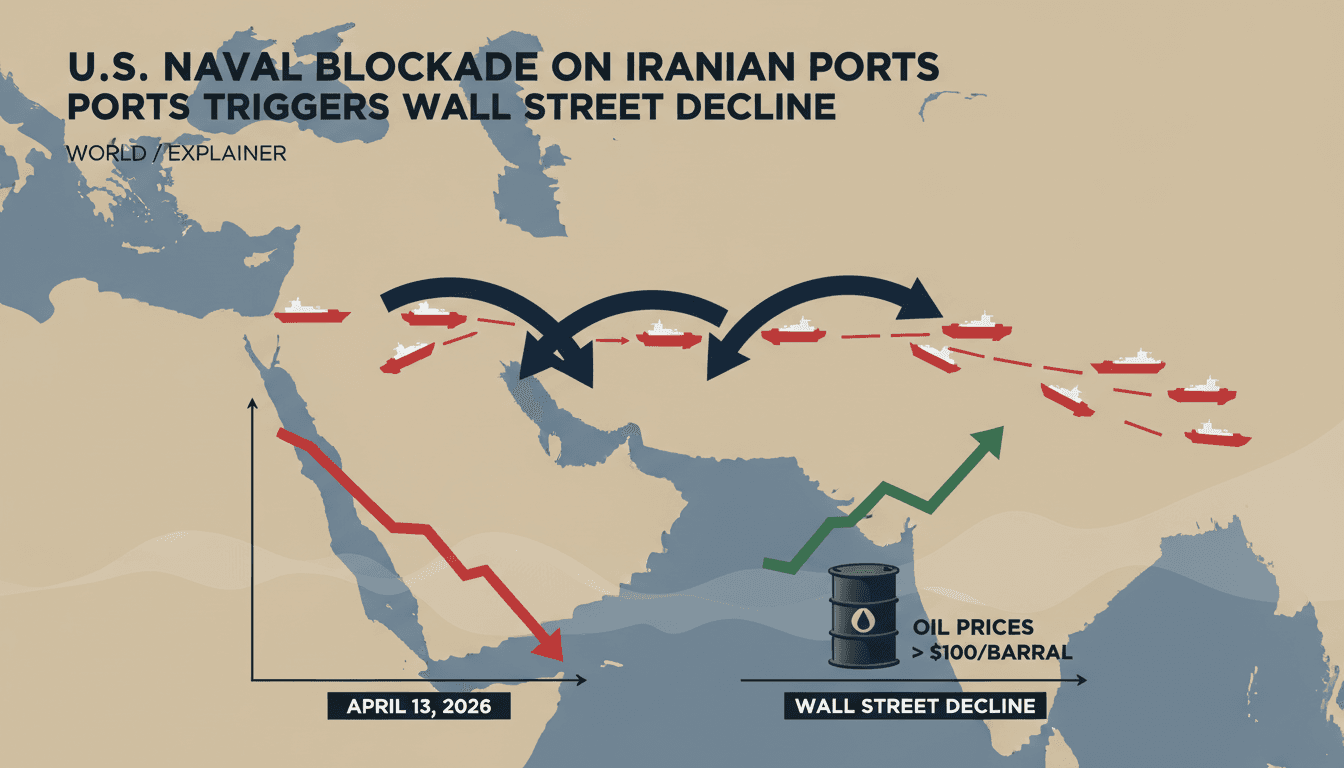
Here's what it means for you.
If you're in Dubai, expect higher fuel prices and potential shipping delays due to escalating tensions in the Strait of Hormuz.
Why it matters
The U.S. naval blockade in the Strait of Hormuz threatens global oil supply, impacting prices and economic stability worldwide.
What happened (in 30 seconds)
- Wall Street indices declined on April 13, 2026, following President Trump's announcement of a naval blockade targeting Iranian ports.
- Oil prices surged above $100 per barrel due to fears of prolonged conflict after failed peace talks.
- Market reassessment occurred as investors reacted to the heightened risks associated with U.S.-Iran tensions.
The context you actually need
- Peace talks collapsed on April 12, 2026, leading to the blockade announcement, escalating an ongoing U.S.-Iran conflict.
- Strait of Hormuz is a critical chokepoint for global oil transit, with 20-30% of oil passing through, making disruptions significant.
- Investor sentiment shifted sharply, with major indices previously gaining on ceasefire optimism before the blockade announcement.
What's really happening
On April 12, 2026, U.S.-Iran peace negotiations in Islamabad fell apart, leading President Trump to announce a naval blockade on all vessels entering or exiting Iranian ports in the Strait of Hormuz. This strategic move was intended to counter Iran's alleged disruptions to shipping in a region crucial for global oil transit. The U.S. Central Command confirmed that operations would commence on April 13 at 10:00 a.m. ET, further heightening market anxieties.
The immediate financial repercussions were palpable. Major Wall Street indices opened lower, with the Dow Jones Industrial Average dropping 0.83%, the S&P 500 declining 0.31%, and the Nasdaq Composite falling 0.33%. This downturn reflected a rapid reassessment of conflict risks among investors, who had previously enjoyed a surge in stock values driven by optimism from a two-week ceasefire. The S&P 500 had risen 3.6%, and the Nasdaq had gained 4.7%, indicating a stark reversal in sentiment.
Oil prices, which had already been on the rise, surged above $100 per barrel following the blockade announcement. This spike is particularly concerning given that the Strait of Hormuz is a vital corridor for oil shipments, with disruptions potentially leading to a broader energy crisis. Analysts warn that the blockade could exacerbate existing supply chain issues and drive prices even higher, impacting consumers and businesses alike.
In response to the blockade, Iran's Revolutionary Guards threatened retaliation against regional ports, signaling a potential escalation of military tensions. Meanwhile, the UK declined to participate in the blockade, and China called for navigation security, highlighting the geopolitical ramifications of the U.S. decision. The UAE, while positioned to mitigate some risks through its Habshan-Fujairah pipeline, is not immune to the economic fallout, as residents face elevated fuel and commodity prices.
The blockade's announcement and the subsequent market reactions illustrate the interconnectedness of geopolitical events and financial markets. Investors are now bracing for further escalation, with companies like Goldman Sachs seeing share prices drop by 3% despite positive earnings reports, indicating a growing concern over the potential for prolonged conflict.
Who feels it first (and how)
- Investors: Immediate market volatility affects portfolios and investment strategies.
- Consumers in Dubai: Higher fuel prices and potential shipping delays impact daily expenses and access to goods.
- Oil companies: Fluctuating prices affect profit margins and operational costs.
- Shipping sectors: Increased insurance costs and logistical challenges arise from heightened geopolitical risks.
What to watch next
- Oil price trends: Monitoring fluctuations in oil prices will be crucial as they directly affect global markets and consumer costs.
- Geopolitical developments: Any further announcements from the U.S. or Iran regarding military actions or diplomatic efforts will shape market sentiment.
- Market reactions: Watch for how Wall Street indices respond to ongoing tensions, as investor confidence can shift rapidly.
Oil prices have surged above $100 per barrel following the blockade announcement.
Continued volatility in financial markets as investors react to geopolitical tensions.
The long-term impact on global oil supply and economic stability remains uncertain.
Frequently Asked Questions
- Why it matters?
- The U.S. naval blockade in the Strait of Hormuz threatens global oil supply, impacting prices and economic stability worldwide.
- What happened (in 30 seconds)?
- Wall Street indices declined on April 13, 2026, following President Trump's announcement of a naval blockade targeting Iranian ports. Oil prices surged above $100 per barrel due to fears of prolonged conflict after failed peace talks. Market reassessment occurred as investors reacted to the heightened risks associated with U.S.-Iran tensions.
- What's really happening?
- On April 12, 2026, U.S.-Iran peace negotiations in Islamabad fell apart, leading President Trump to announce a naval blockade on all vessels entering or exiting Iranian ports in the Strait of Hormuz. This strategic move was intended to counter Iran's alleged disruptions to shipping in a region crucial for global oil transit. The U.S. Central Command confirmed that operations would commence on April 13 at 10:00 a.m. ET, further heightening market anxieties. The immediate financial repercussions
- Who feels it first (and how)?
- Investors: Immediate market volatility affects portfolios and investment strategies. Consumers in Dubai: Higher fuel prices and potential shipping delays impact daily expenses and access to goods. Oil companies: Fluctuating prices affect profit margins and operational costs. Shipping sectors: Increased insurance costs and logistical challenges arise from heightened geopolitical risks.
- What to watch next?
- Oil price trends: Monitoring fluctuations in oil prices will be crucial as they directly affect global markets and consumer costs. Geopolitical developments: Any further announcements from the U.S. or Iran regarding military actions or diplomatic efforts will shape market sentiment. Market reactions: Watch for how Wall Street indices respond to ongoing tensions, as investor confidence can shift rapidly.
Arabic-language UAE newspaper coverage focused on domestic affairs, public institutions, business, society, and regional developments.
"Al Khaleej coverage generally reflects a mainstream UAE editorial lens with strong attention to public affairs, institutions, and regional developments."
— A47 Editor
وول ستريت تتراجع في بداية تعاملات اليوم الإثنين
U.S. stocks declined on Monday as oil prices surged sharply following an announcement from the U.S. President. This downturn reflects growing concerns in the market regarding inflation and energy costs, which can impact consumer spending and corporat...
Market-moving headlines impacting equities, bonds, and related risk assets.
"Real-time catalysts and volatility drivers across indices and sectors."
— A47 Editor
European stocks dip amid Trump’s Hormuz blockade threat, failed Mideast talks
European stocks experienced a decline amid heightened geopolitical tensions following President Trump's announcement of a naval blockade on the Strait of Hormuz, which came after failed peace talks with Iran. This blockade is expected to impact globa...