
Iran Asserts No Retreat on US Ceasefire Amid Ongoing Israeli Strikes in Lebanon
Here's what it means for you.
If you're involved in global trade or energy markets, the ongoing tensions in the Middle East could impact oil prices and shipping routes.
Why it matters
The fragile ceasefire between Iran and the U.S. is pivotal for global oil supply, particularly as the Strait of Hormuz is a critical transit point for 20% of the world's oil.
What happened (in 30 seconds)
- Iran's Parliament Speaker declared no backtracking on a ceasefire deal with the U.S., warning of consequences for violations.
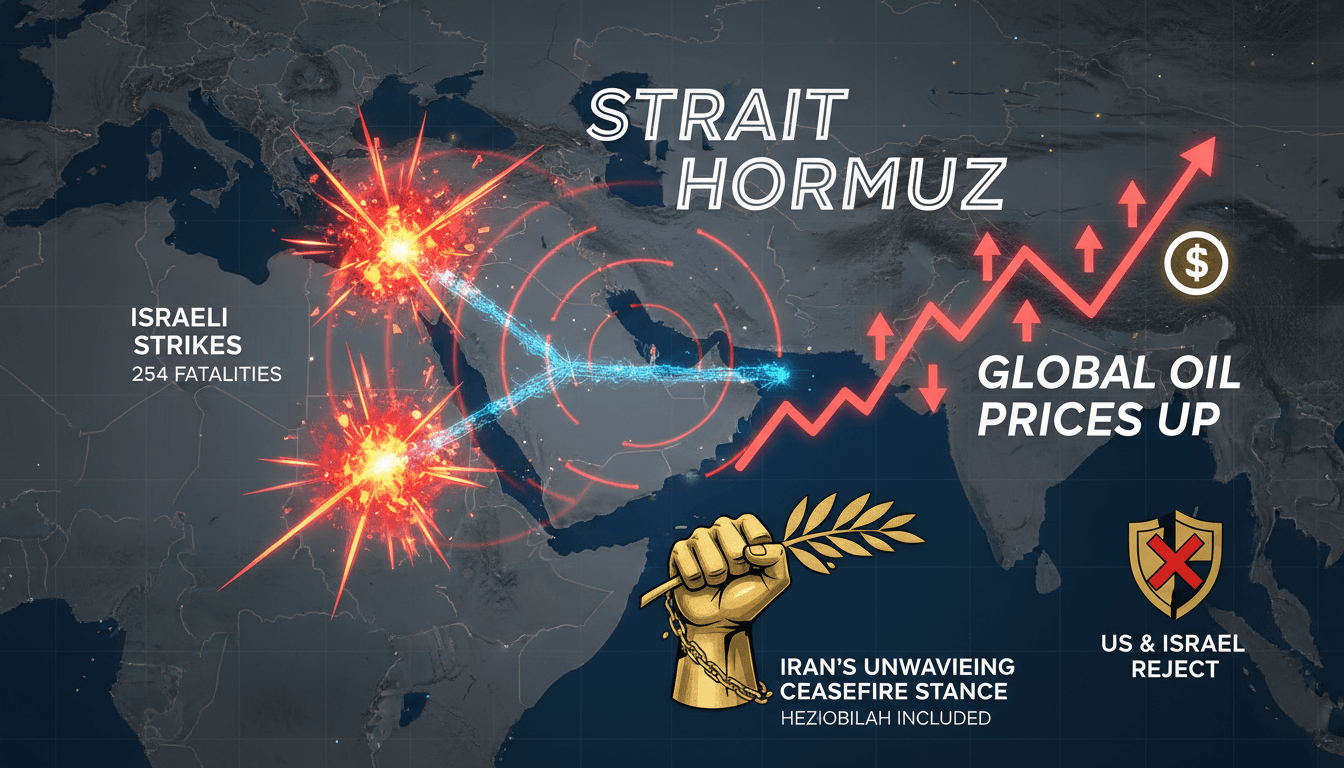
- Israeli airstrikes in Lebanon resulted in 254 deaths, escalating tensions and complicating the ceasefire agreement.
- Oil prices surged toward $100 per barrel amid fears of disrupted navigation through the Strait of Hormuz.
The context you actually need
- Ceasefire details: The two-week ceasefire requires Iran to ensure safe passage through the Strait of Hormuz and to halt nuclear weapons development.
- Regional tensions: Prior to the ceasefire, Iranian missile and drone activities targeted Gulf states, while Israel conducted operations against Hezbollah in Lebanon.
- Economic implications: The UAE and other Gulf states are closely monitoring the situation, as any disruption in oil supply could lead to significant economic volatility.
What's really happening
The recent ceasefire agreement between Iran and the U.S. represents a precarious balance of power in the Middle East, heavily influenced by the ongoing Israeli strikes in Lebanon. On April 8, 2026, Israel's airstrikes killed 254 people, intensifying Iran's resolve to link Lebanon's Resistance Axis with the ceasefire terms. Iran's insistence on including Hezbollah in the ceasefire negotiations is a strategic move to bolster its influence in the region and to signal that any violation of the truce will have severe repercussions.
The U.S. and Israel, however, maintain that the ceasefire does not extend to Hezbollah operations, which complicates the situation further. U.S. President Trump has publicly dismissed Iranian threats, insisting on a continued military presence until full compliance is achieved. This creates a scenario where both sides are entrenched in their positions, increasing the likelihood of further conflict.
The Strait of Hormuz, a vital maritime corridor for oil transportation, is at the center of this dispute. Iran's recent publication of a navigation map designating a danger zone highlights its willingness to exert control over this critical passage. With only three ships transiting the strait on the first day of the ceasefire, the implications for global oil supply are immediate and concerning. Oil prices have already begun to rise, nearing $100 per barrel, reflecting market anxieties over potential disruptions.
The situation is further complicated by the broader geopolitical landscape, where regional players like Pakistan are ramping up security in anticipation of U.S.-Iran talks. The fragile ceasefire is not just a matter of diplomatic negotiations; it is a litmus test for regional stability and the global economy. If Iran perceives that its interests are being undermined, it could respond with military action, further destabilizing the region and impacting global markets.
Who feels it first (and how)
- Energy sector professionals: Fluctuating oil prices and supply chain disruptions will directly impact profitability and operational planning.
- Shipping companies: Increased risks in the Strait of Hormuz may lead to higher insurance costs and rerouting of vessels.
- Investors: Market volatility in Gulf equities and oil prices will affect investment strategies and risk assessments.
What to watch next
- Ceasefire compliance: Monitor any violations or escalations from either side, as these will directly impact oil prices and regional stability.
- U.S. military positioning: Changes in U.S. troop deployments in the region could signal shifts in strategy and influence market sentiment.
- Iran's response: Pay attention to Iran's actions regarding Hezbollah and its military capabilities, as these will shape future negotiations and conflict dynamics.
The ceasefire is fragile and dependent on both sides adhering to their commitments.
Oil prices will remain volatile as markets react to developments in the ceasefire and regional tensions.
The long-term implications of this ceasefire on U.S.-Iran relations and regional stability remain uncertain.
Frequently Asked Questions
- Why it matters?
- The fragile ceasefire between Iran and the U.S. is pivotal for global oil supply, particularly as the Strait of Hormuz is a critical transit point for 20% of the world's oil.
- What happened (in 30 seconds)?
- Iran's Parliament Speaker declared no backtracking on a ceasefire deal with the U.S., warning of consequences for violations. Israeli airstrikes in Lebanon resulted in 254 deaths, escalating tensions and complicating the ceasefire agreement. Oil prices surged toward $100 per barrel amid fears of disrupted navigation through the Strait of Hormuz.
- What's really happening?
- The recent ceasefire agreement between Iran and the U.S. represents a precarious balance of power in the Middle East, heavily influenced by the ongoing Israeli strikes in Lebanon. On April 8, 2026, Israel's airstrikes killed 254 people, intensifying Iran's resolve to link Lebanon's Resistance Axis with the ceasefire terms. Iran's insistence on including Hezbollah in the ceasefire negotiations is a strategic move to bolster its influence in the region and to signal that any violation of the truce
- Who feels it first (and how)?
- Energy sector professionals: Fluctuating oil prices and supply chain disruptions will directly impact profitability and operational planning. Shipping companies: Increased risks in the Strait of Hormuz may lead to higher insurance costs and rerouting of vessels. Investors: Market volatility in Gulf equities and oil prices will affect investment strategies and risk assessments.
- What to watch next?
- Ceasefire compliance: Monitor any violations or escalations from either side, as these will directly impact oil prices and regional stability. U.S. military positioning: Changes in U.S. troop deployments in the region could signal shifts in strategy and influence market sentiment. Iran's response: Pay attention to Iran's actions regarding Hezbollah and its military capabilities, as these will shape future negotiations and conflict dynamics.
Business, investment, entrepreneurship, leadership, and innovation.
"Forbes is known for its coverage of business leaders, market trends, and entrepreneurial ventures with a pro-business editorial stance."
— A47 Editor
Iran Warns ‘No Backtracking’ On Ceasefire Deal—Threatens ‘Strong’ Response (Live Updates)
Iranian officials have issued a warning against any backtracking on a ceasefire deal, stating that the Strait of Hormuz will only reopen once the U.S. ceases its perceived aggression and Israel halts its attacks on Lebanon. This announcement follows ...
Global political, business, and cultural coverage from WSJ international desks.
"The Wall Street Journal offers extensive international reporting with a reputation for financial insight and a center-right editorial stance."
— A47 Editor
Cease-Fire Teeters on Its First Day
On the first day of a fragile ceasefire, Iran has threatened to keep the Strait of Hormuz closed in response to ongoing Israeli airstrikes on Lebanon, escalating regional tensions. This closure comes despite a recent agreement between the United Stat...
European coverage of Middle East politics and security issues.
"France 24 offers international reporting with a European editorial perspective."
— A47 Editor
Iran closes Strait of Hormuz again as Israel pounds Lebanon, air defense systems go off in Tehran
Iran has announced the closure of the Strait of Hormuz in response to ongoing Israeli airstrikes in Lebanon, which have intensified despite a recently declared ceasefire between the United States and Iran. Air defense systems were activated in Tehran...
Coverage of current events and conflicts in the Middle East.
"France 24 is viewed as a globally focused outlet with balanced coverage and a European perspective."
— A47 Editor
Iran closes Strait of Hormuz again as Israel pounds Lebanon, air defense systems go off in Tehran
Iran has announced the closure of the Strait of Hormuz in response to ongoing Israeli airstrikes in Lebanon, which have intensified despite a recently declared ceasefire between the United States and Iran. Air defense systems were activated in Tehran...