
US and Iran Announce Two-Week Ceasefire Leading to Significant Market Reactions
Why it matters
This ceasefire directly impacts global energy prices and market stability, influencing everything from fuel costs to stock performance.
What happened (in 30 seconds)
- On April 7, 2026, the US and Iran announced a two-week ceasefire, mediated by Pakistan.
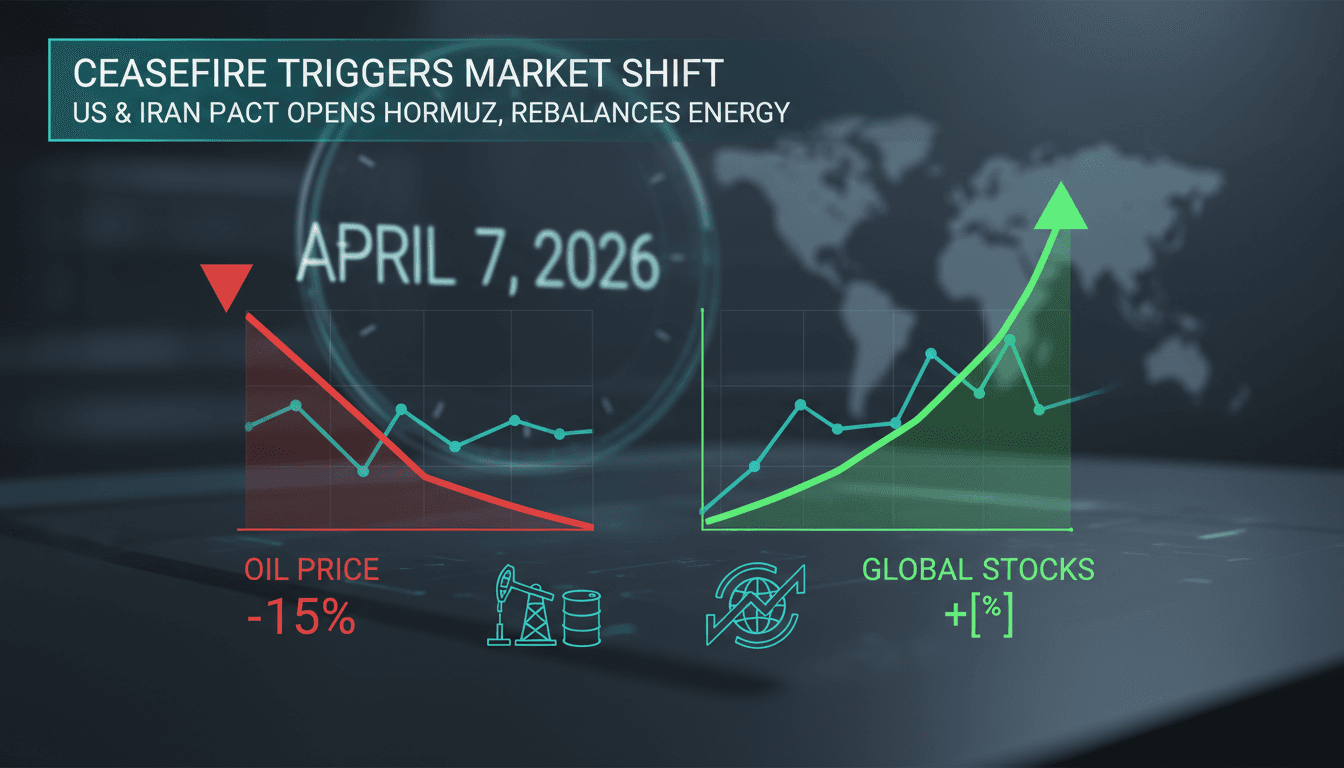
- Oil prices plummeted approximately 15%, with Brent crude dropping to around $94.75 per barrel.
- Global stock markets surged, with major indices rising between 2-5% as investors reacted positively to the news.
The context you actually need
- Tensions escalated in February 2026, following US and Israeli attacks on Iran, leading to significant disruptions in energy supplies.
- The Strait of Hormuz, a critical shipping lane for oil, was previously restricted by Iran, stranding around 800 ships and driving oil prices to record highs.
- The ceasefire agreement includes Iran reopening the Strait under its management, which is crucial for global oil flow and market stability.
What's really happening
The recent ceasefire between the US and Iran marks a significant shift in geopolitical dynamics, particularly in the energy sector. The conflict, which began escalating in February 2026, was characterized by aggressive military actions that severely disrupted oil supplies and heightened global economic tensions. The US and Israeli strikes on Iranian targets not only resulted in thousands of casualties but also led to Iran's strategic decision to restrict access to the Strait of Hormuz, a vital conduit for global oil transport.
The announcement of a ceasefire on April 7, 2026, brokered by Pakistan, is a critical development that aims to de-escalate the situation. Iran's commitment to reopening the Strait of Hormuz is particularly noteworthy, as it allows for the resumption of oil shipments that had been stalled during the conflict. This reopening is expected to alleviate some of the upward pressure on oil prices, which had soared due to fears of supply shortages. The immediate market reaction reflected this optimism, with oil contracts dropping approximately 15% as investors anticipated a return to more stable pricing.
However, the ceasefire is temporary, lasting only two weeks, and negotiations are scheduled to continue in Pakistan. This uncertainty means that while markets are currently buoyed by the prospect of reduced tensions, volatility remains a significant risk. Analysts have cautioned against complacency, noting that any breakdown in negotiations could lead to a rapid resurgence in hostilities, which would likely drive oil prices back up and destabilize markets once again.
Furthermore, the geopolitical implications of this ceasefire extend beyond just oil prices. The agreement has been welcomed by Gulf states, including the UAE, which are keen on maintaining regional stability. However, the situation remains precarious, as evidenced by ongoing military actions in Lebanon and allegations of ceasefire violations. The broader context of US-Iran relations continues to influence market sentiment, with investors closely monitoring developments for signs of either escalation or further diplomatic progress.
Who feels it first (and how)
- Consumers: Lower oil prices may lead to reduced fuel costs, benefiting everyday consumers and businesses reliant on transportation.
- Investors: Stock market gains provide immediate financial benefits to investors, particularly in sectors sensitive to oil prices.
- Airlines: With jet fuel prices expected to normalize, airlines may see improved profit margins.
- Gulf States: Countries like the UAE may experience economic relief from reduced tensions, although their oil revenues could face challenges.
What to watch next
- Negotiation outcomes: The success or failure of ongoing talks in Pakistan will be crucial in determining the future of the ceasefire and market stability.
- Oil price fluctuations: Continued monitoring of oil prices will indicate how markets are responding to geopolitical developments.
- Regional military actions: Any escalation in military actions, particularly in Lebanon or against Iranian interests, could quickly destabilize the situation and impact global markets.
Oil prices dropped approximately 15% following the ceasefire announcement.
Continued volatility in markets as investors react to ongoing geopolitical developments.
The long-term sustainability of the ceasefire and its impact on US-Iran relations.
Frequently Asked Questions
- Why it matters?
- This ceasefire directly impacts global energy prices and market stability, influencing everything from fuel costs to stock performance.
- What happened (in 30 seconds)?
- On April 7, 2026, the US and Iran announced a two-week ceasefire, mediated by Pakistan. Oil prices plummeted approximately 15%, with Brent crude dropping to around $94.75 per barrel. Global stock markets surged, with major indices rising between 2-5% as investors reacted positively to the news.
- What's really happening?
- The recent ceasefire between the US and Iran marks a significant shift in geopolitical dynamics, particularly in the energy sector. The conflict, which began escalating in February 2026, was characterized by aggressive military actions that severely disrupted oil supplies and heightened global economic tensions. The US and Israeli strikes on Iranian targets not only resulted in thousands of casualties but also led to Iran's strategic decision to restrict access to the Strait of Hormuz, a vital c
- Who feels it first (and how)?
- Consumers: Lower oil prices may lead to reduced fuel costs, benefiting everyday consumers and businesses reliant on transportation. Investors: Stock market gains provide immediate financial benefits to investors, particularly in sectors sensitive to oil prices. Airlines: With jet fuel prices expected to normalize, airlines may see improved profit margins. Gulf States: Countries like the UAE may experience economic relief from reduced tensions, although their oil revenues could face challenges.
- What to watch next?
- Negotiation outcomes: The success or failure of ongoing talks in Pakistan will be crucial in determining the future of the ceasefire and market stability. Oil price fluctuations: Continued monitoring of oil prices will indicate how markets are responding to geopolitical developments. Regional military actions: Any escalation in military actions, particularly in Lebanon or against Iranian interests, could quickly destabilize the situation and impact global markets.
Regional coverage and analysis focused on politics, diplomacy, and business across the Middle East.
"Al-Monitor is known for analytical reporting on Middle East politics and policy developments."
— A47 Editor
Oil prices plunge, stocks surge on US-Iran ceasefire
Oil prices have sharply declined by approximately 15% to around $95 a barrel, and stock markets have surged following a temporary ceasefire agreement between the United States and Iran. This ceasefire, confirmed just hours before a deadline set by Pr...
UK and international business news, economics, and corporate coverage.
"The Guardian’s business section covers finance and markets with a progressive editorial tone."
— A47 Editor
Relief in financial markets after Iran ceasefire – but it is far from absolute | Richard Partington
A two-week ceasefire has been announced between the United States and Iran, leading to a significant drop in oil prices and a rally in stock markets. This ceasefire is contingent upon Iran's agreement to reopen the strategically vital Strait of Hormu...
International coverage from The Guardian's global desks.
"The Guardian is known for its progressive editorial stance and in-depth analysis."
— A47 Editor
Relief in financial markets after Iran ceasefire – but it is far from absolute | Richard Partington
A two-week ceasefire has been announced between the United States and Iran, leading to a significant drop in oil prices and a rally in stock markets. This ceasefire is contingent upon Iran's agreement to reopen the strategically vital Strait of Hormu...
Global news coverage with extensive reporting on Middle Eastern conflicts and geopolitics.
"Al Jazeera is a Qatar-based broadcaster known for wide regional coverage and alternative perspectives."
— A47 Editor
Oil prices slide, stocks surge as Trump announces two-week Iran ceasefire
President Donald Trump announced a two-week ceasefire with Iran, which is contingent upon Iran's agreement to reopen the strategically vital Strait of Hormuz. This announcement follows a period of heightened tensions and military threats, leading to ...
Comprehensive coverage of Middle Eastern and global issues.
"Al Jazeera is a prominent voice from the Global South, especially the Middle East, with an emphasis on underreported stories."
— A47 Editor
Oil prices slide, stocks surge as Trump announces two-week Iran ceasefire
President Donald Trump announced a two-week ceasefire with Iran, which is contingent upon Iran's agreement to reopen the strategically vital Strait of Hormuz. This announcement follows a period of heightened tensions and military threats, leading to ...
Global markets, investing, and macroeconomics from a premier financial newsroom.
"Bloomberg is respected for in-depth financial reporting and data-driven analysis."
— A47 Editor
Asia’s Ceasefire Relief Rally Hinges on Hormuz, Oil: Strategists
President Donald Trump has announced a two-week ceasefire with Iran, providing temporary relief to Asian markets amid ongoing geopolitical tensions. This agreement aims to halt military actions and facilitate negotiations regarding the reopening of t...