
Limited shipping traffic continues in Strait of Hormuz despite US-Iran ceasefire
Here's what it means for you.
If you rely on global shipping, expect delays and rising costs due to ongoing tensions in the Strait of Hormuz.
Why it matters
The Strait of Hormuz is a critical chokepoint for global oil and gas shipments, with 25% of the world’s seaborne oil passing through it.
What happened (in 30 seconds)
- A ceasefire was announced: On April 7, 2026, the US and Iran agreed to a two-week ceasefire, contingent on reopening the Strait of Hormuz.
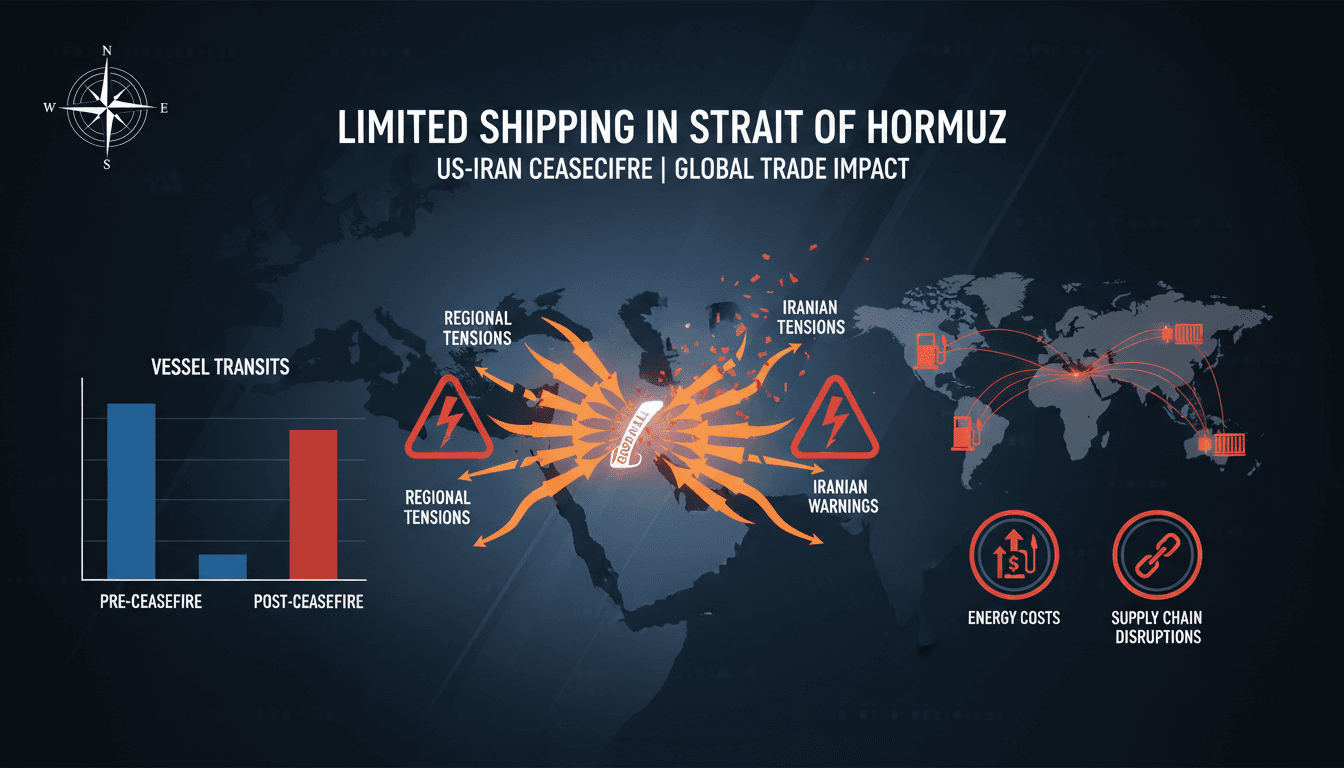
- Limited transits occurred: Only a handful of vessels have managed to transit the strait, as major shipping firms remain cautious amid Iranian oversight and regional tensions.
- Ongoing threats persist: Iran has warned that unauthorized ships could be destroyed, further complicating maritime operations in this vital waterway.
The context you actually need
- Escalating tensions led to closure: The crisis began with US-Israeli strikes on Iran in February 2026, resulting in Iranian retaliation that included mining the Strait of Hormuz and attacks on merchant ships.
- Shipping traffic plummeted: Before the crisis, over 130 ships transited the strait daily; during the conflict, this number dropped to just 120 total in over a month.
- Economic implications loom large: The UAE and other Gulf Cooperation Council (GCC) nations are closely monitoring the situation, as disruptions threaten over Dh10 trillion in global trade.
What's really happening
The fragile ceasefire between the US and Iran has created a precarious environment for maritime operations in the Strait of Hormuz. Despite the announcement of a ceasefire, shipping traffic remains severely limited due to the ongoing risk of Iranian oversight and the complex geopolitical landscape involving Israel. Major shipping companies, such as Maersk and Hapag-Lloyd, are assessing the risks associated with transiting the strait, which has historically been a vital route for global energy trade.
The Iranian government has issued stern warnings that any unauthorized vessels could face destruction, a threat that has heightened caution among shipping operators. As a result, only a few vessels have managed to navigate the strait since the ceasefire was announced, with many firms choosing to suspend operations until they receive clearer assurances regarding safety and stability. This cautious approach has led to a backlog of around 800 tankers waiting on either side of the strait, further exacerbating delays in global shipping.
The economic implications of these disruptions are significant. The Strait of Hormuz is responsible for approximately 25% of the world’s seaborne oil, and any sustained disruption can lead to increased fuel prices and supply chain strains. Dubai residents, for instance, are already experiencing high fuel prices and import delays, which could worsen if the situation does not stabilize. The UAE is attempting to mitigate these impacts by leveraging alternative ports like Khor Fakkan for land-bridging cargo, but the ongoing tensions threaten to undermine these efforts.
Moreover, shipping insurers are demanding proof of stability before lowering premiums that have surged during the conflict. This means that even if the ceasefire holds, the costs associated with shipping could remain elevated for the foreseeable future, impacting businesses and consumers alike.
Who feels it first (and how)
- Shipping companies: Major operators are reassessing their routes and facing potential financial losses due to delays.
- Energy sector: Oil and gas companies are experiencing volatility in pricing and supply chain disruptions.
- Consumers: Higher fuel prices and potential shortages could lead to increased costs for everyday goods.
- UAE residents: Local businesses and consumers are facing sustained high prices and delays in imports.
What to watch next
- Iran's compliance with the ceasefire: Monitoring Iran's adherence to the ceasefire terms will be crucial in determining the stability of shipping operations.
- Shipping traffic resumption: Any significant increase in vessel transits through the Strait of Hormuz will indicate a return to normalcy in global shipping.
- Oil price fluctuations: Watch for changes in oil prices as they can signal shifts in market confidence regarding the security of maritime routes.
The Strait of Hormuz is a critical route for global oil and gas shipments.
Shipping companies will continue to exercise caution, leading to sustained delays and elevated costs.
The long-term impact of the ceasefire on regional stability and shipping operations remains uncertain.
Frequently Asked Questions
- Why it matters?
- The Strait of Hormuz is a critical chokepoint for global oil and gas shipments, with 25% of the world’s seaborne oil passing through it.
- What happened (in 30 seconds)?
- A ceasefire was announced: On April 7, 2026, the US and Iran agreed to a two-week ceasefire, contingent on reopening the Strait of Hormuz. Limited transits occurred: Only a handful of vessels have managed to transit the strait, as major shipping firms remain cautious amid Iranian oversight and regional tensions. Ongoing threats persist: Iran has warned that unauthorized ships could be destroyed, further complicating maritime operations in this vital waterway.
- What's really happening?
- The fragile ceasefire between the US and Iran has created a precarious environment for maritime operations in the Strait of Hormuz. Despite the announcement of a ceasefire, shipping traffic remains severely limited due to the ongoing risk of Iranian oversight and the complex geopolitical landscape involving Israel. Major shipping companies, such as Maersk and Hapag-Lloyd, are assessing the risks associated with transiting the strait, which has historically been a vital route for global energy tr
- Who feels it first (and how)?
- Shipping companies: Major operators are reassessing their routes and facing potential financial losses due to delays. Energy sector: Oil and gas companies are experiencing volatility in pricing and supply chain disruptions. Consumers: Higher fuel prices and potential shortages could lead to increased costs for everyday goods. UAE residents: Local businesses and consumers are facing sustained high prices and delays in imports.
- What to watch next?
- Iran's compliance with the ceasefire: Monitoring Iran's adherence to the ceasefire terms will be crucial in determining the stability of shipping operations. Shipping traffic resumption: Any significant increase in vessel transits through the Strait of Hormuz will indicate a return to normalcy in global shipping. Oil price fluctuations: Watch for changes in oil prices as they can signal shifts in market confidence regarding the security of maritime routes.
Corporate news, economic trends, and markets with UK and global scope.
"BBC News is widely regarded as reputable and impartial, with a public service mandate."
— A47 Editor
How many ships are crossing the Strait of Hormuz?
Four vessels have crossed the Strait of Hormuz ahead of a US military blockade of Iranian ports set to begin on Monday, highlighting the ongoing maritime tensions in the region.
U.S. business news, corporate developments, and economy.
"The Wall Street Journal is respected for deep financial and economic reporting with a center-right editorial perspective."
— A47 Editor
What’s Happening in the Strait of Hormuz Since the Cease-Fire?
Following a recent ceasefire agreement between the United States and Iran, limited ship traffic has begun to navigate the Strait of Hormuz, with Iran imposing tolls of up to $2 million per vessel. This development marks a cautious reopening of this c...
Global political, business, and cultural coverage from WSJ international desks.
"The Wall Street Journal offers extensive international reporting with a reputation for financial insight and a center-right editorial stance."
— A47 Editor
What’s Happening in the Strait of Hormuz Since the Cease-Fire?
Following a recent ceasefire agreement between the United States and Iran, limited maritime traffic has resumed in the Strait of Hormuz, with Iran imposing tolls of up to $2 million per ship. This development marks a cautious reopening of a critical ...
International coverage of politics, culture, and current affairs.
"BBC News is widely regarded as a reputable international news organization, known for its impartial tone and public service mandate."
— A47 Editor
Ships remain cautious approaching Strait of Hormuz amid fragile ceasefire
Following a recent ceasefire agreement between the United States and Iran, only a limited number of vessels have cautiously navigated the Strait of Hormuz, a critical maritime route. This analysis by BBC Verify highlights the ongoing hesitance among ...
Oil, metals, and agriculture: supply/demand headlines, OPEC chatter, inventories, and price action.
"Solid tape for energy and metals traders tracking macro and micro catalysts."
— A47 Editor
Shippers seek clarity on Hormuz passage as Iran issues fresh warnings
Shippers are currently seeking clarity regarding passage through the Strait of Hormuz as Iran issues new warnings amidst a recently established two-week ceasefire with the United States. This ceasefire aims to stabilize the critical waterway for glob...
Regional coverage and analysis focused on politics, diplomacy, and business across the Middle East.
"Al-Monitor is known for analytical reporting on Middle East politics and policy developments."
— A47 Editor
Dilemma over crossings as fate of Hormuz ships remains uncertain
Only three ships attempted to cross the Strait of Hormuz on Wednesday, reflecting heightened caution among maritime operators despite assurances from both the US and Iran that the strategic waterway would reopen following a two-week ceasefire in the ...
UK and international business news, economics, and corporate coverage.
"The Guardian’s business section covers finance and markets with a progressive editorial tone."
— A47 Editor
Ceasefire changes little for shipping in strait of Hormuz, experts say
A two-week conditional ceasefire has been agreed upon between the United States and Iran, allowing for the temporary reopening of the Strait of Hormuz. However, shipping analysts indicate that this will not lead to a significant increase in vessel tr...
International coverage from The Guardian's global desks.
"The Guardian is known for its progressive editorial stance and in-depth analysis."
— A47 Editor
Ceasefire changes little for shipping in strait of Hormuz, experts say
A two-week conditional ceasefire has been agreed upon between the United States and Iran, allowing for the temporary reopening of the strategically vital Strait of Hormuz. However, shipping analysts indicate that this ceasefire will not lead to a sig...