
Debate Intensifies Over Rescue of Stranded Humpback Whale Off German Coast
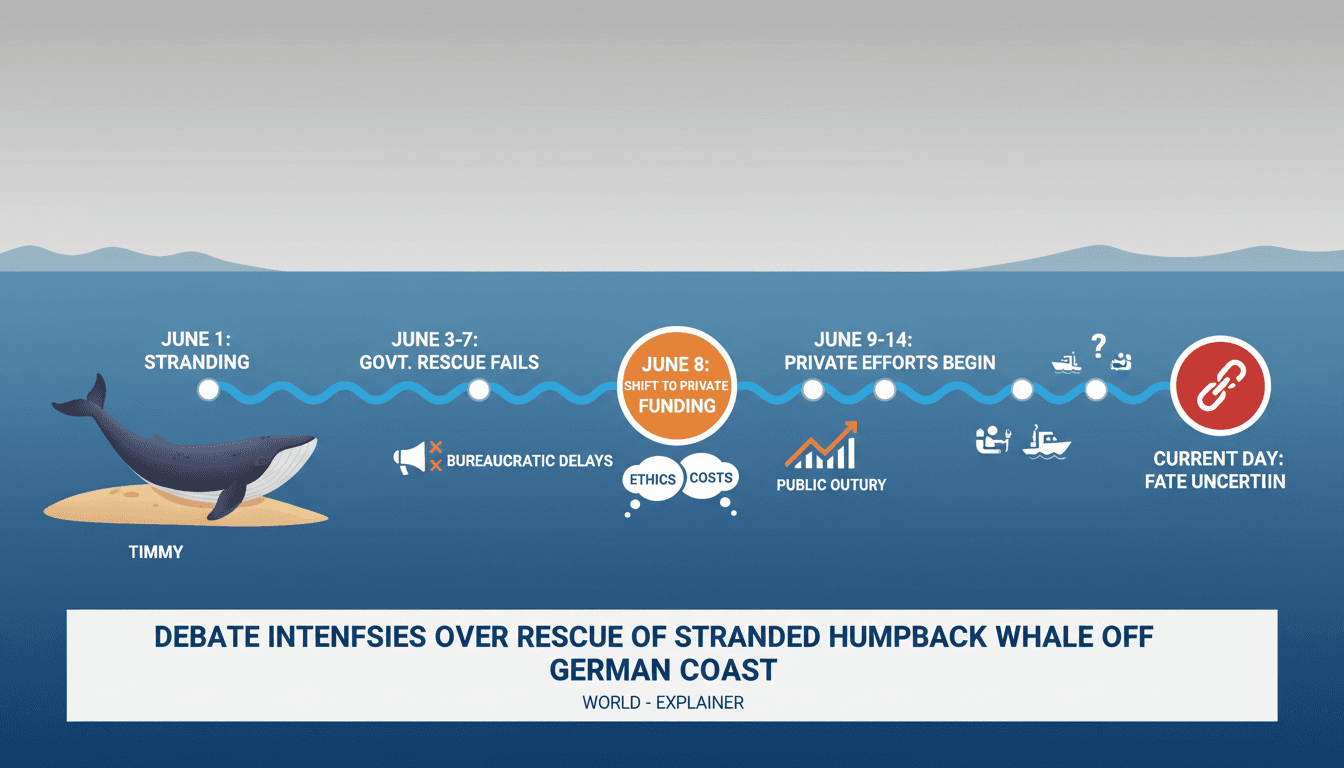
Here's what it means for you.
The ongoing rescue efforts for Timmy the whale highlight the complexities of wildlife intervention, which could influence future environmental policies and public sentiment towards conservation efforts.
Why it matters
This situation underscores the tension between human intervention and natural processes, impacting how societies approach wildlife conservation.
What happened (in 30 seconds)
- Timmy, a young humpback whale, stranded off the German Baltic coast on March 23, 2026, far from its typical Atlantic habitat.
- Multiple rescue attempts have failed, leading to a controversial private-funded operation amid bureaucratic hurdles.
- As of April 19, 2026, Timmy remains in critical condition, with ongoing efforts to rescue him using air cushions delayed by approvals.
The context you actually need
- Humpback whales rarely enter the Baltic Sea due to low salinity, which can cause skin conditions and navigation issues.
- Timmy's stranding reflects a broader trend of marine animals venturing into unfamiliar waters, often leading to disorientation and stranding.
- Public sentiment has rallied around Timmy, with social media campaigns and donations reflecting a growing empathy for wildlife conservation.
What's really happening
Timmy's plight has sparked a heated debate about the ethics of wildlife rescue versus allowing nature to take its course. Stranded in shallow waters off Poel Island, Timmy represents a case study in the complexities of marine conservation. Humpback whales are not typically found in the Baltic Sea, and Timmy's presence there is likely due to a search for prey, such as herring, which has led to his disorientation and subsequent stranding.
The initial rescue attempts by government authorities using excavators and guidance were unsuccessful, leading to a suspension of efforts on April 1, 2026, by Environment Minister Till Backhaus. This decision was made to allow for a natural death, a stance that has drawn criticism from animal welfare advocates and the public alike. The ethical dilemma here is significant: should humans intervene in natural processes, or should they allow nature to take its course, even when it involves suffering?
In response to the government's inaction, private donors Walter Gunz and Karin Walter-Mommert initiated "Operation Cushion," which aims to lift Timmy using air cushions and tow him back to the North Sea. However, this operation has faced bureaucratic delays, highlighting the challenges of coordinating wildlife rescue efforts within existing regulatory frameworks. The situation has become emblematic of perceived inefficiencies in German bureaucracy, as minor actions require extensive approvals, further complicating the rescue efforts.
The public's reaction has been overwhelmingly supportive of Timmy, with widespread media coverage and social media campaigns under the hashtag #SaveTimmy. This reflects a growing empathy for wildlife and a desire for more proactive conservation measures. The situation has also prompted discussions about the responsibilities of governments and private entities in wildlife rescue, raising questions about funding, resources, and ethical considerations in conservation.
As Timmy's condition remains critical, the outcome of this situation could have lasting implications for wildlife rescue operations in Germany and beyond. It may influence future policies regarding intervention in natural processes and the allocation of resources for conservation efforts.
Who feels it first (and how)
- Environmental NGOs: Increased scrutiny on their roles and funding in wildlife rescue operations.
- Government agencies: Pressure to streamline bureaucratic processes for wildlife intervention.
- Local communities: Heightened awareness and engagement in conservation efforts, potentially leading to increased tourism or local activism.
What to watch next
- Government policy changes: Watch for potential shifts in wildlife rescue regulations that could emerge from this incident.
- Public sentiment: Monitor how ongoing media coverage and social media campaigns influence public opinion on wildlife conservation.
- Future rescue operations: Observe how this case impacts the planning and execution of future wildlife rescue efforts in similar situations.
Timmy is in critical condition and ongoing rescue efforts are underway.
Increased public engagement and scrutiny of wildlife rescue policies will emerge from this incident.
The long-term impact on Timmy's health and the success of the rescue operation remains uncertain.
Frequently Asked Questions
- Why it matters?
- This situation underscores the tension between human intervention and natural processes, impacting how societies approach wildlife conservation.
- What happened (in 30 seconds)?
- Timmy, a young humpback whale, stranded off the German Baltic coast on March 23, 2026, far from its typical Atlantic habitat. Multiple rescue attempts have failed, leading to a controversial private-funded operation amid bureaucratic hurdles. As of April 19, 2026, Timmy remains in critical condition, with ongoing efforts to rescue him using air cushions delayed by approvals.
- What's really happening?
- Timmy's plight has sparked a heated debate about the ethics of wildlife rescue versus allowing nature to take its course. Stranded in shallow waters off Poel Island, Timmy represents a case study in the complexities of marine conservation. Humpback whales are not typically found in the Baltic Sea, and Timmy's presence there is likely due to a search for prey, such as herring, which has led to his disorientation and subsequent stranding. The initial rescue attempts by government authorities usin
- Who feels it first (and how)?
- Environmental NGOs: Increased scrutiny on their roles and funding in wildlife rescue operations. Government agencies: Pressure to streamline bureaucratic processes for wildlife intervention. Local communities: Heightened awareness and engagement in conservation efforts, potentially leading to increased tourism or local activism.
- What to watch next?
- Government policy changes: Watch for potential shifts in wildlife rescue regulations that could emerge from this incident. Public sentiment: Monitor how ongoing media coverage and social media campaigns influence public opinion on wildlife conservation. Future rescue operations: Observe how this case impacts the planning and execution of future wildlife rescue efforts in similar situations.
European current affairs, EU politics, and regional developments.
"France 24 is viewed as a globally focused outlet with balanced coverage and a European perspective."
— A47 Editor
Should Timmy, the whale stranded off the German coast, be saved?
Rescuers in northern Germany are making efforts to save a sick humpback whale, nicknamed 'Timmy', which has repeatedly become stranded off the Baltic Sea coast. Experts are utilizing air cushions and tugboats to refloat the whale, which has been trap...
News and current affairs from across Europe.
"The Guardian is known for its progressive editorial stance and in-depth analysis."
— A47 Editor
Stranded and dying, the German whale is a parable of our troubled relationship with these sea giants
A humpback whale, entangled in ropes and unable to feed, has been stranded on Poel Island in the Bay of Wismar, Germany, for weeks. The whale's condition has deteriorated due to extreme dehydration, and it is facing a slow death as it lies partially ...
International coverage of politics, security, and social issues.
"Global News is a mainstream Canadian outlet with a centrist editorial stance, focusing on factual reporting."
— A47 Editor
Multimillionaires band together in effort to save beached whale in Germany
A group of multimillionaires has come together to support efforts to rescue a stranded humpback whale, nicknamed Timmy, off the northern coast of Germany. The whale has faced multiple strandings and has been trapped for weeks, raising concerns about ...
International coverage of politics, culture, and current affairs.
"BBC News is widely regarded as a reputable international news organization, known for its impartial tone and public service mandate."
— A47 Editor
Rescuers to use air cushions in latest effort to save stranded whale
Rescuers are preparing to use air cushions in a new attempt to save a stranded whale named Timmy, who has been stuck in the Baltic Sea for several weeks despite previous rescue efforts. The situation remains critical as the whale's health continues t...
International coverage from The Guardian's global desks.
"The Guardian is known for its progressive editorial stance and in-depth analysis."
— A47 Editor
Millionaires fund last-ditch attempt to save humpback whale stranded in Germany
A last-ditch effort is underway to rescue a stranded humpback whale, nicknamed Timmy, in the Baltic Sea, where it has been trapped for weeks. Despite previous attempts to assist the 12-tonne whale, experts warn that the chances of success are slim, a...