
Kremlin Warns US Military Blockade of Strait of Hormuz Threatens Global Energy Stability
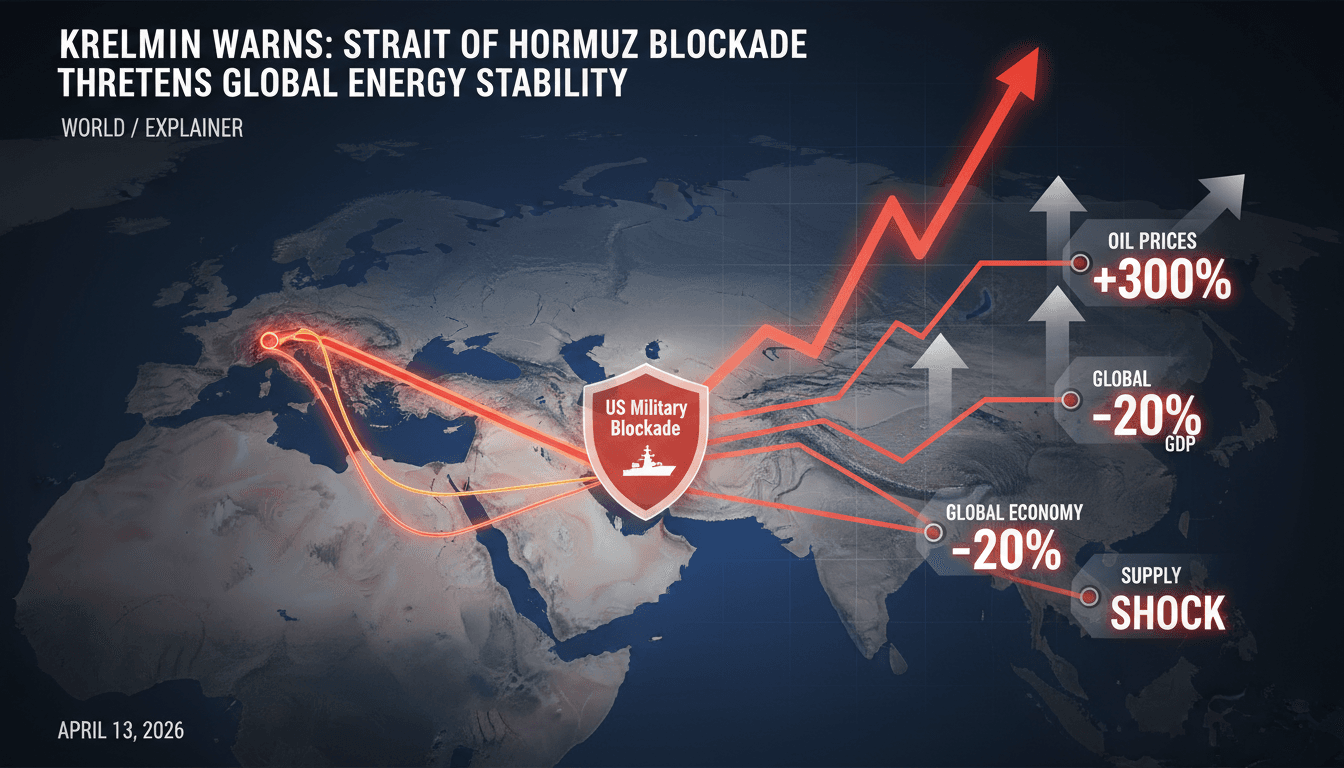
Here's what it means for you.
If you rely on global energy markets, prepare for potential price spikes and supply chain disruptions.
Why it matters
The Strait of Hormuz is a critical chokepoint for global oil trade, and any disruption can lead to significant economic repercussions worldwide.
What happened (in 30 seconds)
- On April 12, 2026, U.S. President Donald Trump announced a military blockade of the Strait of Hormuz, citing Iranian threats.
- Kremlin spokesperson Dmitry Peskov warned that this blockade would severely damage global energy markets.
- Oil prices surged above $100 per barrel, causing market volatility and raising inflation fears in various economies.
The context you actually need
- The Strait of Hormuz handles approximately 20-25% of global seaborne oil trade, making it a vital artery for energy supplies.
- Escalating U.S.-Iran tensions have included threats from Iran to close the strait and attacks on Gulf energy infrastructure, leading to prior disruptions since March 2026.
- Trump's return to the presidency in 2025 has intensified pressures, with previous U.S. threats and Iranian retaliations causing oil prices to spike.
What's really happening
The U.S. military blockade of the Strait of Hormuz represents a significant escalation in the ongoing conflict between the U.S. and Iran. By controlling ship access and intercepting vessels that pay transit fees to Iran, the U.S. aims to counter what it perceives as Iranian "extortion" tactics, particularly threats involving mines in the strait. This move, however, is fraught with risks and potential backlash.
The Kremlin's response highlights the interconnectedness of global energy markets and the geopolitical landscape. Peskov's warning underscores the high stakes involved; a blockade could lead to severe disruptions in oil supply, which would ripple through economies dependent on stable energy prices. With the Strait of Hormuz facilitating the flow of approximately 20.3 million barrels of oil per day, any significant interruption could lead to skyrocketing prices, affecting everything from transportation costs to consumer goods.
The implications extend beyond immediate price increases. Countries heavily reliant on oil imports, such as those in Europe and Asia, could face economic slowdowns as inflation rises and consumer spending tightens. The UAE, as a trading hub, is particularly vulnerable; disruptions in oil supply could lead to volatility in the Dubai Mercantile Exchange, impacting local businesses and households.
Moreover, the geopolitical ramifications are profound. Russia and China have already issued joint warnings regarding the potential for increased global security risks stemming from U.S. actions. This could lead to a realignment of alliances and increased tensions in the region, as countries assess their positions in light of U.S. military maneuvers.
In summary, the blockade is not just a tactical military decision; it is a strategic move that could reshape energy markets and geopolitical alliances. The uncertainty surrounding the U.S. plans and the potential for Iranian retaliation add layers of complexity to an already volatile situation.
Who feels it first (and how)
- Energy consumers: Households and businesses facing rising fuel prices and inflation.
- Oil-dependent industries: Sectors like transportation and manufacturing that rely on stable energy costs.
- Geopolitical analysts: Professionals monitoring shifts in international relations and market stability.
What to watch next
- Oil price fluctuations: Monitor how prices respond to developments in the blockade and Iranian actions, as this will directly impact global markets.
- Geopolitical responses: Watch for reactions from other nations, particularly Russia and China, which could influence international relations and trade agreements.
- U.S. military actions: Keep an eye on any changes in U.S. military strategy in the region, as this could escalate or de-escalate tensions.
The Strait of Hormuz is crucial for global oil trade, with 20-25% of seaborne oil passing through.
Oil prices will remain volatile, with potential spikes affecting global economies.
The long-term geopolitical consequences of the blockade and how Iran will respond.
Frequently Asked Questions
- Why it matters?
- The Strait of Hormuz is a critical chokepoint for global oil trade, and any disruption can lead to significant economic repercussions worldwide.
- What happened (in 30 seconds)?
- On April 12, 2026, U.S. President Donald Trump announced a military blockade of the Strait of Hormuz, citing Iranian threats. Kremlin spokesperson Dmitry Peskov warned that this blockade would severely damage global energy markets. Oil prices surged above $100 per barrel, causing market volatility and raising inflation fears in various economies.
- What's really happening?
- The U.S. military blockade of the Strait of Hormuz represents a significant escalation in the ongoing conflict between the U.S. and Iran. By controlling ship access and intercepting vessels that pay transit fees to Iran, the U.S. aims to counter what it perceives as Iranian "extortion" tactics, particularly threats involving mines in the strait. This move, however, is fraught with risks and potential backlash. The Kremlin's response highlights the interconnectedness of global energy markets and
- Who feels it first (and how)?
- Energy consumers: Households and businesses facing rising fuel prices and inflation. Oil-dependent industries: Sectors like transportation and manufacturing that rely on stable energy costs. Geopolitical analysts: Professionals monitoring shifts in international relations and market stability.
- What to watch next?
- Oil price fluctuations: Monitor how prices respond to developments in the blockade and Iranian actions, as this will directly impact global markets. Geopolitical responses: Watch for reactions from other nations, particularly Russia and China, which could influence international relations and trade agreements. U.S. military actions: Keep an eye on any changes in U.S. military strategy in the region, as this could escalate or de-escalate tensions.
Sports reporting with a focus on Saudi and regional competitions.
"Okaz sports coverage is broad and audience-friendly, with strong attention to Saudi teams and leagues."
— A47 Editor
روسيا تحذّر: حصار «هرمز» يلحق أضراراً جسيمة بأسواق الطاقة العالمية
The Kremlin has criticized U.S. President Donald Trump's announcement of a military blockade on the Strait of Hormuz, which includes closing access to Iranian ports. Kremlin spokesman Dmitry Peskov stated that this action is likely to cause significa...
Macro commentary, policy analysis, growth/inflation themes, and global outlooks.
"Contextual macro coverage that complements day-to-day market headlines."
— A47 Editor
Kremlin says U.S. blockade of Hormuz will be bad for markets
The Kremlin has warned that the U.S. blockade of the Strait of Hormuz will negatively impact global markets, emphasizing the potential for increased instability in the region. This blockade follows the breakdown of peace negotiations between the U.S....
UAE-based English-language newspaper covering regional politics, economics, and global affairs.
"The National reflects Emirati policy perspectives while maintaining international editorial standards."
— A47 Editor
Manus on Markets: US's Hormuz blockade will wreck world energy supply
The United States has announced a blockade of the Strait of Hormuz, a critical maritime route for global oil shipments, following the failure of U.S.-Iran ceasefire talks. This blockade, declared by President Donald Trump, aims to interdict vessels i...