
Israeli Airstrikes in Lebanon Result in 254 Deaths Amid Escalated Conflict
Here's what it means for you.
Global markets and geopolitical stability are at risk as tensions escalate in the Middle East.
Why it matters
The ongoing conflict between Israel and Hezbollah could disrupt energy markets and heighten global security concerns.
What happened (in 30 seconds)
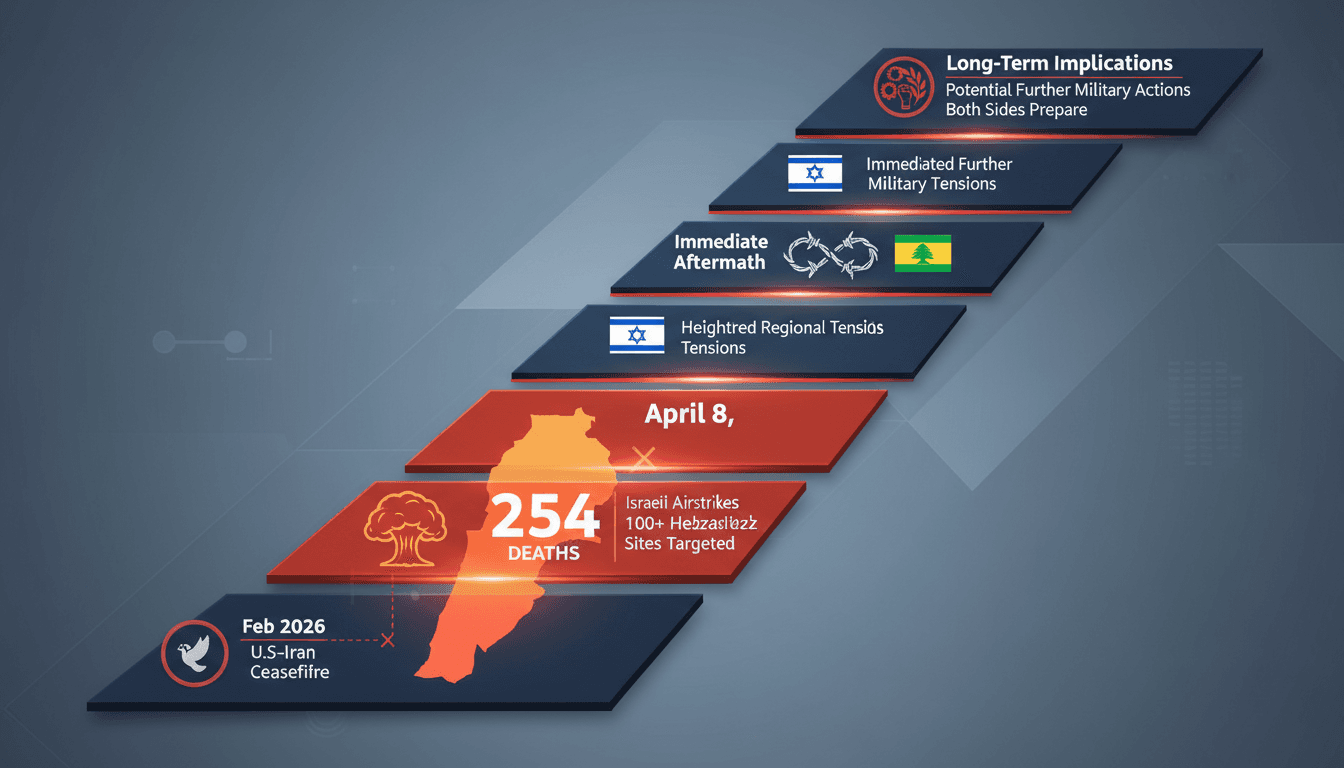
- Israeli airstrikes targeted over 100 Hezbollah sites in Lebanon on April 8, 2026, killing at least 254 people.
- The strikes occurred shortly after a U.S.-Iran ceasefire took effect, which Israel claimed did not apply to Lebanon.
- Hezbollah briefly paused its rocket attacks but has since resumed, indicating a potential escalation in hostilities.
The context you actually need
- The conflict intensified after Hezbollah retaliated against the U.S.-Israeli assassination of Iran's Supreme Leader on March 1, 2026.
- Prior to April 8, Israeli operations had already displaced over 1.2 million people and resulted in approximately 1,700 deaths.
- Lebanon's civil defense reported overwhelming casualties, with hospitals struggling to cope with the influx of injured civilians.
What's really happening
The airstrikes on April 8 represent a significant escalation in the ongoing Israel-Hezbollah conflict, which has roots in broader regional tensions involving Iran and the U.S. The timing of the strikes—just hours after a U.S.-Iran ceasefire was announced—suggests a calculated move by Israel to assert its military dominance and respond to perceived threats from Hezbollah.
Israel's military strategy has increasingly focused on targeting Hezbollah's infrastructure, which it views as a direct threat to its national security. By striking over 100 sites in a matter of minutes, Israel aimed to deliver a decisive blow to Hezbollah's operational capabilities. The choice of targets, including residential and commercial areas, has drawn international condemnation and raised questions about compliance with international law.
The aftermath of the strikes has seen a surge in civilian casualties, with hospitals overwhelmed and a national day of mourning declared in Lebanon. This humanitarian crisis is compounded by the fact that many of the casualties are civilians, which has prompted calls for global intervention from Lebanese leaders. The Lebanese Prime Minister has accused Israel of violating international law, while Hezbollah has vowed to retaliate, indicating that the cycle of violence is likely to continue.
The strikes also have broader implications for regional stability. As tensions rise, oil prices have already reacted, rebounding by 2.5% to $97 per barrel. This volatility in energy markets can have far-reaching effects on global economies, especially in regions heavily reliant on oil imports. Furthermore, the conflict's escalation could lead to increased military engagement from other regional players, further complicating the geopolitical landscape.
In summary, the airstrikes on April 8 not only mark the deadliest day of the conflict but also signal a potential shift in the balance of power in the region, with implications that could reverberate globally.
Who feels it first (and how)
- Lebanese civilians: Directly impacted by the violence and humanitarian crisis, facing casualties and displacement.
- Healthcare providers: Overwhelmed hospitals struggling to manage the influx of injured individuals.
- Global energy markets: Investors and consumers may see fluctuations in oil prices due to regional instability.
- UAE expatriates: The Lebanese community in Dubai is closely monitoring the situation, with familial concerns but no immediate disruptions reported.
What to watch next
- Hezbollah's response: Continued rocket fire into Israel could escalate military engagements and further destabilize the region.
- International reactions: Global leaders' responses to the humanitarian crisis and calls for intervention will shape diplomatic relations and potential resolutions.
- Market fluctuations: Watch for changes in oil prices and stock market reactions as the conflict evolves, which could impact global economic stability.
The conflict has resulted in significant civilian casualties and a humanitarian crisis in Lebanon.
Continued military operations by Israel and potential retaliation from Hezbollah, leading to further escalation.
The long-term implications for regional stability and the effectiveness of international diplomatic efforts to mediate the conflict.
Frequently Asked Questions
- Why it matters?
- The ongoing conflict between Israel and Hezbollah could disrupt energy markets and heighten global security concerns.
- What happened (in 30 seconds)?
- Israeli airstrikes targeted over 100 Hezbollah sites in Lebanon on April 8, 2026, killing at least 254 people. The strikes occurred shortly after a U.S.-Iran ceasefire took effect, which Israel claimed did not apply to Lebanon. Hezbollah briefly paused its rocket attacks but has since resumed, indicating a potential escalation in hostilities.
- What's really happening?
- The airstrikes on April 8 represent a significant escalation in the ongoing Israel-Hezbollah conflict, which has roots in broader regional tensions involving Iran and the U.S. The timing of the strikes—just hours after a U.S.-Iran ceasefire was announced—suggests a calculated move by Israel to assert its military dominance and respond to perceived threats from Hezbollah. Israel's military strategy has increasingly focused on targeting Hezbollah's infrastructure, which it views as a direct thre
- Who feels it first (and how)?
- Lebanese civilians: Directly impacted by the violence and humanitarian crisis, facing casualties and displacement. Healthcare providers: Overwhelmed hospitals struggling to manage the influx of injured individuals. Global energy markets: Investors and consumers may see fluctuations in oil prices due to regional instability. UAE expatriates: The Lebanese community in Dubai is closely monitoring the situation, with familial concerns but no immediate disruptions reported.
- What to watch next?
- Hezbollah's response: Continued rocket fire into Israel could escalate military engagements and further destabilize the region. International reactions: Global leaders' responses to the humanitarian crisis and calls for intervention will shape diplomatic relations and potential resolutions. Market fluctuations: Watch for changes in oil prices and stock market reactions as the conflict evolves, which could impact global economic stability.
Global news coverage with extensive reporting on Middle Eastern conflicts and geopolitics.
"Al Jazeera is a Qatar-based broadcaster known for wide regional coverage and alternative perspectives."
— A47 Editor
‘People are afraid’: Lebanese reeling after Israel’s devastating attacks
Fear and confusion have engulfed Lebanon as Israeli airstrikes continue to devastate the country, leading to significant civilian casualties and widespread destruction. The ongoing military operations have resulted in the displacement of up to 1.2 mi...
Comprehensive coverage of Middle Eastern and global issues.
"Al Jazeera is a prominent voice from the Global South, especially the Middle East, with an emphasis on underreported stories."
— A47 Editor
‘People are afraid’: Lebanese reeling after Israel’s devastating attacks
Fear and confusion have engulfed Lebanon as Israeli airstrikes intensify, leading to widespread destruction and civilian casualties. The recent military operations have resulted in the displacement of up to 1.2 million people, exacerbating an already...
National headlines across the United States including breaking stories and societal issues.
"NBC News is a mainstream media outlet known for comprehensive national and international news coverage with a centrist to slightly left-leaning editorial tone."
— A47 Editor
Video shows strike in Lebanon as Israel launches attacks
Recent video footage has captured a strike in Lebanon as Israel escalates its military operations, intensifying airstrikes against Hezbollah and causing widespread panic among civilians. The situation has led to significant displacement, with over 1 ...
Global news coverage with extensive reporting on Middle Eastern conflicts and geopolitics.
"Al Jazeera is a Qatar-based broadcaster known for wide regional coverage and alternative perspectives."
— A47 Editor
Scenes of chaos, destruction as Israel bombards Lebanon
The Israeli military has intensified its bombardment of Lebanon, particularly targeting central Beirut, resulting in widespread chaos and destruction. Video footage has captured the aftermath of these airstrikes, which have led to significant civilia...
Comprehensive coverage of Middle Eastern and global issues.
"Al Jazeera is a prominent voice from the Global South, especially the Middle East, with an emphasis on underreported stories."
— A47 Editor
Scenes of chaos, destruction as Israel bombards Lebanon
The Israeli military has intensified its bombardment of Lebanon, particularly targeting central Beirut, resulting in widespread chaos and destruction. Video footage has captured the aftermath of these airstrikes, which have led to significant civilia...