
United States Expands Naval Blockade of Iranian Ports to Global Enforcement
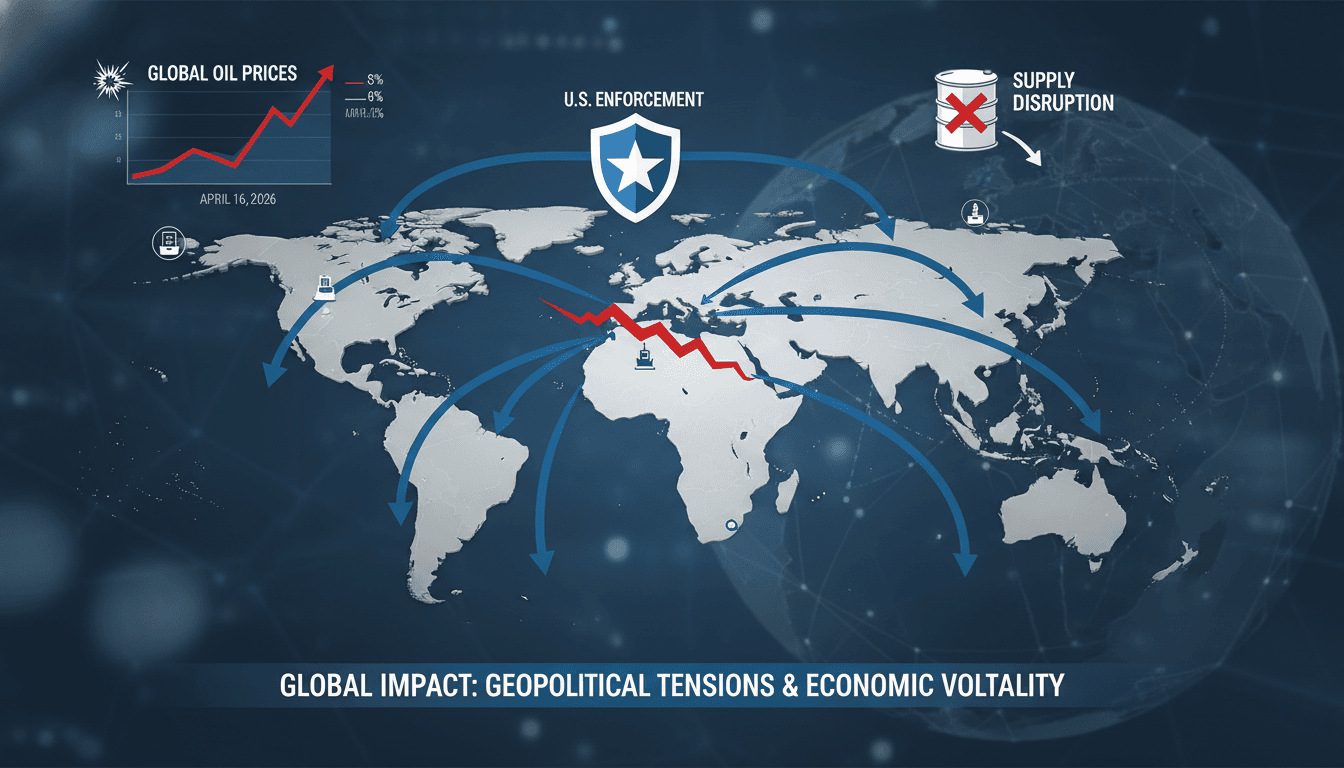
Here's what it means for you.
If you rely on global oil markets, expect price fluctuations and potential supply chain disruptions.
Why it matters
The expansion of the U.S. naval blockade could significantly impact global oil prices and trade routes.
What happened (in 30 seconds)
- April 13, 2026: President Trump announces a blockade of Iranian ports to enforce sanctions.
- April 15, 2026: U.S. Central Command fully implements the blockade, targeting Iranian maritime activities.
- April 16, 2026: The U.S. expands the blockade globally, warning Iran to accept a deal or face increased military pressure.
The context you actually need
- Heightened tensions: The blockade follows failed negotiations with Iran and ongoing geopolitical strains, including nuclear ambitions and regional conflicts.
- Economic stakes: Iran's daily oil revenue of approximately $400 million is at risk due to the interdiction of its shadow fleet.
- Market reactions: Oil prices surged above $100 per barrel, with predictions of reaching $150, affecting global markets and economies reliant on oil imports.
What's really happening
The U.S. naval blockade expansion is a strategic maneuver aimed at enforcing sanctions against Iran, which has been accused of defying international norms through its maritime activities. The blockade's initial announcement by President Trump on April 13, 2026, was a direct response to Iran's continued oil exports via a so-called "dark fleet," which consists of vessels operating under the radar to evade sanctions. By April 15, U.S. Central Command had fully implemented the blockade, asserting maritime superiority in the region.
The Pentagon's announcement on April 16 marked a significant escalation, as U.S. forces are now authorized to pursue Iranian-flagged vessels globally, including in the Indo-Pacific region. This move reflects a broader strategy to isolate Iran economically and politically, leveraging military presence to enforce compliance. Secretary of War Pete Hegseth's warning to Iran to "choose wisely" underscores the U.S. commitment to maintaining pressure on Tehran, with the military prepared to act if necessary.
The implications of this blockade are profound. For one, it risks disrupting global oil supply chains, particularly through the Strait of Hormuz, a critical chokepoint for oil transport. As a result, oil prices have already reacted sharply, with Brent crude exceeding $100 per barrel. The potential for prices to rise further to $150 is a concern for economies dependent on oil imports, including many in Europe and Asia.
Moreover, Iran's response to the blockade will be crucial. Reports indicate that Tehran is exploring alternative trade routes through Russia, Central Asia, and China, which could reshape regional trade dynamics. The U.S. Navy's readiness to interdict vessels globally signals a willingness to escalate military involvement if Iran continues its defiance. This situation creates a precarious balance, where any miscalculation could lead to military confrontations, further destabilizing the region.
In summary, the U.S. blockade expansion is not just a military tactic; it is a calculated economic strategy aimed at crippling Iran's oil revenue while asserting U.S. influence in global maritime operations. The outcome of this strategy will have far-reaching consequences for oil markets and geopolitical stability.
Who feels it first (and how)
- Oil traders: Immediate impact on pricing and trading strategies due to market volatility.
- Consumers: Increased fuel prices at the pump as oil prices rise.
- Logistics companies: Potential disruptions in supply chains reliant on oil imports.
- Middle Eastern economies: Countries like the UAE may benefit from higher oil prices but face risks from regional instability.
What to watch next
- Oil price trends: Monitor Brent crude prices for indications of market stability or further volatility.
- Iran's alternative trade routes: Watch for developments in Iran's partnerships with Russia and China, which could shift regional trade dynamics.
- U.S. military movements: Keep an eye on U.S. Navy deployments in the Indo-Pacific and Middle East, as increased military presence may signal further escalation.
The U.S. has expanded its naval blockade to global operations.
Oil prices will continue to fluctuate as markets react to the blockade and geopolitical tensions.
The long-term effectiveness of the blockade in compelling Iran to negotiate or change its behavior.
Frequently Asked Questions
- Why it matters?
- The expansion of the U.S. naval blockade could significantly impact global oil prices and trade routes.
- What happened (in 30 seconds)?
- April 13, 2026: President Trump announces a blockade of Iranian ports to enforce sanctions. April 15, 2026: U.S. Central Command fully implements the blockade, targeting Iranian maritime activities. April 16, 2026: The U.S. expands the blockade globally, warning Iran to accept a deal or face increased military pressure.
- What's really happening?
- The U.S. naval blockade expansion is a strategic maneuver aimed at enforcing sanctions against Iran, which has been accused of defying international norms through its maritime activities. The blockade's initial announcement by President Trump on April 13, 2026, was a direct response to Iran's continued oil exports via a so-called "dark fleet," which consists of vessels operating under the radar to evade sanctions. By April 15, U.S. Central Command had fully implemented the blockade, asserting ma
- Who feels it first (and how)?
- Oil traders: Immediate impact on pricing and trading strategies due to market volatility. Consumers: Increased fuel prices at the pump as oil prices rise. Logistics companies: Potential disruptions in supply chains reliant on oil imports. Middle Eastern economies: Countries like the UAE may benefit from higher oil prices but face risks from regional instability.
- What to watch next?
- Oil price trends: Monitor Brent crude prices for indications of market stability or further volatility. Iran's alternative trade routes: Watch for developments in Iran's partnerships with Russia and China, which could shift regional trade dynamics. U.S. military movements: Keep an eye on U.S. Navy deployments in the Indo-Pacific and Middle East, as increased military presence may signal further escalation.
Breaking news, politics, business, and entertainment from the U.S. and around the world.
"The New York Post is a tabloid-format newspaper known for its sensationalist headlines and conservative-leaning editorial tone."
— A47 Editor
US ‘locked and loaded’ as it announces aggressive expansion of Iran blockade, warns regime to ‘choose wisely’
The United States has announced an aggressive expansion of its blockade against Iranian-backed vessels, particularly in the Indo-Pacific region, as stated by General Dan Caine, Chairman of the Joint Chiefs of Staff. This move follows heightened tensi...
Capitol Hill news, legislation, and policy insight.
"The Hill specializes in U.S. politics and policy, with a focus on Capitol Hill developments and a reputation for insider reporting."
— A47 Editor
Caine says 13 ships made 'wise decision' to turn around amid US blockade
General Dan Caine, Chairman of the Joint Chiefs of Staff, reported that 13 ships have opted to turn back rather than navigate the U.S.-imposed blockade in the Strait of Hormuz. This decision reflects the captains' judgment amid heightened tensions in...