
Israeli Restrictions on Prosthetic Materials Impact 5,000 Amputees in Gaza
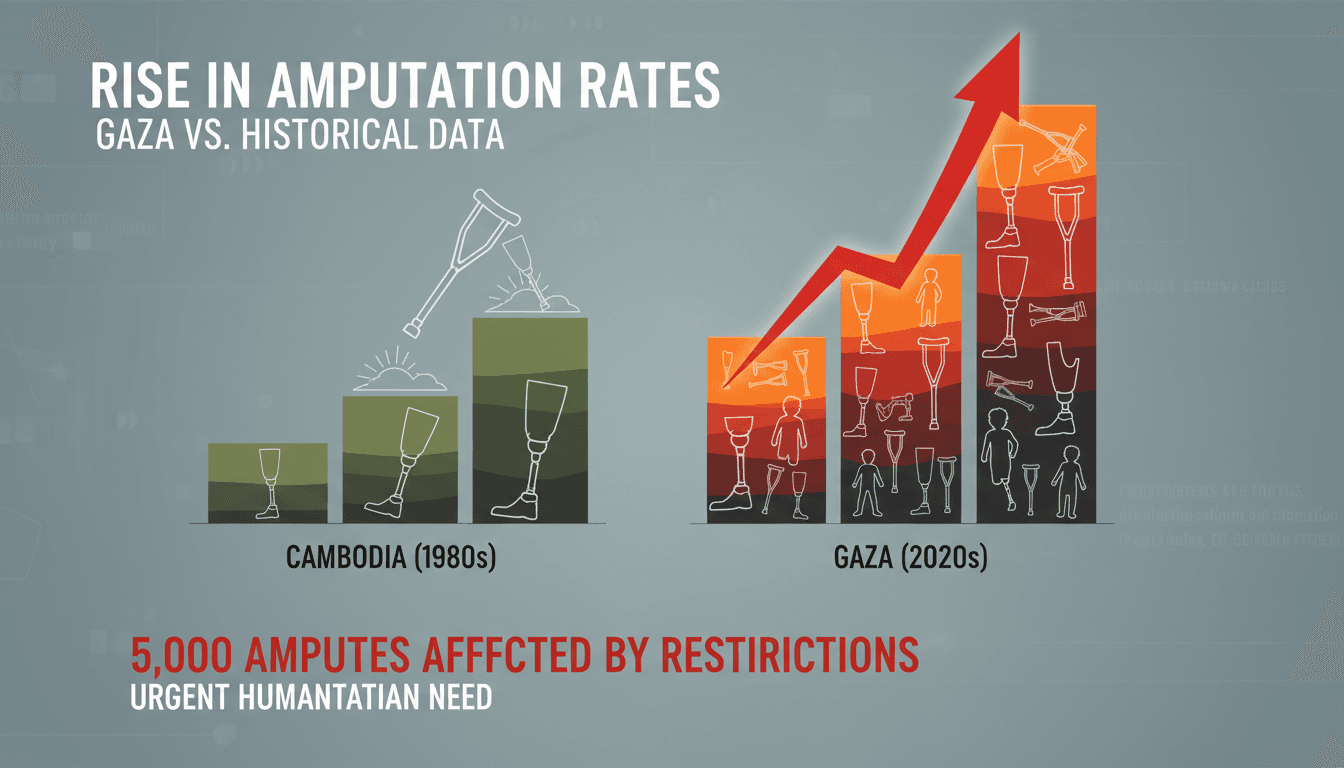
Here's what it means for you.
The ongoing humanitarian crisis in Gaza could impact global health initiatives and international aid strategies.
Why it matters
This situation highlights the intersection of conflict, healthcare access, and humanitarian response, affecting global perceptions of aid effectiveness.
What happened (in 30 seconds)
- On April 16, 2026, Reuters reported that Israeli restrictions on materials essential for prosthetic limb production have severely impacted nearly 5,000 amputees in Gaza.
- Approximately 25% of these amputees are children, facing heightened risks due to improvised prosthetics made from unsafe materials.
- Gaza's per capita amputation rate has surpassed historical peaks, raising alarms about the long-term health implications for the population.
The context you actually need
- Since October 7, 2023, Israel's military operations in Gaza have led to a significant increase in injuries, resulting in a surge of amputations.
- Restrictions imposed by Israel's COGAT on dual-use items like plaster are intended to prevent Hamas from exploiting these materials, but they have compounded existing humanitarian challenges.
- Medical facilities in Gaza are struggling with persistent shortages, forcing them to create makeshift prosthetics from scraps, which increases the risk of complications for patients.
What's really happening
The humanitarian crisis in Gaza is a direct consequence of the ongoing military conflict, which has resulted in a staggering number of injuries and amputations. Since the escalation of hostilities in October 2023, the region has seen a dramatic rise in the number of individuals requiring prosthetic limbs. Reports indicate that nearly 5,000 people, including a significant proportion of children, have undergone amputations due to explosive incidents, such as drone strikes and shelling.
Israeli authorities, through the Coordinator of Government Activities in the Territories (COGAT), have implemented strict regulations on the importation of materials deemed "dual-use," which includes essential items like plaster used for creating prosthetic molds. These restrictions are framed as security measures to prevent Hamas from utilizing these materials for military purposes. However, the unintended consequence has been a humanitarian disaster for those in need of medical assistance.
Medical professionals in Gaza report that the lack of access to proper prosthetic materials has forced clinics to resort to creating makeshift devices from plastic pipes and wood. This not only compromises the quality of care but also significantly increases the risk of infection and further injury for patients. The situation is exacerbated by the fact that Gaza's per capita amputation rate now exceeds historical peaks seen in Cambodia, a country long associated with the devastating effects of landmines.
The international community has responded with calls for increased humanitarian aid, but the Israeli government maintains its stance on restrictions, citing security concerns. Relief organizations are working tirelessly to provide support, yet the ongoing blockade and scrutiny of aid efforts complicate their missions. The Humanitarian and Inclusion Relief Organization has highlighted the dire need for proper prosthetic care, emphasizing that the current conditions are unsustainable and pose long-term health risks for the population.
As the crisis continues, the implications extend beyond immediate healthcare needs. The psychological and social impacts on the affected individuals and families are profound, affecting their ability to reintegrate into society and live fulfilling lives. The situation in Gaza serves as a stark reminder of the complex interplay between conflict, healthcare access, and humanitarian response, raising critical questions about the effectiveness of international aid strategies in conflict zones.
Who feels it first (and how)
- Amputees in Gaza: Facing severe limitations in accessing proper prosthetics, leading to increased health risks.
- Children: Representing 25% of amputees, they are particularly vulnerable to the long-term consequences of inadequate medical care.
- Medical professionals: Struggling with resource shortages, they are forced to improvise, impacting the quality of care provided.
- International aid organizations: Facing challenges in delivering effective support due to restrictions and scrutiny, complicating their missions.
What to watch next
- International Aid Responses: Monitor how global humanitarian organizations adapt their strategies in light of ongoing restrictions and the evolving situation in Gaza.
- Health Outcomes for Amputees: Track the long-term health implications for those using improvised prosthetics, which could inform future medical interventions.
- Policy Changes: Watch for any shifts in Israeli policy regarding the importation of medical materials, which could significantly impact the humanitarian landscape in Gaza.
Nearly 5,000 amputees in Gaza are struggling with inadequate prosthetic care.
The humanitarian crisis will continue to escalate without changes to current restrictions.
The potential for policy shifts from Israeli authorities regarding the importation of medical materials remains uncertain.
Frequently Asked Questions
- Why it matters?
- This situation highlights the intersection of conflict, healthcare access, and humanitarian response, affecting global perceptions of aid effectiveness.
- What happened (in 30 seconds)?
- On April 16, 2026, Reuters reported that Israeli restrictions on materials essential for prosthetic limb production have severely impacted nearly 5,000 amputees in Gaza. Approximately 25% of these amputees are children, facing heightened risks due to improvised prosthetics made from unsafe materials. Gaza's per capita amputation rate has surpassed historical peaks, raising alarms about the long-term health implications for the population.
- What's really happening?
- The humanitarian crisis in Gaza is a direct consequence of the ongoing military conflict, which has resulted in a staggering number of injuries and amputations. Since the escalation of hostilities in October 2023, the region has seen a dramatic rise in the number of individuals requiring prosthetic limbs. Reports indicate that nearly 5,000 people, including a significant proportion of children, have undergone amputations due to explosive incidents, such as drone strikes and shelling. Israeli au
- Who feels it first (and how)?
- Amputees in Gaza: Facing severe limitations in accessing proper prosthetics, leading to increased health risks. Children: Representing 25% of amputees, they are particularly vulnerable to the long-term consequences of inadequate medical care. Medical professionals: Struggling with resource shortages, they are forced to improvise, impacting the quality of care provided. International aid organizations: Facing challenges in delivering effective support due to restrictions and scrutiny, compl
- What to watch next?
- International Aid Responses: Monitor how global humanitarian organizations adapt their strategies in light of ongoing restrictions and the evolving situation in Gaza. Health Outcomes for Amputees: Track the long-term health implications for those using improvised prosthetics, which could inform future medical interventions. Policy Changes: Watch for any shifts in Israeli policy regarding the importation of medical materials, which could significantly impact the humanitarian landscape in Gaza
Arabic-language UAE newspaper coverage focused on domestic affairs, public institutions, business, society, and regional developments.
"Al Khaleej coverage generally reflects a mainstream UAE editorial lens with strong attention to public affairs, institutions, and regional developments."
— A47 Editor
القيود الإسرائيلية تزيد معاناة مبتوري الأطراف في غزة
Fourteen-year-old Palestinian child Fadl Al-Naji, who loved playing football, is now confined to his home in Gaza after losing both legs due to an Israeli drone strike in September. His mother, Najwa Al-Naji, shared old videos of him playing football...
Regional coverage and analysis focused on politics, diplomacy, and business across the Middle East.
"Al-Monitor is known for analytical reporting on Middle East politics and policy developments."
— A47 Editor
Gaza's war amputees short of prostheses under Israeli restrictions
In Gaza, the ongoing conflict has left many individuals, including 14-year-old Fadel al-Naji, without access to essential medical supplies such as prostheses. Al-Naji lost both legs in an Israeli drone strike, highlighting the severe impact of milita...