
Fuel and Food Supply Crisis in Pacific Island Nations Amid U.S.-Israeli-Iran War
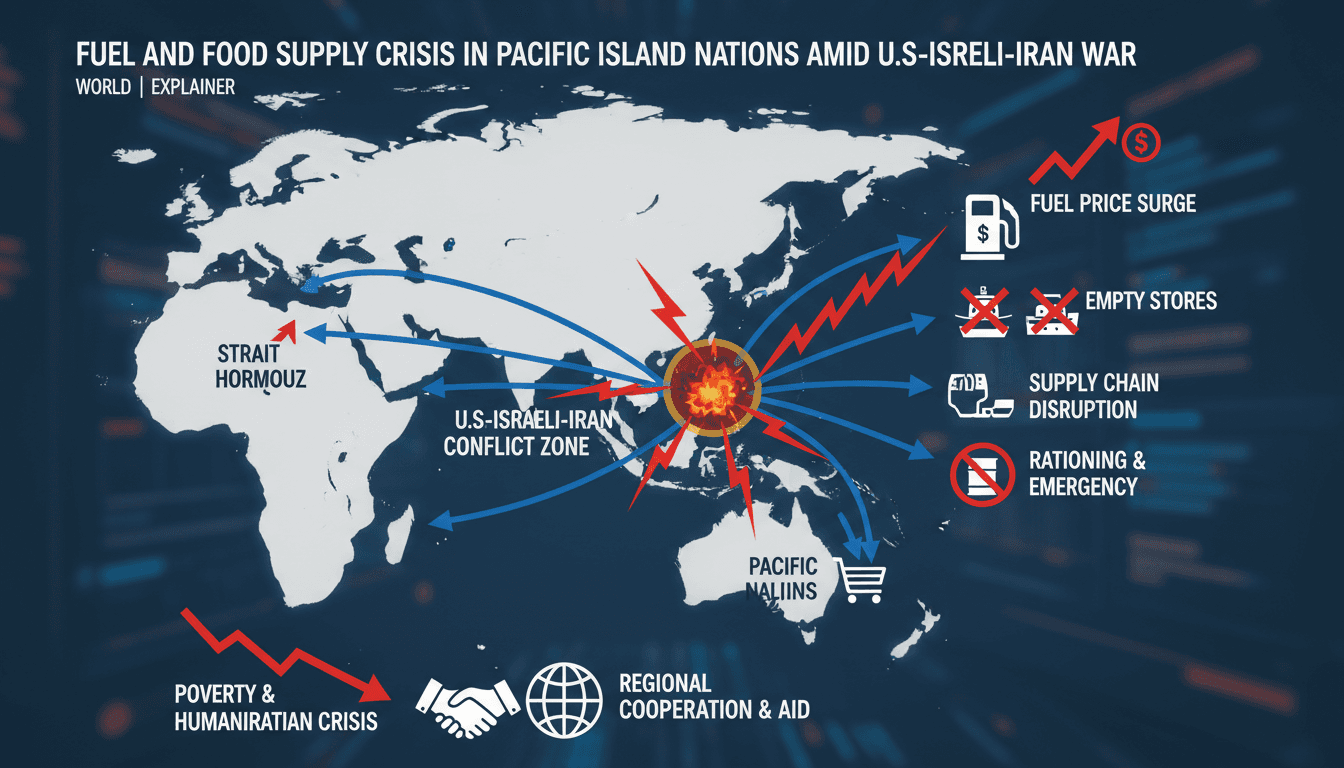
Here's what it means for you.
Rising costs and supply disruptions in the Pacific could impact global markets and trade routes, affecting prices and availability of goods worldwide.
Why it matters
The conflict's ripple effects threaten the stability of import-dependent economies, potentially leading to broader economic repercussions.
What happened (in 30 seconds)
- Fuel shortages: The U.S.-Israeli conflict with Iran has severely disrupted fuel supplies, leading to critical shortages in Pacific island nations.
- Price surges: Diesel, petrol, and kerosene prices in Papua New Guinea have surged by 70%, complicating food and medicine transport.
- Emergency measures: Governments have declared states of emergency and activated regional aid mechanisms to manage the crisis.
The context you actually need
- High import dependency: Pacific island nations rely heavily on imported diesel for over half of their electricity generation, with fuel imports comprising a significant portion of GDP.
- Strait of Hormuz disruptions: The conflict has blocked key shipping routes, stranding oil and LNG shipments and echoing vulnerabilities seen during the COVID-19 pandemic.
- Economic strain: The escalating costs are pushing many households into poverty, with 40% of Papua New Guinea's population already below the poverty line.
What's really happening
The ongoing U.S.-Israeli-Iran war, which escalated in early 2026, has led to significant disruptions in the Strait of Hormuz, a critical chokepoint for global oil and liquefied natural gas (LNG) shipments. By mid-April, fuel imports to Pacific island nations had plummeted to just one-quarter of the previous year's levels. This drastic reduction has triggered a series of economic shocks, particularly in countries like Papua New Guinea, where fuel price hikes have reached 70%.
The reliance on imported diesel for electricity generation means that these nations are particularly vulnerable to external shocks. With fuel imports accounting for 8-11% of GDP in most Pacific island nations and as high as 27% in Tuvalu, the economic implications are severe. Households are now forced to prioritize essential goods, leading to emergency declarations and the implementation of subsidies and price caps to mitigate the impact of soaring costs.
The Pacific Islands Forum activated its emergency mechanism for the first time since the COVID-19 pandemic, highlighting the urgency of the situation. Governments are scrambling to manage panic-buying and ensure that essential services, such as healthcare and food delivery, are not disrupted. The situation is exacerbated by the fact that many of these nations are geographically isolated, making them reliant on a fragile supply chain that is now under severe strain.
In response to the crisis, regional powers like New Zealand and Australia are stepping up diplomatic efforts to provide aid, while China has expressed interest in energy security cooperation. The Asian Development Bank has projected a moderation in regional growth to 3.4% for 2026 if the conflict resolves quickly, but the longer the war continues, the more entrenched the economic challenges will become.
Who feels it first (and how)
- Households: Families face skyrocketing costs for fuel and essential goods, leading to difficult choices about spending.
- Local businesses: Small businesses reliant on fuel for transport and operations are struggling to maintain profitability.
- Healthcare providers: Medical facilities are at risk of supply shortages, impacting patient care and health outcomes.
- Government officials: Leaders are under pressure to respond effectively to the crisis, balancing economic stability with public safety.
What to watch next
- Fuel price trends: Monitor fluctuations in fuel prices in the Pacific, as they will indicate the ongoing impact of the conflict on local economies.
- Aid responses: Watch for announcements from regional governments and international organizations regarding aid packages and support measures.
- Conflict developments: Keep an eye on the U.S.-Israeli-Iran war's progression, as any escalation or resolution will directly affect supply chains and economic stability in the Pacific.
Fuel shortages and price surges are currently affecting Pacific island nations.
Continued economic strain and potential for increased poverty levels in affected regions.
The long-term implications of the conflict on global supply chains and economic recovery in the Pacific.
Frequently Asked Questions
- Why it matters?
- The conflict's ripple effects threaten the stability of import-dependent economies, potentially leading to broader economic repercussions.
- What happened (in 30 seconds)?
- Fuel shortages: The U.S.-Israeli conflict with Iran has severely disrupted fuel supplies, leading to critical shortages in Pacific island nations. Price surges: Diesel, petrol, and kerosene prices in Papua New Guinea have surged by 70%, complicating food and medicine transport. Emergency measures: Governments have declared states of emergency and activated regional aid mechanisms to manage the crisis.
- What's really happening?
- The ongoing U.S.-Israeli-Iran war, which escalated in early 2026, has led to significant disruptions in the Strait of Hormuz, a critical chokepoint for global oil and liquefied natural gas (LNG) shipments. By mid-April, fuel imports to Pacific island nations had plummeted to just one-quarter of the previous year's levels. This drastic reduction has triggered a series of economic shocks, particularly in countries like Papua New Guinea, where fuel price hikes have reached 70%. The reliance on im
- Who feels it first (and how)?
- Households: Families face skyrocketing costs for fuel and essential goods, leading to difficult choices about spending. Local businesses: Small businesses reliant on fuel for transport and operations are struggling to maintain profitability. Healthcare providers: Medical facilities are at risk of supply shortages, impacting patient care and health outcomes. Government officials: Leaders are under pressure to respond effectively to the crisis, balancing economic stability with public safety.
- What to watch next?
- Fuel price trends: Monitor fluctuations in fuel prices in the Pacific, as they will indicate the ongoing impact of the conflict on local economies. Aid responses: Watch for announcements from regional governments and international organizations regarding aid packages and support measures. Conflict developments: Keep an eye on the U.S.-Israeli-Iran war's progression, as any escalation or resolution will directly affect supply chains and economic stability in the Pacific.
Regional coverage and analysis focused on politics, diplomacy, and business across the Middle East.
"Al-Monitor is known for analytical reporting on Middle East politics and policy developments."
— A47 Editor
Tiny Pacific nations face tough choices on food, fuel posed by Iran war
The ongoing conflict involving Iran has led to a significant global fuel crisis, impacting far-flung Pacific nations as they struggle to manage energy supplies amid rising costs for food and healthcare. Authorities are implementing fuel curbs to cope...
Regional coverage and analysis focused on politics, diplomacy, and business across the Middle East.
"Al-Monitor is known for analytical reporting on Middle East politics and policy developments."
— A47 Editor
War in Iran is causing biggest energy crisis in history, IEA says
The ongoing conflict in Iran, particularly involving the United States and Israel, has been identified by the International Energy Agency (IEA) as the catalyst for the largest energy crisis in history, severely disrupting global oil and gas supplies.
Business and economy coverage focused on Dubai, the UAE, Saudi Arabia, and the wider Middle East.
"Arabian Business is a well-known regional business outlet with strong focus on Gulf markets, leadership, and investment stories."
— A47 Editor
War in Iran is causing biggest energy crisis in history, IEA says
The ongoing war in Iran has led to a significant energy crisis, as reported by the International Energy Agency (IEA), which highlights the impact of disrupted maritime traffic in the Strait of Hormuz, a critical passage for global oil and liquefied n...
Top international stories selected by The Guardian editors.
"The Guardian is known for its progressive editorial stance and in-depth analysis."
— A47 Editor
Iran war energy crisis: how bad could it get? – The Latest
The Strait of Hormuz has been closed again by Iran's military, disrupting the transit of numerous commercial ships and escalating tensions with the United States following the seizure of an Iranian cargo ship. This closure comes amid ongoing conflict...
Global markets, investing, and macroeconomics from a premier financial newsroom.
"Bloomberg is respected for in-depth financial reporting and data-driven analysis."
— A47 Editor
Iran Takes Control of Hormuz Again Sending Oil Higher
Iran has reasserted control over the Strait of Hormuz, declaring it closed to maritime traffic amid reports of gunfire, following a brief period of optimism regarding shipping in the area. This escalation comes after the U.S. Navy seized an Iranian-f...
Global markets, investing, and macroeconomics from a premier financial newsroom.
"Bloomberg is respected for in-depth financial reporting and data-driven analysis."
— A47 Editor
Iran War: US Seizes Iranian Ship, Casting Doubt on Peace Talks | The Opening Trade 04/20/2026
The U.S. Navy seized an Iranian-flagged cargo ship in the Gulf of Oman over the weekend, marking a significant escalation in tensions in the Strait of Hormuz. This incident occurred shortly after Iran had announced the reopening of the waterway, whic...
Global markets, investing, and macroeconomics from a premier financial newsroom.
"Bloomberg is respected for in-depth financial reporting and data-driven analysis."
— A47 Editor
Oil and Gas Jump After US Seizure of Iranian Ship Imperils Talks
Oil and natural gas prices surged following the U.S. Navy's seizure of an Iranian-flagged cargo ship, escalating tensions in the Strait of Hormuz. This incident occurred during a chaotic weekend marked by Iran's aggressive actions towards vessels and...
Global markets, investing, and macroeconomics from a premier financial newsroom.
"Bloomberg is respected for in-depth financial reporting and data-driven analysis."
— A47 Editor
Hormuz at Standstill, Denting US-Iran Peace Deal Hopes
Shipping in the Strait of Hormuz has come to a near standstill after Iran reversed its earlier decision to reopen the waterway, firing on vessels attempting to pass and warning that it would block transits as long as the US blockade of Iranian ports ...