
Cryptocurrency Scam Targets Stranded Ships in Strait of Hormuz
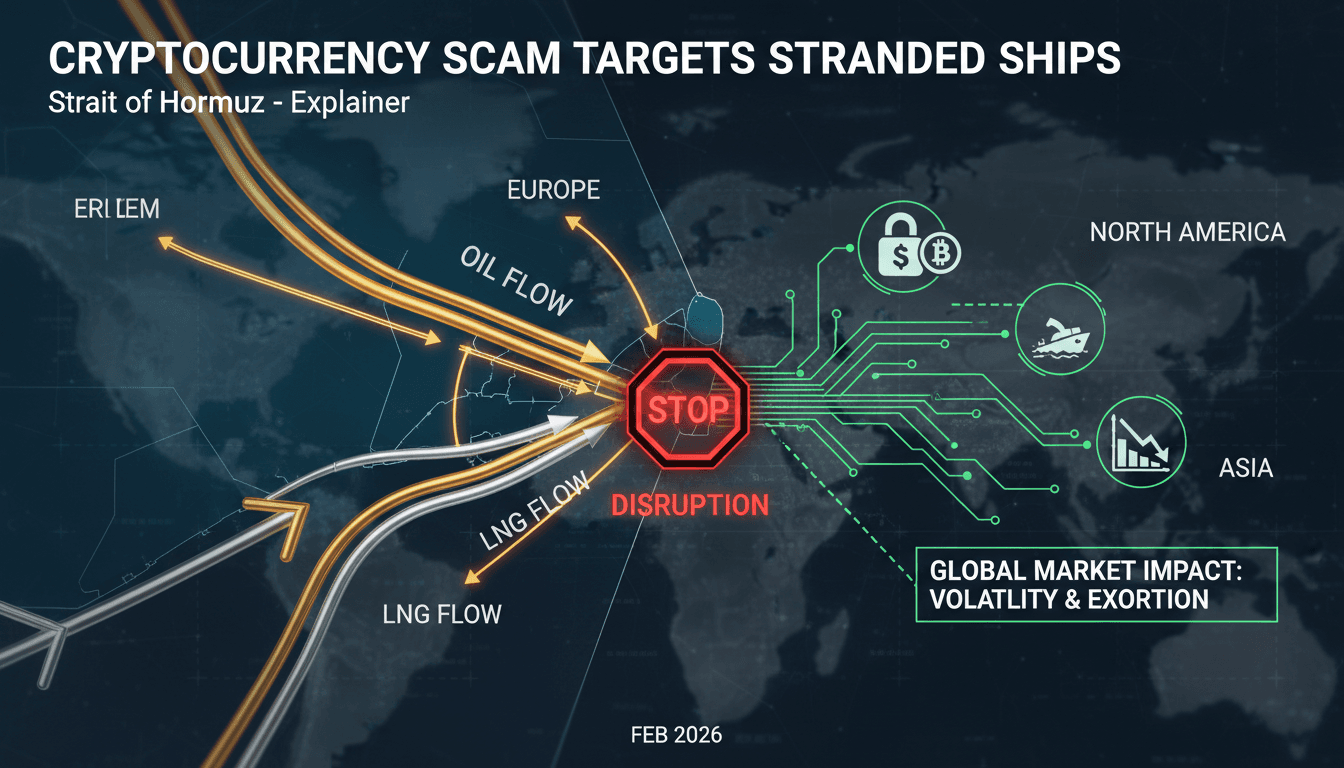
Here's what it means for you.
If you’re involved in global shipping or energy markets, this scam could disrupt your operations and increase costs.
Why it matters
The Strait of Hormuz is a critical chokepoint for global oil and LNG flows, and disruptions here can ripple through energy markets worldwide.
What happened (in 30 seconds)
- Fraudsters began targeting merchant vessels in the Strait of Hormuz with demands for fake Bitcoin and Tether transit fees in mid-April 2026.
- Global shipping firms received phishing messages promising safe passage through the strait in exchange for cryptocurrency payments.
- At least one vessel fell victim to the scam and was fired upon by Iranian forces while attempting transit.
The context you actually need
- The Strait of Hormuz is vital for global energy supply, facilitating 20% of the world’s oil and LNG shipments.
- Ongoing US-Iran tensions have led to the stranding of hundreds to 2,000 vessels and approximately 20,000 seafarers since late February 2026.
- Iran's proposal for cryptocurrency tolls during a ceasefire created an opportunity for scammers to exploit the situation.
What's really happening
In late February 2026, escalating tensions between the US and Iran erupted into conflict, marked by airstrikes and retaliatory actions that led to the closure of the Strait of Hormuz. This strategic waterway, which normally facilitates a significant portion of global oil and LNG shipments, became a flashpoint for maritime operations. By mid-April, the situation worsened as hundreds of vessels became stranded due to intermittent blockades imposed by both Iranian and US naval forces.
Amid this chaos, Iranian authorities briefly proposed the acceptance of Bitcoin for transit fees during ceasefire discussions on April 8-9. This announcement inadvertently set the stage for a new wave of fraud. Scammers began impersonating Iranian officials, sending phishing messages to shipping companies, demanding cryptocurrency payments for purported safe passage through the strait. The messages included requests for Bitcoin (BTC) and Tether (USDT) after reviewing vessel documentation, exploiting the confusion and urgency of the situation.
The maritime risk firm MARISKS issued warnings about these fraudulent communications on April 20-21, confirming that the messages were not affiliated with Iranian authorities. Despite these alerts, at least one vessel reportedly fell victim to the scam, leading to a dangerous encounter with Iranian forces. This incident highlights the vulnerabilities in maritime security during geopolitical crises, where legitimate operations can be easily disrupted by opportunistic fraud.
The implications of this scam extend beyond immediate financial losses for shipping firms. It raises significant concerns about the legal ramifications of cryptocurrency transactions under US sanctions, as well as the potential for increased scrutiny and regulation of maritime operations in conflict zones. As the situation evolves, the risk of further scams may persist, particularly as tensions in the region remain high and the stranding of vessels continues.
Who feels it first (and how)
- Shipping companies: Facing increased operational costs and potential losses from scams.
- Seafarers: Approximately 20,000 stranded individuals facing uncertain conditions and potential safety risks.
- Energy markets: Heightened volatility and supply chain disruptions affecting fuel prices and availability.
- Insurance firms: Increased claims and risk assessments related to maritime operations in conflict zones.
- Governments: Pressure to respond to security threats and ensure safe passage for commercial vessels.
What to watch next
- Increased maritime security measures: Watch for enhanced protocols and regulations from shipping firms and governments to mitigate fraud risks.
- Legal developments regarding cryptocurrency: Monitor potential changes in regulations affecting crypto transactions in conflict zones, especially under US sanctions.
- Geopolitical shifts in the region: Keep an eye on US-Iran relations and any developments that could further impact shipping traffic through the Strait of Hormuz.
Fraudsters are targeting stranded vessels with fake cryptocurrency demands.
Increased scrutiny and regulation of maritime operations in conflict zones will emerge.
The long-term impact on global energy markets and shipping operations remains uncertain.
Frequently Asked Questions
- Why it matters?
- The Strait of Hormuz is a critical chokepoint for global oil and LNG flows, and disruptions here can ripple through energy markets worldwide.
- What happened (in 30 seconds)?
- Fraudsters began targeting merchant vessels in the Strait of Hormuz with demands for fake Bitcoin and Tether transit fees in mid-April 2026. Global shipping firms received phishing messages promising safe passage through the strait in exchange for cryptocurrency payments. At least one vessel fell victim to the scam and was fired upon by Iranian forces while attempting transit.
- What's really happening?
- In late February 2026, escalating tensions between the US and Iran erupted into conflict, marked by airstrikes and retaliatory actions that led to the closure of the Strait of Hormuz. This strategic waterway, which normally facilitates a significant portion of global oil and LNG shipments, became a flashpoint for maritime operations. By mid-April, the situation worsened as hundreds of vessels became stranded due to intermittent blockades imposed by both Iranian and US naval forces. Amid this ch
- Who feels it first (and how)?
- Shipping companies: Facing increased operational costs and potential losses from scams. Seafarers: Approximately 20,000 stranded individuals facing uncertain conditions and potential safety risks. Energy markets: Heightened volatility and supply chain disruptions affecting fuel prices and availability. Insurance firms: Increased claims and risk assessments related to maritime operations in conflict zones. Governments: Pressure to respond to security threats and ensure safe passage for co
- What to watch next?
- Increased maritime security measures: Watch for enhanced protocols and regulations from shipping firms and governments to mitigate fraud risks. Legal developments regarding cryptocurrency: Monitor potential changes in regulations affecting crypto transactions in conflict zones, especially under US sanctions. Geopolitical shifts in the region: Keep an eye on US-Iran relations and any developments that could further impact shipping traffic through the Strait of Hormuz.
News, analysis, and thought leadership focusing exclusively on Bitcoin.
"Bitcoin Magazine is one of the original publications devoted to Bitcoin, offering in-depth news, analysis, and commentary."
— A47 Editor
Scammers Target Stranded Ships in Strait of Hormuz With Fake Bitcoin Transit Fees
Scammers are targeting global shipping firms by demanding fake transit fees in Bitcoin and Tether for vessels stranded in the Strait of Hormuz, amidst rising geopolitical tensions in the region. This fraudulent activity highlights the vulnerabilities...
UAE-based English-language newspaper covering regional politics, economics, and global affairs.
"The National reflects Emirati policy perspectives while maintaining international editorial standards."
— A47 Editor
Fraudsters offer ships Strait of Hormuz passage in exchange for crypto
Fraudsters are reportedly targeting shipping companies by offering safe passage through the Strait of Hormuz in exchange for cryptocurrency, exploiting the ongoing tensions and disruptions in the region. This scam comes amid heightened military activ...
Arabic-language coverage of political affairs and current events.
"Okaz political coverage typically follows mainstream Saudi framing on national and regional affairs."
— A47 Editor
فوضى هرمز تفتح باب الاحتيال.. رسوم وهمية لعبور السفن
A Greek maritime risk management company, Marisks, has issued a warning about fraudulent messages targeting shipping companies, claiming to secure safe passage for vessels through the Strait of Hormuz in exchange for cryptocurrency payments. These me...
Covers blockchain, cryptocurrency news, project analysis, and market insights.
"CoinDesk is a well-established cryptocurrency and blockchain news provider, offering comprehensive insights, market data, and industry research."
— A47 Editor
Crypto scammers offer ‘safe passage’ through Hormuz. At least one ship may have been conned.
Marisks, a maritime risk company, has issued a warning about scammers posing as Iranian authorities, offering 'safe passage' through the Hormuz Strait in exchange for bitcoin or USDT. This warning comes amid ongoing tensions and blockades affecting m...
Real-time updates, analysis, and reports on the blockchain and cryptocurrency sectors.
"Crypto News delivers real-time updates, analysis, and reports on the blockchain and cryptocurrency sectors."
— A47 Editor
Scammers seek crypto payments from ships stranded near Strait of Hormuz
MARISKS has issued a warning about scammers posing as Iranian authorities who are demanding cryptocurrency payments, specifically bitcoin or USDT, from ships stranded near the Strait of Hormuz. This alarming trend highlights the vulnerabilities faced...
Business and economy coverage focused on Dubai, the UAE, Saudi Arabia, and the wider Middle East.
"Arabian Business is a well-known regional business outlet with strong focus on Gulf markets, leadership, and investment stories."
— A47 Editor
Scam messages offering ships safe transit through Hormuz, security firm warns
MARISKS, a maritime risk management firm, has issued a warning to shipowners about fraudulent messages from unknown actors claiming to represent Iranian authorities. These messages demand cryptocurrency payments, specifically Bitcoin or Tether, for s...
Covers blockchain, cryptocurrency news, project analysis, and market insights.
"Cointelegraph is a leading crypto-focused media outlet known for timely news, analysis, and educational content related to blockchain and digital assets."
— A47 Editor
Scammers demand crypto from stranded ships in Strait of Hormuz: Report
Shipping companies with vessels stranded near the Strait of Hormuz are facing threats from scammers impersonating Iranian authorities, who are demanding cryptocurrency payments, specifically Bitcoin or USDt, for safe passage. This alarming trend has ...
Research, news, and analysis on blockchain startups, DeFi, and regulations.
"Crypto Briefing provides research, news, and analysis on blockchain startups, DeFi, and crypto regulations with investor-focused coverage."
— A47 Editor
Iranian actors demand crypto for safe passage in Strait of Hormuz
Iranian actors have demanded cryptocurrency as a means for safe passage through the strategically vital Strait of Hormuz, a key route for global oil trade. This demand arises amid escalating geopolitical tensions that threaten to disrupt oil supplies...
Regional coverage and analysis focused on politics, diplomacy, and business across the Middle East.
"Al-Monitor is known for analytical reporting on Middle East politics and policy developments."
— A47 Editor
Scam messages offering ships safe transit through Hormuz, security firm warns
A Greek maritime risk management firm, MARISKS, has issued a warning about fraudulent messages that promise safe passage through the Strait of Hormuz in exchange for cryptocurrency. These scams target shipping companies with vessels stranded west of ...