
Iran Conflict Causes Major Disruptions in Global Air Travel and Jet Fuel Supply
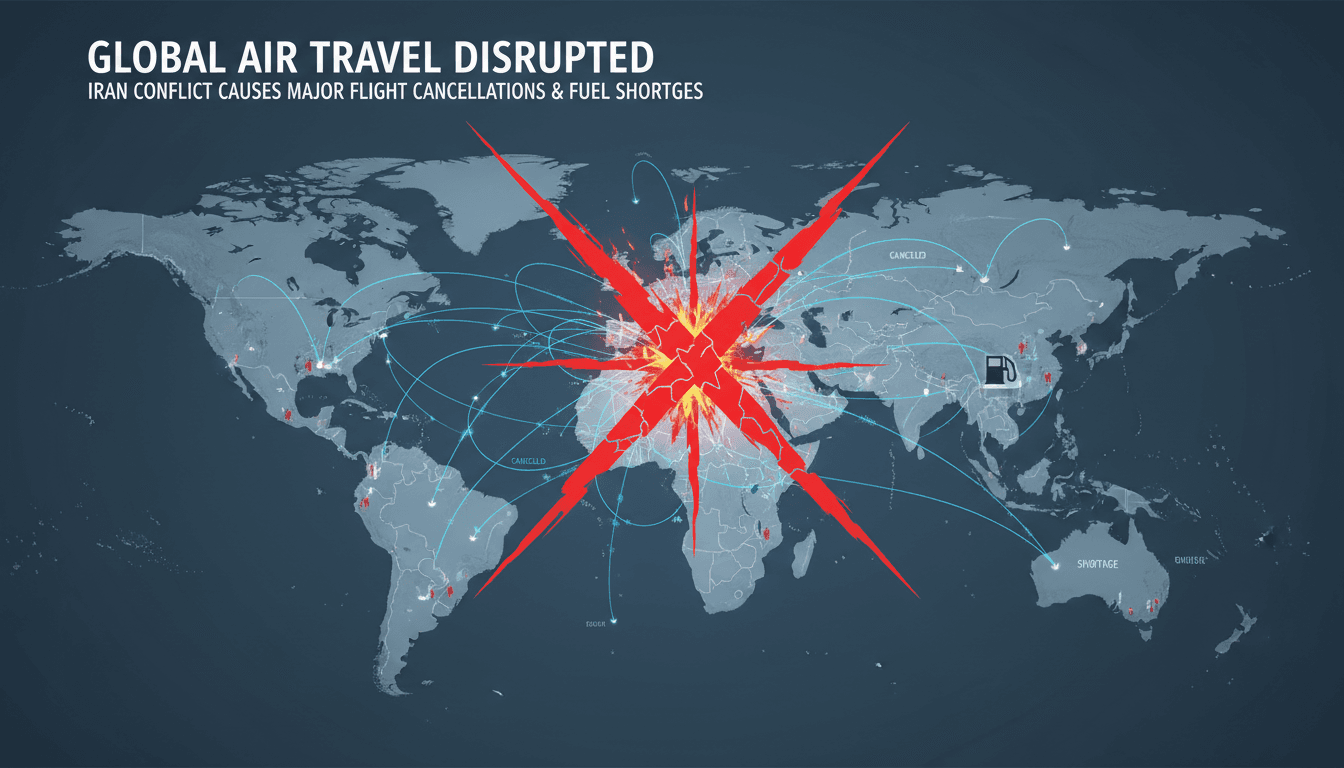
Here's what it means for you.
If you travel through the Middle East or rely on European airlines, expect ongoing disruptions and potential financial impacts.
Why it matters
The aviation industry faces unprecedented challenges, affecting global travel patterns and economic stability.
What happened (in 30 seconds)
- February 28, 2026: U.S.-Israeli strikes on Iran trigger immediate airspace closures, particularly impacting Dubai International Airport.
- Over 23,000 flights canceled globally, stranding more than one million passengers and prompting emergency accommodations.
- European jet fuel shortages arise from supply chain disruptions, leading to further cancellations and route adjustments.
The context you actually need
- Geopolitical tensions escalated with U.S. and Israeli airstrikes aimed at Iranian military targets, prompting Iran's retaliatory actions.
- Key aviation corridors were severed, particularly affecting routes through Iran, Iraq, and the UAE, which are critical for global air travel.
- Energy supply disruptions in the Strait of Hormuz have exacerbated jet fuel shortages in Europe, where 75% of fuel is imported and reserves are critically low.
What's really happening
The aviation crisis stemming from the Iran conflict is a complex interplay of geopolitical actions and market vulnerabilities. On February 28, 2026, U.S. and Israeli airstrikes targeted Iranian military sites, igniting a series of retaliatory strikes from Iran that included attacks on regional targets. This led to immediate airspace closures across Iran, Iraq, the UAE, Qatar, and Bahrain, effectively severing vital aviation corridors. Dubai International Airport (DXB), the world's busiest international hub, faced significant operational disruptions, with over 20,000 flights canceled in the initial days of the conflict.
As the crisis unfolded, the UAE government took swift action to accommodate stranded passengers, directing hotels to provide lodging at government expense. This response was crucial, as the number of affected travelers quickly escalated, with global cancellations exceeding 23,000 flights by early March. The situation was further complicated by debris from Iranian drones injuring individuals in Dubai, raising safety concerns and impacting tourism—a sector that contributes 12% to the UAE's GDP.
The conflict's ripple effects extended beyond immediate flight cancellations. European airlines, heavily reliant on jet fuel imports, began to face shortages as supply chains were disrupted. With only six weeks of reserves available, carriers like Lufthansa and KLM were forced to cancel routes, while British Airways and Air France suspended flights to Dubai amid ongoing volatility. The surge in jet fuel prices—up 60%—added financial strain to an already beleaguered travel industry, which faces a $12 trillion risk due to the crisis.
As the situation evolves, ceasefire negotiations are underway, but the Iranian Revolutionary Guard Corps (IRGC) actions have led to renewed flight suspensions, indicating that the conflict's resolution remains uncertain. The aviation sector is adapting with flexible rebooking policies and increased insurance claims, but the long-term implications for global travel patterns and economic stability are still unfolding.
Who feels it first (and how)
- Travelers: Stranded passengers face uncertainty and financial strain due to cancellations and limited rebooking options.
- Airlines: Major carriers are experiencing operational disruptions, increased costs, and potential revenue losses.
- Tourism sector: Destinations reliant on international travelers, particularly in the UAE, are seeing declines in visitor numbers and economic impact.
- Fuel suppliers: European jet fuel suppliers are grappling with shortages, affecting pricing and availability for airlines.
What to watch next
- Ceasefire negotiations: Progress or setbacks in talks could significantly impact air travel stability and operational capacity in the region.
- Jet fuel prices: Continued fluctuations in fuel costs will affect airline profitability and ticket prices, influencing travel demand.
- Passenger rights regulations: Changes in EU regulations regarding passenger protections during extraordinary circumstances may reshape airline policies and consumer expectations.
Over 23,000 flights have been canceled globally since the conflict began, stranding millions of passengers.
Continued disruptions in air travel and jet fuel supply will persist as geopolitical tensions remain high.
The timeline for a resolution to the conflict and its long-term effects on global aviation and tourism.
Frequently Asked Questions
- Why it matters?
- The aviation industry faces unprecedented challenges, affecting global travel patterns and economic stability.
- What happened (in 30 seconds)?
- February 28, 2026: U.S.-Israeli strikes on Iran trigger immediate airspace closures, particularly impacting Dubai International Airport. Over 23,000 flights canceled globally, stranding more than one million passengers and prompting emergency accommodations. European jet fuel shortages arise from supply chain disruptions, leading to further cancellations and route adjustments.
- What's really happening?
- The aviation crisis stemming from the Iran conflict is a complex interplay of geopolitical actions and market vulnerabilities. On February 28, 2026, U.S. and Israeli airstrikes targeted Iranian military sites, igniting a series of retaliatory strikes from Iran that included attacks on regional targets. This led to immediate airspace closures across Iran, Iraq, the UAE, Qatar, and Bahrain, effectively severing vital aviation corridors. Dubai International Airport (DXB), the world's busiest intern
- Who feels it first (and how)?
- Travelers: Stranded passengers face uncertainty and financial strain due to cancellations and limited rebooking options. Airlines: Major carriers are experiencing operational disruptions, increased costs, and potential revenue losses. Tourism sector: Destinations reliant on international travelers, particularly in the UAE, are seeing declines in visitor numbers and economic impact. Fuel suppliers: European jet fuel suppliers are grappling with shortages, affecting pricing and availability
- What to watch next?
- Ceasefire negotiations: Progress or setbacks in talks could significantly impact air travel stability and operational capacity in the region. Jet fuel prices: Continued fluctuations in fuel costs will affect airline profitability and ticket prices, influencing travel demand. Passenger rights regulations: Changes in EU regulations regarding passenger protections during extraordinary circumstances may reshape airline policies and consumer expectations.
Global business headlines with AI angles.
"General business outlet that frequently covers AI."
— A47 Editor
Iran Travel Chaos: How Are Passengers Protected Amid Flight Cancellations?
The ongoing conflict in Iran has resulted in significant jet fuel shortages, leading to widespread flight cancellations and disruptions among European airlines. As airlines adjust their routes and schedules, passengers are facing potential delays and...
Corporate leadership, finance, technology, and market trends.
"Fortune covers financial trends, leadership, and innovation with a pragmatic editorial approach."
— A47 Editor
The jet-fuel surge is making global flight connections disappear
The International Energy Agency (IEA) has issued a stark warning that Europe has only about six weeks of jet fuel supplies left, primarily due to ongoing disruptions linked to the conflict in Iran. This situation has led to significant concerns among...
UK and international business news, economics, and corporate coverage.
"The Guardian’s business section covers finance and markets with a progressive editorial tone."
— A47 Editor
Can Europe avoid a summer of holiday flight and cross-Channel travel chaos?
Passengers planning summer holidays in Europe face potential flight cancellations and long airport queues due to fuel shortages and the EU's new entry-exit system. The ongoing conflict in Iran has led to concerns about the availability of jet fuel, w...
News and current affairs from across Europe.
"The Guardian is known for its progressive editorial stance and in-depth analysis."
— A47 Editor
Can Europe avoid a summer of holiday flight and cross-Channel travel chaos?
Passengers planning summer holidays in Europe face potential flight cancellations and long airport queues due to fuel shortages and the EU's new entry-exit system. The ongoing conflict in Iran has led to concerns about the availability of jet fuel, w...