
United States Implements 100% Tariffs on Imported Patented Pharmaceuticals
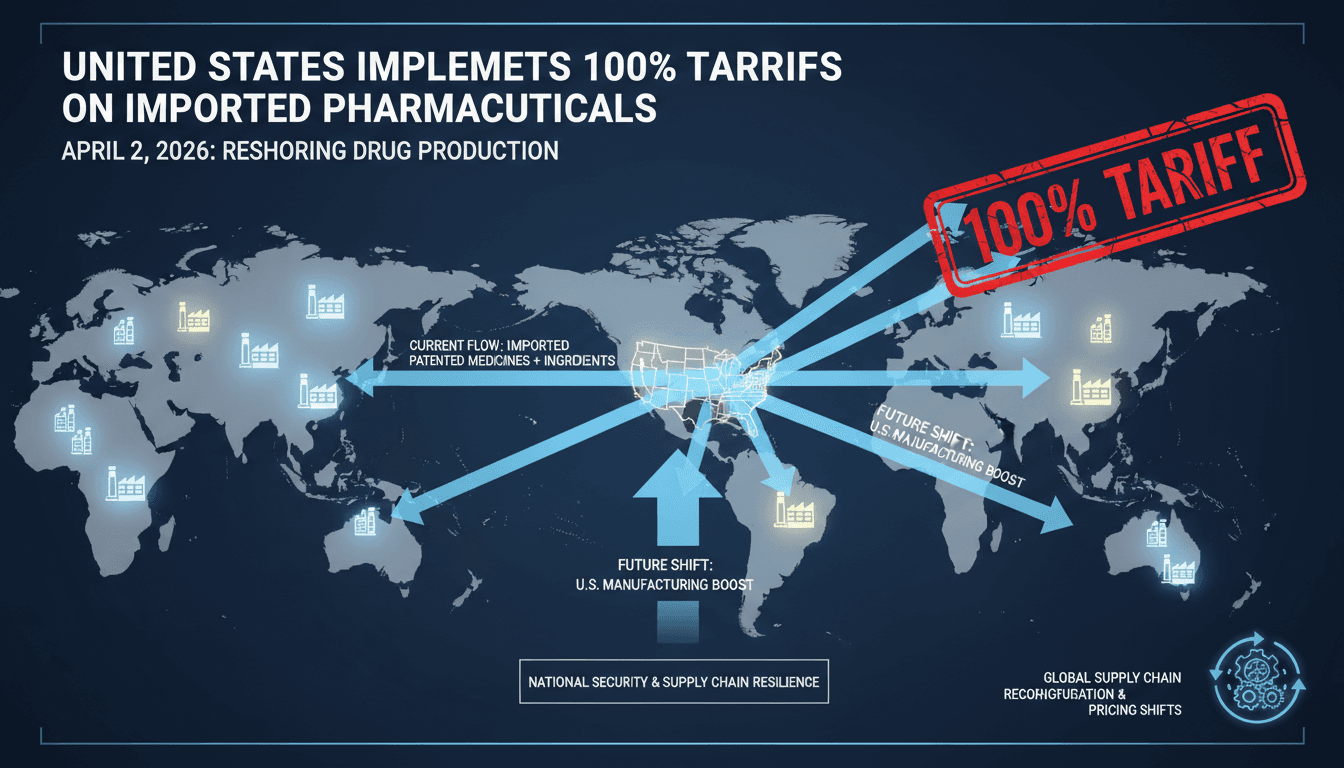
Here's what it means for you.
If you rely on patented medications, expect potential price increases and shifts in availability.
Why it matters
This policy could reshape the U.S. pharmaceutical landscape, impacting drug prices and supply chains.
What happened (in 30 seconds)
- On April 2, 2026, President Trump imposed 100% tariffs on imported patented pharmaceuticals and ingredients.
- The tariffs aim to reduce U.S. reliance on foreign-produced drugs, with compliance timelines of 120-180 days for companies.
- Exemptions exist for firms committing to U.S. manufacturing, while generics and biosimilars from certain countries remain unaffected.
The context you actually need
- 53% of patented pharmaceuticals distributed in the U.S. are produced abroad, highlighting significant import dependence.
- The tariffs follow a U.S. Department of Commerce investigation that identified import reliance as a national security risk.
- Previous tariff initiatives were delayed or invalidated, but this new measure builds on earlier efforts to reshore manufacturing, which attracted $400 billion in investment commitments.
What's really happening
The imposition of 100% tariffs on imported patented pharmaceuticals is a strategic maneuver aimed at bolstering national security by reducing the United States' dependency on foreign drug production. This policy, enacted under Section 232 of the Trade Expansion Act of 1962, is rooted in findings from a U.S. Department of Commerce investigation that identified excessive reliance on imports as a threat to public health and defense capabilities.
The timing of this announcement coincides with the one-year anniversary of the "Liberation Day" tariffs, which had previously aimed to adjust drug pricing structures but faced legal challenges. By imposing these tariffs, the Trump administration is signaling a commitment to reshoring pharmaceutical manufacturing, a move that has already garnered substantial investment pledges from the industry.
The tariffs will be phased in over 120 days for large companies and 180 days for smaller firms, allowing them time to adjust their supply chains. Companies can avoid the full tariff by committing to onshore production or entering into most-favored-nation pricing agreements, which could lead to a 0% tariff rate. This creates a clear incentive for pharmaceutical companies to relocate their manufacturing operations to the U.S., potentially revitalizing domestic production capabilities.
However, the policy also raises concerns about healthcare costs. The U.S. Chamber of Commerce has criticized the tariffs, warning that they could lead to increased prices for consumers as companies pass on the costs of tariffs. The pharmaceutical industry is already experiencing stock declines, particularly among Indian exporters who have relied heavily on the U.S. market for their patented drugs.
While the tariffs do include exemptions for generics and biosimilars from certain trade partners, the overall impact on drug availability and pricing remains to be seen. The potential for limited global supply disruptions exists, but early analyses suggest that the exemptions may mitigate some of these risks.
Overall, this policy reflects a broader trend of nations reassessing their supply chain dependencies in light of recent global events, including the COVID-19 pandemic, which exposed vulnerabilities in international trade networks.
Who feels it first (and how)
- Pharmaceutical companies: Facing increased costs and pressure to relocate manufacturing.
- Consumers: Potentially facing higher prices for patented medications.
- Healthcare providers: Adjusting to changes in drug availability and pricing.
- Investors: Particularly in pharmaceutical stocks, which may see volatility due to market reactions.
What to watch next
- Compliance pathways: Monitor how many companies opt for onshoring versus paying the tariffs, as this will indicate the effectiveness of the policy.
- Market reactions: Keep an eye on pharmaceutical stock performance and consumer prices in the coming months to gauge the impact of the tariffs.
- Global supply chain shifts: Watch for changes in sourcing strategies among pharmaceutical companies, particularly those in regions like Dubai that may benefit from reshoring trends.
The tariffs are effective immediately, with compliance timelines set for large and small companies.
Increased prices for patented pharmaceuticals in the U.S. market as companies adjust to tariffs.
The long-term impact on drug availability and the overall health of the pharmaceutical market.
Frequently Asked Questions
- Why it matters?
- This policy could reshape the U.S. pharmaceutical landscape, impacting drug prices and supply chains.
- What happened (in 30 seconds)?
- On April 2, 2026, President Trump imposed 100% tariffs on imported patented pharmaceuticals and ingredients. The tariffs aim to reduce U.S. reliance on foreign-produced drugs, with compliance timelines of 120-180 days for companies. Exemptions exist for firms committing to U.S. manufacturing, while generics and biosimilars from certain countries remain unaffected.
- What's really happening?
- The imposition of 100% tariffs on imported patented pharmaceuticals is a strategic maneuver aimed at bolstering national security by reducing the United States' dependency on foreign drug production. This policy, enacted under Section 232 of the Trade Expansion Act of 1962, is rooted in findings from a U.S. Department of Commerce investigation that identified excessive reliance on imports as a threat to public health and defense capabilities. The timing of this announcement coincides with the
- Who feels it first (and how)?
- Pharmaceutical companies: Facing increased costs and pressure to relocate manufacturing. Consumers: Potentially facing higher prices for patented medications. Healthcare providers: Adjusting to changes in drug availability and pricing. Investors: Particularly in pharmaceutical stocks, which may see volatility due to market reactions.
- What to watch next?
- Compliance pathways: Monitor how many companies opt for onshoring versus paying the tariffs, as this will indicate the effectiveness of the policy. Market reactions: Keep an eye on pharmaceutical stock performance and consumer prices in the coming months to gauge the impact of the tariffs. Global supply chain shifts: Watch for changes in sourcing strategies among pharmaceutical companies, particularly those in regions like Dubai that may benefit from reshoring trends.
Capitol Hill news, legislation, and policy insight.
"The Hill specializes in U.S. politics and policy, with a focus on Capitol Hill developments and a reputation for insider reporting."
— A47 Editor
Trump unveils 100% tariff on branded pharmaceutical imports
President Trump has signed an executive order imposing a 100% tariff on branded pharmaceuticals imported from outside the U.S. This move follows his threats to enforce tariffs on drugmakers throughout 2025 to secure Most Favored Nation agreements aim...
News across North, Central, and South America including politics and economics.
"France 24 is viewed as a globally focused outlet with balanced coverage and a European perspective."
— A47 Editor
Trump signs order threatening up to 100% tariffs on pharmaceuticals
US President Donald Trump has signed an order imposing tariffs on pharmaceuticals that could reach up to 100% unless drug manufacturers negotiate pricing agreements with the administration. This decision marks a significant escalation in Trump's trad...
Conservative-leaning political and national coverage.
"The Washington Times is a conservative-leaning newspaper known for its political coverage and advocacy of right-of-center viewpoints."
— A47 Editor
Trump unveils 100% tariff on some patented drugs on 'Liberation Day' anniversary
President Donald Trump signed an executive order imposing a potential 100% tariff on certain patented drugs from pharmaceutical companies that do not negotiate price reductions with his administration. This announcement coincided with the anniversary...
Global business headlines with AI angles.
"General business outlet that frequently covers AI."
— A47 Editor
Trump Slaps 100% Tariffs on Drugmakers That Refuse to Cut Prices
President Donald Trump announced a significant pharmaceutical trade crackdown, imposing tariffs of up to 100% on imported branded drugs from companies that do not agree to lower U.S. prices or relocate production to the United States. This move escal...
Public health, medical research, healthcare policy, and pharmaceutical developments.
"Dow Jones is a major financial news provider with a professional tone and broad coverage, including specialized health-sector reporting."
— A47 Editor
The U.S. will impose tariffs of up to 100% on branded pharmaceuticals, though countries or drugmakers that strike deals with the Trump administration can receive lower levies or none at all
The U.S. government, under the Trump administration, has announced the imposition of tariffs of up to 100% on imported branded pharmaceuticals. This decision aims to encourage drugmakers and countries to negotiate pricing deals or invest in manufactu...
Insights and news on social issues, policy, and political movements across the United States.
"The Wall Street Journal is known for its deep political coverage, especially at the intersection of policy, regulation, and social dynamics."
— A47 Editor
The U.S. will impose tariffs of up to 100% on branded pharmaceuticals, though countries or drugmakers that strike deals with the Trump administration can receive lower levies or none at all
The U.S. government, under the Trump administration, has announced the imposition of tariffs of up to 100% on imported branded pharmaceuticals. This decision aims to encourage drugmakers and countries to negotiate pricing deals or invest in manufactu...
UK and international business news, economics, and corporate coverage.
"The Guardian’s business section covers finance and markets with a progressive editorial tone."
— A47 Editor
Trump threatens 100% tariff on US drug makers that don’t strike deals to lower prices
Donald Trump has threatened to impose a 100% tariff on pharmaceutical companies that fail to negotiate deals aimed at lowering drug prices in the United States. This new tax will specifically target branded drugs and their active ingredients, while g...
News from the United States including domestic politics, society, and culture.
"The Guardian is known for its progressive editorial stance and in-depth analysis, often advocating for social justice, environmental issues, and liberal values."
— A47 Editor
Trump threatens 100% tariff on US drug makers that don’t strike deals to lower prices
Donald Trump has threatened to impose a 100% tariff on pharmaceutical companies that fail to negotiate deals aimed at lowering drug prices in the United States. This new tax will specifically target branded drugs and their active ingredients, while g...
International coverage from The Guardian's global desks.
"The Guardian is known for its progressive editorial stance and in-depth analysis."
— A47 Editor
Trump threatens 100% tariff on US drug makers that don’t strike deals to lower prices
Donald Trump has threatened to impose a 100% tariff on pharmaceutical companies that fail to negotiate deals aimed at lowering drug prices in the United States. This new tax will specifically target branded drugs and their active ingredients, while g...
Right-of-center views on political news.
"The Washington Times is a conservative-leaning newspaper known for its political coverage and advocacy of right-of-center viewpoints."
— A47 Editor
Trump imposes 100% tariff on imported drugs, overhauls steel tariffs
President Trump has announced a 100% tariff on drugmakers that have not reached pricing agreements with his administration, aiming to lower drug costs for American consumers. This decision also includes adjustments to tariffs on metal products such a...
Macro commentary, policy analysis, growth/inflation themes, and global outlooks.
"Contextual macro coverage that complements day-to-day market headlines."
— A47 Editor
Trump imposes 100% tariff on patented pharmaceuticals
Former President Trump has imposed a 100% tariff on patented pharmaceuticals, a significant move that reflects his administration's ongoing focus on reshaping trade policies. This decision is part of a broader strategy to leverage tariffs as a negoti...