
Iran's Internet Blackout Bypassed by Satellite Technology Amid Protests
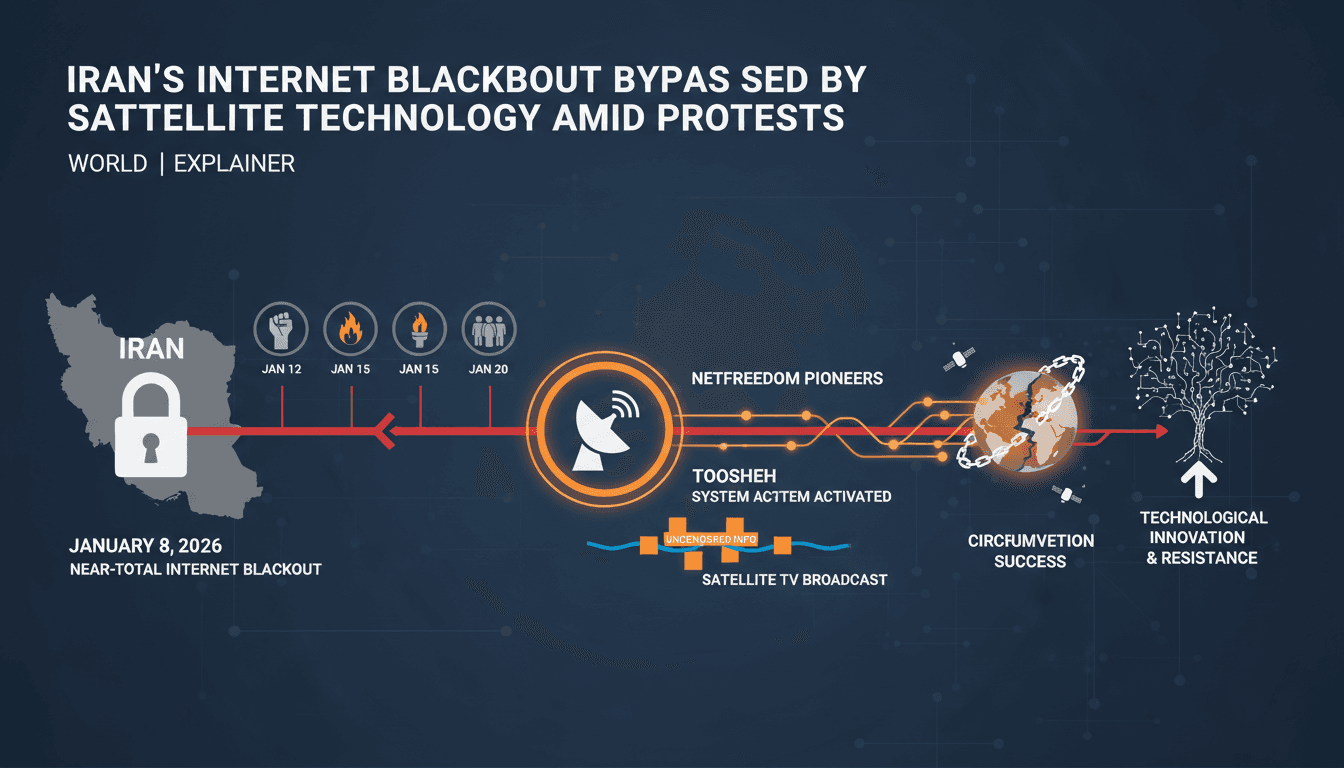
Here's what it means for you.
The ongoing internet blackout in Iran highlights the vulnerabilities of digital communication and the potential for alternative information channels to emerge in crisis situations.
Why it matters
This situation underscores the fragility of internet access in authoritarian regimes and the innovative methods used to circumvent censorship.
What happened (in 30 seconds)
- Iran imposed a near-total internet blackout on January 8, 2026, isolating over 90 million citizens amid protests.
- NetFreedom Pioneers activated the Toosheh system thirteen days later, embedding uncensored news within satellite TV broadcasts to bypass government controls.
- The blackout has persisted for over 38 days, with ongoing efforts to provide information through satellite technology despite government crackdowns.
The context you actually need
- Iran's National Information Network allows for rapid censorship and control over internet traffic, making it difficult for citizens to access information.
- Economic collapse and political repression have fueled protests, reminiscent of previous uprisings in 2019, leading to similar blackouts.
- International tensions have escalated, particularly following U.S. and Israeli airstrikes, prompting renewed restrictions on communication.
What's really happening
On January 8, 2026, Iran experienced its first full communications blackout, a drastic measure taken by the government in response to widespread protests against economic hardship and political repression. This blackout effectively dropped connectivity to near zero, isolating over 90 million citizens. Thirteen days later, on January 21, NetFreedom Pioneers reactivated the Toosheh system, a technology designed to embed files within free-to-air satellite TV broadcasts. This innovative approach allowed for the dissemination of critical information, including opposition statements, news from international outlets like BBC Persian and VOA Farsi, first-aid guides, and instructions for setting up Starlink terminals.
The blackout was exacerbated by U.S. and Israeli airstrikes in late February 2026, which prompted another round of communication restrictions. By April 2026, the blackout had extended beyond 38 days, marking the longest recorded internet shutdown in any country. Despite the Iranian government's efforts to jam signals and arrest users possessing satellite terminals, Toosheh and approximately 50,000 smuggled Starlink terminals provided a crucial lifeline for information access.
Iranian authorities responded aggressively, deploying Russian Krasukha-4 jammers against Starlink communications, seizing satellite dishes, and arresting individuals caught with terminals, labeling them as spies. While partial SMS restoration occurred by late January, full internet access remained severely limited. The protests faced brutal suppression, resulting in over 7,000 confirmed deaths, and businesses reported significant losses due to the economic fallout from the blackout, totaling $214 million in the initial days.
The Toosheh system has become a vital tool for opposition coordination, allowing protesters to organize and share information despite the government's attempts to stifle dissent. International observers have condemned the blackout, viewing it as a tactic to cover up state violence against protesters. The situation in Iran serves as a stark reminder of the lengths to which authoritarian regimes will go to maintain control and the resilience of citizens seeking to access uncensored information.
Who feels it first (and how)
- Iranian citizens: Directly impacted by the loss of communication and access to information.
- Opposition groups: Utilizing Toosheh for coordination and information dissemination.
- Businesses: Facing economic losses due to operational disruptions and currency crashes.
- International observers: Monitoring the situation for implications on human rights and global stability.
- UAE residents: Experiencing service outages due to Iranian cyberattacks on regional data centers.
What to watch next
- International responses: Watch for potential sanctions or diplomatic actions from Western nations in response to Iran's crackdown on dissent.
- Technological adaptations: Monitor the development and deployment of alternative communication technologies that may emerge in response to ongoing censorship.
- Protest dynamics: Observe how the protests evolve, particularly in light of government repression and the effectiveness of information-sharing tools like Toosheh.
The blackout has isolated over 90 million citizens and has lasted for over 38 days.
The Iranian government will continue to suppress dissent and restrict access to information.
The long-term impact of these protests on Iran's political landscape and the potential for regime change.
Frequently Asked Questions
- Why it matters?
- This situation underscores the fragility of internet access in authoritarian regimes and the innovative methods used to circumvent censorship.
- What happened (in 30 seconds)?
- Iran imposed a near-total internet blackout on January 8, 2026, isolating over 90 million citizens amid protests. NetFreedom Pioneers activated the Toosheh system thirteen days later, embedding uncensored news within satellite TV broadcasts to bypass government controls. The blackout has persisted for over 38 days, with ongoing efforts to provide information through satellite technology despite government crackdowns.
- What's really happening?
- On January 8, 2026, Iran experienced its first full communications blackout, a drastic measure taken by the government in response to widespread protests against economic hardship and political repression. This blackout effectively dropped connectivity to near zero, isolating over 90 million citizens. Thirteen days later, on January 21, NetFreedom Pioneers reactivated the Toosheh system, a technology designed to embed files within free-to-air satellite TV broadcasts. This innovative approach all
- Who feels it first (and how)?
- Iranian citizens: Directly impacted by the loss of communication and access to information. Opposition groups: Utilizing Toosheh for coordination and information dissemination. Businesses: Facing economic losses due to operational disruptions and currency crashes. International observers: Monitoring the situation for implications on human rights and global stability. UAE residents: Experiencing service outages due to Iranian cyberattacks on regional data centers.
- What to watch next?
- International responses: Watch for potential sanctions or diplomatic actions from Western nations in response to Iran's crackdown on dissent. Technological adaptations: Monitor the development and deployment of alternative communication technologies that may emerge in response to ongoing censorship. Protest dynamics: Observe how the protests evolve, particularly in light of government repression and the effectiveness of information-sharing tools like Toosheh.
Engineering, robotics, AI, and computing coverage from IEEE's flagship magazine.
"IEEE Spectrum provides deep technical insight and rigorous analysis, often cited by researchers and industry professionals alike."
— A47 Editor
Stealth Signals Are Bypassing Iran’s Internet Blackout
On January 8, 2026, the Iranian government implemented a near-total communications shutdown, marking the first full information blackout in the country, which affected over 90 million people. This unprecedented lockdown severely restricted internet a...
Technology business and AI-related headlines.
"Data-driven tech newsroom with global scope."
— A47 Editor
Iran Offers Limited Internet in Rare Move to Stem War Losses
Iran has initiated a limited restoration of internet connectivity for select businesses and individuals, a response to the economic fallout from a nationwide shutdown that began over six weeks ago amid escalating conflict with the US and Israel.
Technology business news, market impacts, and innovation trends.
"Bloomberg is a premier financial and tech news provider, respected for its in-depth reporting and analytical rigor."
— A47 Editor
Iran Offers Limited Internet in Rare Move to Stem War Losses
Iran has initiated a limited restoration of internet connectivity for select businesses and individuals, a response to the economic fallout from a nationwide shutdown that began over six weeks ago amid escalating conflict with the US and Israel.
Curated tech headlines including AI stories.
"Influential aggregator surfacing the day’s top tech/AI links."
— A47 Editor
Iran's internet blackout enters a record 45th day, per NetBlocks, amid the war; the country's 90M people now rely on the domestic National Information Network (Financial Times)
Iran's internet blackout has now reached a record 45 days, with the country's 90 million citizens increasingly reliant on the National Information Network due to severe disruptions caused by military actions involving the US and Israel. This blackout...
Tech news, hardware, and AI tools coverage.
"PC/tech site increasingly covering AI hardware and apps."
— A47 Editor
Iran's internet blackout passes 1,000 hours as connectivity drops to near zero
Iran is currently experiencing a significant internet blackout that has lasted over 1,000 hours, with connectivity levels plummeting to approximately 1% of pre-blackout traffic. This disruption began on February 28, coinciding with military strikes t...