
Trump Issues Annihilation Ultimatum to Iran Over Strait of Hormuz Closure
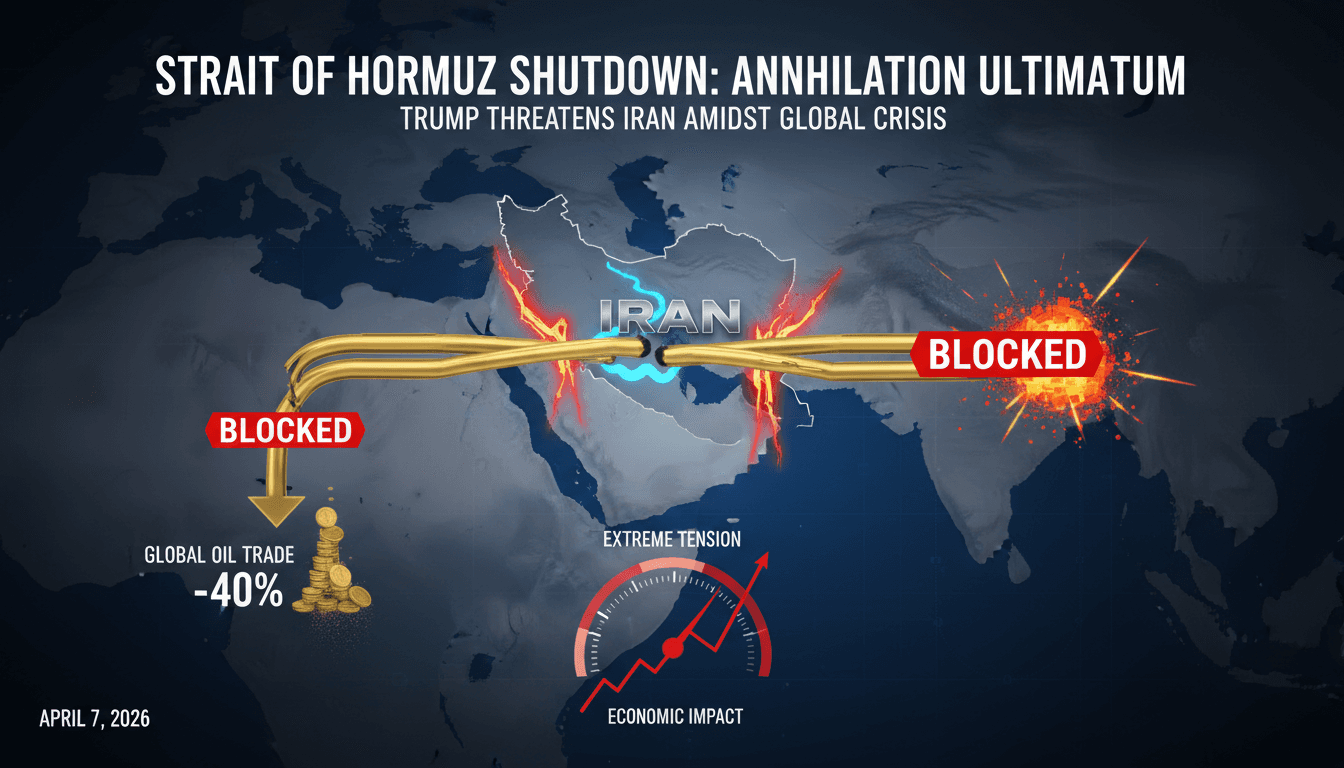
Here's what it means for you.
The escalating tensions in the Strait of Hormuz could impact global oil prices and economic stability, affecting your business costs and energy expenses.
Why it matters
The closure of the Strait of Hormuz disrupts 20% of global oil trade, directly influencing energy prices and economic conditions worldwide.
What happened (in 30 seconds)
- On April 7, 2026, U.S. President Donald Trump issued a stark ultimatum threatening the annihilation of Iranian civilization if the Strait of Hormuz was not reopened by 8 p.m. ET.
- Iran had closed the Strait on March 4, disrupting oil shipments and causing Brent crude prices to exceed $120 per barrel, leading to a global oil market crisis.
- A two-week ceasefire was agreed upon, mediated by Pakistan, with peace talks scheduled for April 10, 2026, in Islamabad.
The context you actually need
- The U.S.-Israeli conflict with Iran escalated on February 28, 2026, due to tensions over Iran's nuclear program and military activities.
- Iran's closure of the Strait of Hormuz has significant implications for global oil supply, as it is a critical passage for oil tankers.
- The economic impact of rising oil prices is felt globally, with Brent crude prices soaring and affecting trade dynamics, particularly in oil-dependent economies like the UAE.
What's really happening
The recent ultimatum from President Trump is a culmination of escalating tensions between the U.S., Israel, and Iran, primarily driven by Iran's nuclear ambitions and regional military activities. The conflict began intensifying in late February 2026, when the U.S. and Israel launched military operations against Iranian targets, citing threats to regional stability. In retaliation, Iran closed the Strait of Hormuz, a strategic chokepoint for oil shipments, which accounts for approximately 20% of global oil trade. This closure sent shockwaves through the oil markets, pushing Brent crude prices above $120 per barrel, a significant increase that heightened concerns about inflation and economic stability worldwide.
Trump's ultimatum, delivered via Truth Social, escalated the rhetoric significantly, threatening not just military action but the very existence of Iranian civilization. This statement reflects a strategic move to apply maximum pressure on Iran to reopen the Strait and resume oil shipments. The U.S. has been conducting targeted strikes on Iranian military infrastructure, which has resulted in civilian casualties and further inflamed tensions. Iran's response included mobilizing civilians to protect critical infrastructure and launching missiles targeting UAE facilities, indicating a willingness to escalate the conflict further.
The involvement of Pakistan as a mediator for a ceasefire highlights the complexity of the situation, as regional players seek to stabilize the situation amid fears of a broader conflict. The ceasefire agreement, which includes a demand for safe passage through the Strait, is a temporary measure but underscores the precarious nature of diplomatic relations in the region. The economic implications of this conflict are profound, as the volatility in oil prices directly affects global markets, trade routes, and energy security.
As the situation evolves, the potential for further military action remains, particularly if diplomatic efforts fail. The international community is closely monitoring the developments, as any escalation could have far-reaching consequences not just for the Middle East but for global economic stability.
Who feels it first (and how)
- Energy sector professionals: Fluctuations in oil prices directly impact their operations and profitability.
- Consumers: Rising fuel prices affect transportation costs, leading to increased prices for goods and services.
- Investors: Market volatility can lead to significant financial losses or gains, depending on exposure to oil and energy stocks.
- Businesses in oil-dependent regions: Companies in the UAE and other Gulf states may face economic strain due to rising costs and reduced trade.
What to watch next
- Diplomatic negotiations: The outcome of the peace talks scheduled for April 10, 2026, will be crucial in determining the stability of the region.
- Oil price trends: Monitor fluctuations in oil prices, particularly following the ceasefire announcement and any subsequent military actions.
- Regional security developments: Keep an eye on Iran's military responses and any retaliatory actions from the U.S. and Israel, which could escalate tensions further.
The Strait of Hormuz is a critical passage for global oil trade, and its closure has immediate economic implications.
Continued diplomatic efforts will be necessary to prevent further escalation of the conflict.
The long-term effects on global oil markets and regional stability remain uncertain, depending on the outcomes of negotiations and military actions.
Frequently Asked Questions
- Why it matters?
- The closure of the Strait of Hormuz disrupts 20% of global oil trade, directly influencing energy prices and economic conditions worldwide.
- What happened (in 30 seconds)?
- On April 7, 2026, U.S. President Donald Trump issued a stark ultimatum threatening the annihilation of Iranian civilization if the Strait of Hormuz was not reopened by 8 p.m. ET. Iran had closed the Strait on March 4, disrupting oil shipments and causing Brent crude prices to exceed $120 per barrel, leading to a global oil market crisis. A two-week ceasefire was agreed upon, mediated by Pakistan, with peace talks scheduled for April 10, 2026, in Islamabad.
- What's really happening?
- The recent ultimatum from President Trump is a culmination of escalating tensions between the U.S., Israel, and Iran, primarily driven by Iran's nuclear ambitions and regional military activities. The conflict began intensifying in late February 2026, when the U.S. and Israel launched military operations against Iranian targets, citing threats to regional stability. In retaliation, Iran closed the Strait of Hormuz, a strategic chokepoint for oil shipments, which accounts for approximately 20% of
- Who feels it first (and how)?
- Energy sector professionals: Fluctuations in oil prices directly impact their operations and profitability. Consumers: Rising fuel prices affect transportation costs, leading to increased prices for goods and services. Investors: Market volatility can lead to significant financial losses or gains, depending on exposure to oil and energy stocks. Businesses in oil-dependent regions: Companies in the UAE and other Gulf states may face economic strain due to rising costs and reduced trade.
- What to watch next?
- Diplomatic negotiations: The outcome of the peace talks scheduled for April 10, 2026, will be crucial in determining the stability of the region. Oil price trends: Monitor fluctuations in oil prices, particularly following the ceasefire announcement and any subsequent military actions. Regional security developments: Keep an eye on Iran's military responses and any retaliatory actions from the U.S. and Israel, which could escalate tensions further.
Arabic-language UAE newspaper coverage focused on domestic affairs, public institutions, business, society, and regional developments.
"Al Khaleej coverage generally reflects a mainstream UAE editorial lens with strong attention to public affairs, institutions, and regional developments."
— A47 Editor
تهديد ترامب بـ«إفناء الحضارة» في إيران يربك العالم
Tensions between the United States and Iran have reached a peak, with President Donald Trump continuing his threats just hours before the expiration of an ultimatum. The situation has escalated, raising concerns about potential military action and it...
Pan-Arab news coverage spanning politics, business, sports, and regional affairs.
"Asharq Al-Awsat reflects a broad Arab editorial perspective with strong attention to regional geopolitics."
— A47 Editor
ترمب يتوعد إيران بـ«محو حضارة بأكملها» الليلة: قد يحدث أمر استثنائي
U.S. President Donald Trump stated today that an entire civilization could be obliterated in Iran tonight, suggesting a significant escalation in rhetoric regarding U.S.-Iran relations. This statement raises concerns about potential military actions ...
Arabic-language coverage of political affairs and current events.
"Okaz political coverage typically follows mainstream Saudi framing on national and regional affairs."
— A47 Editor
ترمب مهدداً طهران: «حضارة ستموت الليلة».. و47 عاماً من الفساد في إيران إلى النهاية
In a dramatic statement, U.S. President Donald Trump warned that an entire civilization could perish in Iran, suggesting the country is on the brink of a historic moment that could end decades of corruption and lead to significant internal change. He...
Arabic-language coverage of political affairs and current events.
"Okaz political coverage typically follows mainstream Saudi framing on national and regional affairs."
— A47 Editor
ماذا في «جعبة» ترمب بعد انتهاء مهلة الإنذار الأخير؟
As tensions escalate in the Middle East, U.S. President Donald Trump has threatened to unleash severe consequences on Iran following the expiration of a ten-day ultimatum. Military experts warn of a potential wide-scale escalation unless an agreement...