
Kremlin Warns of Severe Global Energy Market Damage from U.S. Blockade of Strait of Hormuz
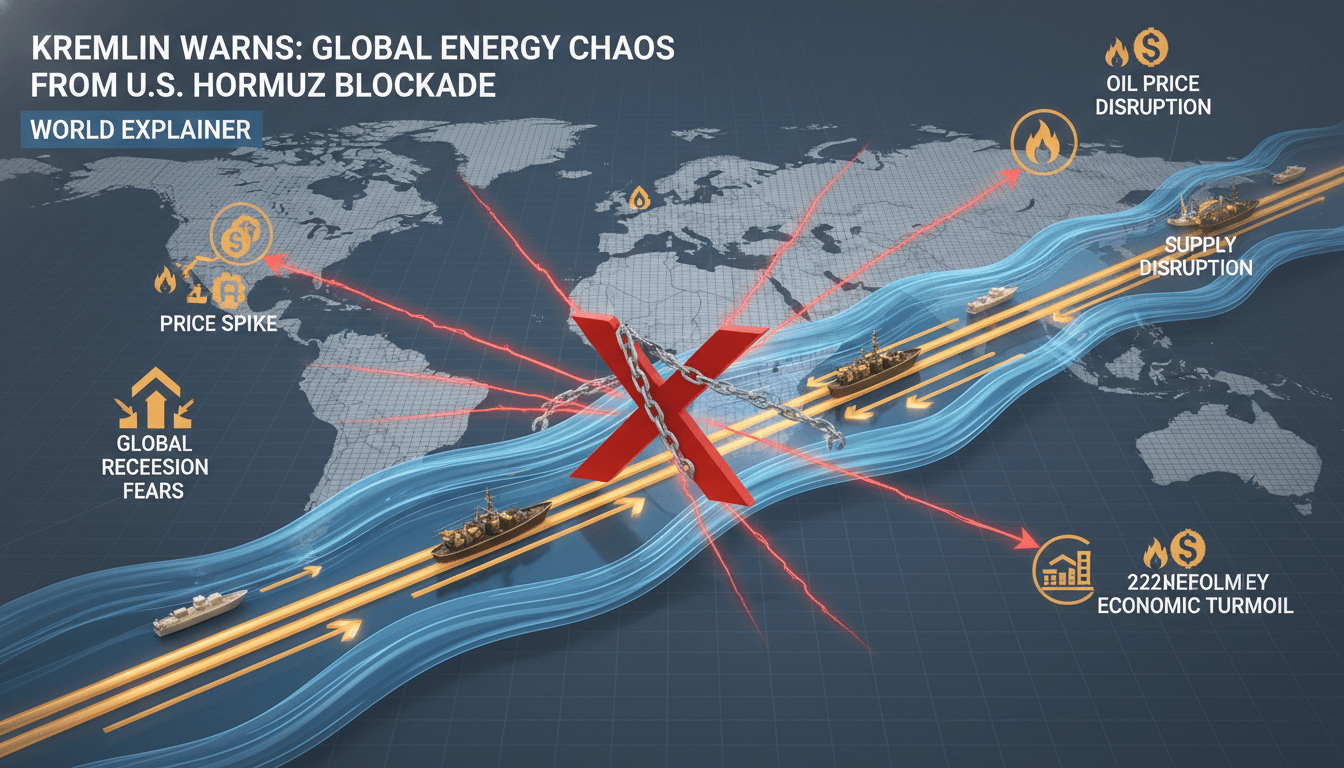
Here's what it means for you.
Rising energy prices could impact your daily expenses and business costs globally.
Why it matters
The U.S. blockade threatens to disrupt a critical maritime route that carries 20% of the world's oil supply.
What happened (in 30 seconds)
- April 12, 2026: President Trump announces a military blockade of the Strait of Hormuz to pressure Iran amid escalating tensions.
- April 13, 2026: Kremlin warns that the blockade will severely damage global energy markets, as oil prices surge above $100 per barrel.
- Current Status: The U.S. Navy is enforcing the blockade, with limited transits by non-Iranian vessels and elevated oil prices affecting global markets.
The context you actually need
- Strait of Hormuz: This narrow waterway is vital for global oil transport, with approximately 20 million barrels per day passing through it.
- Escalating Tensions: The U.S.-Iran conflict has intensified since February 2026, leading to strikes on Gulf energy infrastructure and Iran's partial closure of the strait.
- Global Impact: The blockade is expected to exacerbate existing supply chain issues, affecting not just oil prices but also food and consumer goods due to increased shipping costs.
What's really happening
The U.S. blockade of the Strait of Hormuz is a strategic move aimed at crippling Iran's oil exports, which amount to about 2 million barrels per day. This action follows a series of failed peace talks and escalating military confrontations in the region, which have already disrupted approximately 20% of global oil flows. The blockade is intended to force Iran back to the negotiating table by choking off its primary source of revenue.
Kremlin spokesperson Dmitry Peskov's warning underscores the high stakes involved. The blockade is not merely a regional issue; it has global ramifications. Oil prices surged past $100 per barrel immediately following the announcement, reflecting market fears of prolonged disruptions. The International Energy Agency (IEA) has labeled this situation as the largest energy security crisis in recent history, indicating the potential for widespread economic fallout.
The Strait of Hormuz is a critical chokepoint with few viable alternatives for oil transport. Any significant disruption here can lead to increased shipping and insurance costs, which will be passed on to consumers. Countries heavily reliant on oil imports, particularly in Europe and Asia, will feel the pinch first.
Moreover, the geopolitical implications are profound. Russia and China have condemned the U.S. actions, framing them as irresponsible and potentially destabilizing. This could lead to a realignment of alliances in the region, as countries may seek to bolster their defenses or find alternative energy sources.
In the short term, the blockade is likely to create volatility in energy markets, with prices fluctuating based on news from the region. In the long term, if the blockade persists, it could lead to a reevaluation of energy dependencies and supply chains globally, pushing countries to diversify their energy sources and rethink their strategic partnerships.
Who feels it first (and how)
- Consumers: Higher fuel prices will increase transportation and grocery costs.
- Businesses: Companies reliant on oil will face rising operational costs, impacting profit margins.
- Governments: Nations dependent on oil imports will experience inflationary pressures, affecting economic stability.
- Shipping Companies: Increased insurance and shipping fees will impact logistics and supply chain operations.
What to watch next
- Oil Price Trends: Monitor fluctuations in oil prices as they will directly affect global markets and consumer costs.
- Iran's Response: Watch for Iran's military and diplomatic reactions, which could escalate tensions further or lead to negotiations.
- Global Supply Chain Adjustments: Observe how countries adapt their energy strategies and supply chains in response to the blockade.
The U.S. Navy is actively enforcing the blockade, and oil prices have already surged.
Continued volatility in global energy markets and potential retaliatory actions from Iran.
The long-term geopolitical ramifications and how countries will adjust their energy policies.
Frequently Asked Questions
- Why it matters?
- The U.S. blockade threatens to disrupt a critical maritime route that carries 20% of the world's oil supply.
- What happened (in 30 seconds)?
- April 12, 2026: President Trump announces a military blockade of the Strait of Hormuz to pressure Iran amid escalating tensions. April 13, 2026: Kremlin warns that the blockade will severely damage global energy markets, as oil prices surge above $100 per barrel. Current Status: The U.S. Navy is enforcing the blockade, with limited transits by non-Iranian vessels and elevated oil prices affecting global markets.
- What's really happening?
- The U.S. blockade of the Strait of Hormuz is a strategic move aimed at crippling Iran's oil exports, which amount to about 2 million barrels per day. This action follows a series of failed peace talks and escalating military confrontations in the region, which have already disrupted approximately 20% of global oil flows. The blockade is intended to force Iran back to the negotiating table by choking off its primary source of revenue. Kremlin spokesperson Dmitry Peskov's warning underscores the
- Who feels it first (and how)?
- Consumers: Higher fuel prices will increase transportation and grocery costs. Businesses: Companies reliant on oil will face rising operational costs, impacting profit margins. Governments: Nations dependent on oil imports will experience inflationary pressures, affecting economic stability. Shipping Companies: Increased insurance and shipping fees will impact logistics and supply chain operations.
- What to watch next?
- Oil Price Trends: Monitor fluctuations in oil prices as they will directly affect global markets and consumer costs. Iran's Response: Watch for Iran's military and diplomatic reactions, which could escalate tensions further or lead to negotiations. Global Supply Chain Adjustments: Observe how countries adapt their energy strategies and supply chains in response to the blockade.
Sports reporting with a focus on Saudi and regional competitions.
"Okaz sports coverage is broad and audience-friendly, with strong attention to Saudi teams and leagues."
— A47 Editor
روسيا تحذّر: حصار «هرمز» يلحق أضراراً جسيمة بأسواق الطاقة العالمية
The Kremlin has criticized U.S. President Donald Trump's announcement of a military blockade on the Strait of Hormuz, which includes closing access to Iranian ports. Kremlin spokesman Dmitry Peskov stated that this action is likely to cause significa...
Macro commentary, policy analysis, growth/inflation themes, and global outlooks.
"Contextual macro coverage that complements day-to-day market headlines."
— A47 Editor
Kremlin says U.S. blockade of Hormuz will be bad for markets
The Kremlin has warned that the U.S. blockade of the Strait of Hormuz will negatively impact global markets, emphasizing the potential for increased instability in the region. This blockade follows the breakdown of peace negotiations between the U.S....
UAE-based English-language newspaper covering regional politics, economics, and global affairs.
"The National reflects Emirati policy perspectives while maintaining international editorial standards."
— A47 Editor
Manus on Markets: US's Hormuz blockade will wreck world energy supply
The United States has announced a blockade of the Strait of Hormuz, a critical maritime route for global oil shipments, following the failure of U.S.-Iran ceasefire talks. This blockade, declared by President Donald Trump, aims to interdict vessels i...