
Global Food Crisis Expected by 2026 Due to Middle East Conflict and Fertilizer Shortages
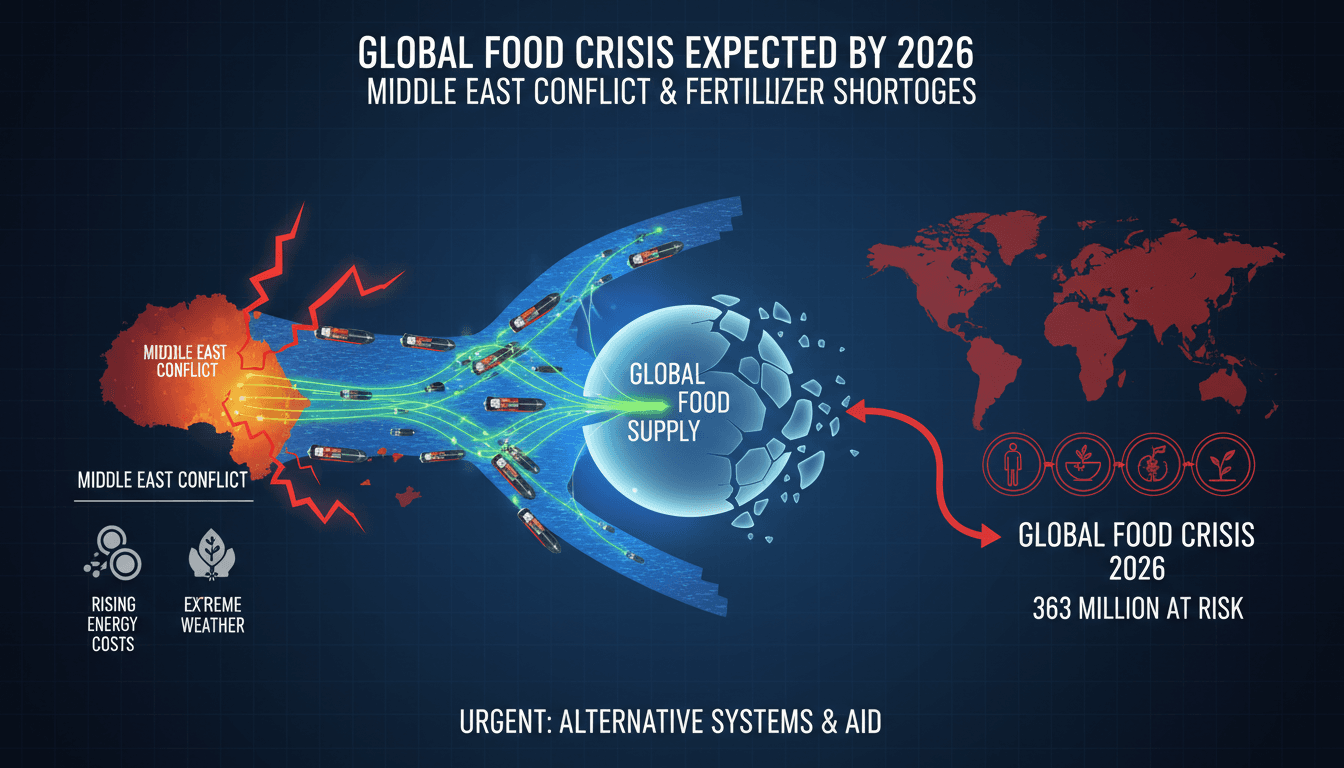
Here's what it means for you.
The looming food crisis could impact global supply chains, driving up prices and affecting food security for millions.
Why it matters
This crisis threatens to exacerbate existing hunger issues, particularly in vulnerable regions, and could lead to widespread socio-economic instability.
What happened (in 30 seconds)
- Late February 2026: War involving Iran disrupts the Strait of Hormuz, a critical chokepoint for global fertilizer shipments.
- March 2026: Urea prices surge by 46%, and Russia halts 37% of global ammonium nitrate exports, worsening fertilizer shortages.
- April 2026: The World Food Programme warns that 363 million people are at risk of acute hunger by year-end, with additional cases linked to the Middle East conflict.
The context you actually need
- Strait of Hormuz: This narrow waterway is vital for 30-34% of global fertilizer trade, making disruptions particularly impactful.
- Previous shocks: The ongoing effects of the Russia-Ukraine war have already strained grain and fertilizer markets since 2022.
- La Niña conditions: Forecasted weather patterns are expected to reduce crop yields in 2026, compounding the crisis.
What's really happening
The anticipated global food crisis is primarily driven by geopolitical tensions in the Middle East, particularly the conflict involving Iran that began in late February 2026. This conflict has led to the partial closure of the Strait of Hormuz, a critical artery for global trade, particularly for fertilizers. Approximately 30-34% of the world's fertilizer shipments pass through this chokepoint, and any disruption can have cascading effects on agricultural production worldwide.
In March 2026, the situation worsened as Russia, a key exporter of fertilizers, announced a halt to 37% of its ammonium nitrate exports. This decision came on the heels of rising energy costs and ongoing supply chain disruptions stemming from the Russia-Ukraine war, which had already strained global grain and fertilizer markets since 2022. The combination of these factors has led to a significant surge in fertilizer prices, with urea prices increasing by 46% in just one month.
The World Food Programme has projected that by the end of 2026, 363 million people could be at risk of acute hunger, a staggering figure that underscores the severity of the situation. The crisis is particularly acute in regions like Africa and Asia, where food security is already fragile. The escalation of hostilities in the Middle East is expected to add an additional 45 million people to this alarming statistic.
Moreover, the forecasted La Niña weather patterns are anticipated to further reduce crop yields in 2026, compounding the challenges faced by farmers globally. Countries like Brazil, India, and various African nations are already feeling the pinch, as fertilizer shortages threaten their upcoming harvests. The implications of these shortages will become increasingly visible by August 2026, when the effects on crop yields will be more apparent.
In response to these challenges, the UAE government has conducted over 12,000 market inspections to ensure price stability and prevent gouging. They have assured the public of stable food supplies, although fresh produce stocks may only last about 10 days amid ongoing disruptions. Gulf states like Saudi Arabia and Qatar are also taking measures to bolster their reserves, indicating a regional response to the impending crisis.
Who feels it first (and how)
- Farmers: Particularly in Africa and Asia, who rely on fertilizers for crop yields.
- Consumers: Households in low-income regions facing rising food prices and potential shortages.
- Agricultural producers: Companies dependent on stable fertilizer supplies for production.
- Governments: Nations that import food and fertilizers, particularly those with limited reserves.
What to watch next
- Fertilizer prices: Monitor fluctuations in global fertilizer prices, as they will directly impact food production costs.
- Crop yield reports: Keep an eye on agricultural yield forecasts, especially from major producers like Brazil and India, to gauge the crisis's impact.
- International aid responses: Watch for announcements from organizations like the World Food Programme regarding aid initiatives aimed at mitigating hunger.
The conflict in the Middle East is disrupting fertilizer supplies, leading to increased prices and potential food shortages.
The number of people at risk of acute hunger will continue to rise as the crisis unfolds, particularly in vulnerable regions.
The long-term effects on global food security and agricultural practices remain uncertain, especially regarding potential shifts in supply chains.
Frequently Asked Questions
- Why it matters?
- This crisis threatens to exacerbate existing hunger issues, particularly in vulnerable regions, and could lead to widespread socio-economic instability.
- What happened (in 30 seconds)?
- Late February 2026: War involving Iran disrupts the Strait of Hormuz, a critical chokepoint for global fertilizer shipments. March 2026: Urea prices surge by 46%, and Russia halts 37% of global ammonium nitrate exports, worsening fertilizer shortages. April 2026: The World Food Programme warns that 363 million people are at risk of acute hunger by year-end, with additional cases linked to the Middle East conflict.
- What's really happening?
- The anticipated global food crisis is primarily driven by geopolitical tensions in the Middle East, particularly the conflict involving Iran that began in late February 2026. This conflict has led to the partial closure of the Strait of Hormuz, a critical artery for global trade, particularly for fertilizers. Approximately 30-34% of the world's fertilizer shipments pass through this chokepoint, and any disruption can have cascading effects on agricultural production worldwide. In March 2026, th
- Who feels it first (and how)?
- Farmers: Particularly in Africa and Asia, who rely on fertilizers for crop yields. Consumers: Households in low-income regions facing rising food prices and potential shortages. Agricultural producers: Companies dependent on stable fertilizer supplies for production. Governments: Nations that import food and fertilizers, particularly those with limited reserves.
- What to watch next?
- Fertilizer prices: Monitor fluctuations in global fertilizer prices, as they will directly impact food production costs. Crop yield reports: Keep an eye on agricultural yield forecasts, especially from major producers like Brazil and India, to gauge the crisis's impact. International aid responses: Watch for announcements from organizations like the World Food Programme regarding aid initiatives aimed at mitigating hunger.
Editor-curated FT homepage stories spanning markets, business, world, and opinion.
"The Financial Times is a globally respected business publication with a centrist/center-left tone and strong markets focus."
— A47 Editor
The coming global food crisis
The ongoing conflict in Iran is projected to lead to a global food crisis, with hunger and famine becoming foreseeable consequences as supply chains are disrupted. The war has already begun to affect essential goods, raising concerns about food avail...
Corporate news, economic trends, and markets with UK and global scope.
"BBC News is widely regarded as reputable and impartial, with a public service mandate."
— A47 Editor
Why the UK is preparing for food shortages due to Iran war
The UK is bracing for potential food shortages as the ongoing conflict in Iran disrupts supply chains, particularly affecting essential goods like fizzy drinks, salad, and meat. Government officials are preparing for a worst-case scenario by summer, ...
United Kingdom-focused news including local politics, business, and social issues.
"BBC News is widely regarded as a reputable international news organization, known for its impartial tone and public service mandate."
— A47 Editor
Why the UK is preparing for food shortages due to Iran war
The UK government is bracing for potential food shortages this summer as the ongoing conflict in Iran disrupts supply chains, particularly affecting essential goods like fizzy drinks, salad, and meat. Officials have indicated that these shortages cou...
UAE-based English-language newspaper covering regional politics, economics, and global affairs.
"The National reflects Emirati policy perspectives while maintaining international editorial standards."
— A47 Editor
UK planning for food shortages as Iran war causes fall in carbon dioxide supplies
The UK is preparing for potential food shortages as the ongoing war in Iran has led to a significant decrease in carbon dioxide supplies, which are essential for food production. This situation arises amidst rising global inflation and energy prices,...