
Blue Owl Capital Co-Founders Revise Loan Terms Amid Stock Price Decline
Here's what it means for you.
If you’re invested in private credit or related sectors, this shift could signal deeper market vulnerabilities.
Why it matters
The revisions reflect broader instability in the private credit market, which could impact investment strategies and asset valuations.
What happened (in 30 seconds)
- On April 17, 2026, Blue Owl Capital co-CEOs Doug Ostrover and Marc Lipschultz announced changes to personal loan terms, removing firm shares as collateral.
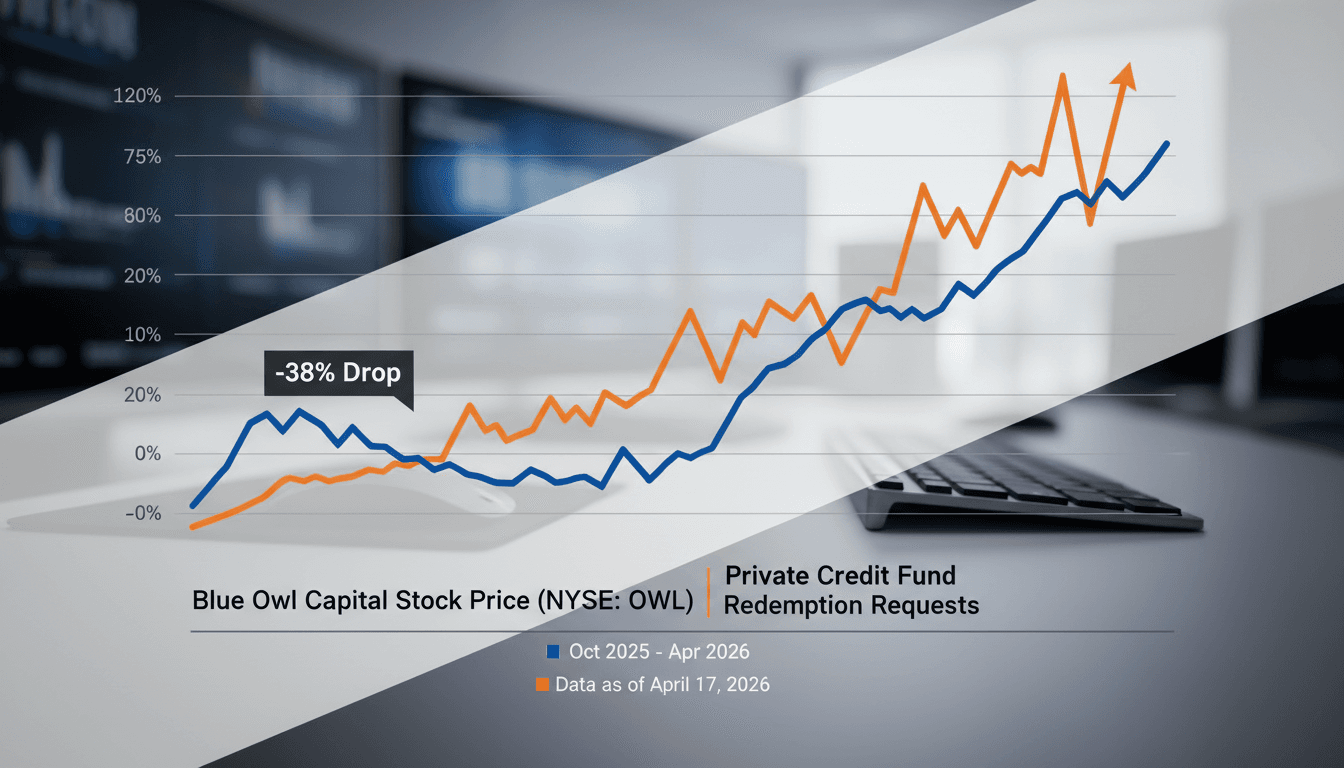
- This decision was prompted by a nearly 40% decline in Blue Owl's stock price due to market turbulence and significant fund redemption requests.
- The move aims to alleviate concerns over potential margin calls that could exacerbate selling pressure on the stock.
The context you actually need
- Blue Owl Capital, founded in 2016, has grown to manage over $307 billion in assets, focusing on private credit for private equity-backed firms.
- The stock price peaked post-IPO in 2021, allowing co-founders to pledge over 76 million shares for personal loans, which are now under scrutiny due to falling stock values.
- Market conditions in early 2026 included $5.4 billion in redemption requests from a $36 billion fund, raising alarms about the stability of the private credit sector.
What's really happening
Blue Owl Capital's recent decision to revise personal loan terms is a direct response to significant pressures within the private credit market. The firm, which has seen its stock price drop nearly 40% year-to-date, faced scrutiny as co-founders Ostrover and Lipschultz had pledged substantial shares—over 76 million—as collateral for personal loans. This situation raised fears of margin calls, which could lead to further stock sell-offs and exacerbate the already volatile market conditions.
The private credit sector has been under strain due to a combination of factors, including substantial fund redemption requests and concerns about exposure to the software industry. In early 2026, Blue Owl's funds faced a wave of redemption requests totaling $5.4 billion, which is a significant portion of its $36 billion fund. This prompted analysts and investors to question the stability of the firm and the broader market, leading to a decline in share prices.
By removing shares as collateral for personal loans, Blue Owl aims to mitigate the risk of margin calls that could further destabilize its stock. This move is seen as a proactive measure to address investor concerns and restore confidence in the firm. However, it also raises questions about the underlying health of the private credit market and whether other firms may follow suit in revising their loan terms.
The implications of this decision extend beyond Blue Owl itself. Investors in private credit and related sectors should be aware of the potential ripple effects, as the market grapples with redemption pressures and declining asset values. The revisions may signal a shift in how firms manage collateral and personal loans, potentially leading to more conservative lending practices across the industry.
Who feels it first (and how)
- Investors in private credit funds: They may experience increased volatility and uncertainty in asset valuations.
- Financial institutions: They could face tighter lending conditions as firms reassess collateral requirements.
- Employees and stakeholders at Blue Owl: They may see changes in company strategy and potential impacts on job security or bonuses.
What to watch next
- Redemption trends: Monitoring ongoing redemption requests in the private credit sector will be crucial to understanding market stability.
- Stock performance: Watch for Blue Owl's stock price movements as the market reacts to these loan term revisions and broader economic conditions.
- Regulatory responses: Any changes in regulations affecting private credit could reshape lending practices and market dynamics.
Blue Owl Capital has revised its loan terms to remove shares as collateral.
Other firms in the private credit sector may follow suit in response to market pressures.
The long-term impact on Blue Owl's stock price and overall market stability remains uncertain.
Frequently Asked Questions
- Why it matters?
- The revisions reflect broader instability in the private credit market, which could impact investment strategies and asset valuations.
- What happened (in 30 seconds)?
- On April 17, 2026, Blue Owl Capital co-CEOs Doug Ostrover and Marc Lipschultz announced changes to personal loan terms, removing firm shares as collateral. This decision was prompted by a nearly 40% decline in Blue Owl's stock price due to market turbulence and significant fund redemption requests. The move aims to alleviate concerns over potential margin calls that could exacerbate selling pressure on the stock.
- What's really happening?
- Blue Owl Capital's recent decision to revise personal loan terms is a direct response to significant pressures within the private credit market. The firm, which has seen its stock price drop nearly 40% year-to-date, faced scrutiny as co-founders Ostrover and Lipschultz had pledged substantial shares—over 76 million—as collateral for personal loans. This situation raised fears of margin calls, which could lead to further stock sell-offs and exacerbate the already volatile market conditions. The
- Who feels it first (and how)?
- Investors in private credit funds: They may experience increased volatility and uncertainty in asset valuations. Financial institutions: They could face tighter lending conditions as firms reassess collateral requirements. Employees and stakeholders at Blue Owl: They may see changes in company strategy and potential impacts on job security or bonuses.
- What to watch next?
- Redemption trends: Monitoring ongoing redemption requests in the private credit sector will be crucial to understanding market stability. Stock performance: Watch for Blue Owl's stock price movements as the market reacts to these loan term revisions and broader economic conditions. Regulatory responses: Any changes in regulations affecting private credit could reshape lending practices and market dynamics.
Editor-curated FT homepage stories spanning markets, business, world, and opinion.
"The Financial Times is a globally respected business publication with a centrist/center-left tone and strong markets focus."
— A47 Editor
Blue Owl co-founders no longer pledging shares for personal loans
Doug Ostrover and Marc Lipschultz, co-founders of Blue Owl, have decided to no longer use the company's shares as collateral for their personal loans, a shift from their previous commitment of over $1.1 billion in firm equity last year. This change c...
Global markets, investing, and macroeconomics from a premier financial newsroom.
"Bloomberg is respected for in-depth financial reporting and data-driven analysis."
— A47 Editor
Blue Owl Co-CEOs’ Personal Loans No Longer Backed by Firm Shares
Blue Owl Capital Inc. Co-CEOs Doug Ostrover and Marc Lipschultz have revised the terms of their personal loans, removing the company's shares as collateral due to a decline in stock value amid turmoil in the private credit market. This decision refle...
U.S. business news, corporate developments, and economy.
"The Wall Street Journal is respected for deep financial and economic reporting with a center-right editorial perspective."
— A47 Editor
Blue Owl Founders Revise Terms of Personal Loans That Raised Scrutiny
Doug Ostrover and Marc Lipschultz, co-founders of Blue Owl, have revised the terms of their personal loans, deciding to no longer use the company's shares as collateral. This marks a significant shift from their previous commitment of over $1.1 billi...
Markets desk coverage, trading insights, and investor updates.
"WSJ’s markets reporting provides in-depth analysis and context for investors."
— A47 Editor
Blue Owl Founders Revise Terms of Personal Loans That Raised Scrutiny
Doug Ostrover and Marc Lipschultz, co-founders of Blue Owl, have revised the terms of their personal loans, opting to no longer use the company's shares as collateral. This decision marks a significant shift from their previous commitment of over $1....