
IATA Projects Months-Long Recovery for Global Jet Fuel Supplies Following Hormuz Reopening
Here's what it means for you.
If you travel frequently or work in the aviation sector, prepare for fluctuating airfares and reduced flight options in the coming months.
Why it matters
The prolonged recovery of jet fuel supplies following the Strait of Hormuz reopening could significantly impact global airline operations and ticket prices.
What happened (in 30 seconds)
- April 8, 2026: IATA Director General Willie Walsh announced in Singapore that global jet fuel supplies may take months to recover after the reopening of the Strait of Hormuz.
- February 28, 2026: Iran closed the Strait in retaliation for U.S. and Israeli military strikes, leading to a doubling of jet fuel prices and airline capacity reductions.
- Current Status: A two-week U.S.-Iran ceasefire is in place, contingent on the safe reopening of the strait, but refining capacity remains severely damaged.
The context you actually need
- 20% of global oil trade passes through the Strait of Hormuz, making its stability crucial for international energy markets.
- Gulf carriers accounted for 14.6% of international air capacity last year, indicating their significant role in global aviation.
- UAE infrastructure suffered extensive damage from drone strikes, impacting refineries and air travel connectivity, particularly for Europe-Asia routes.
What's really happening
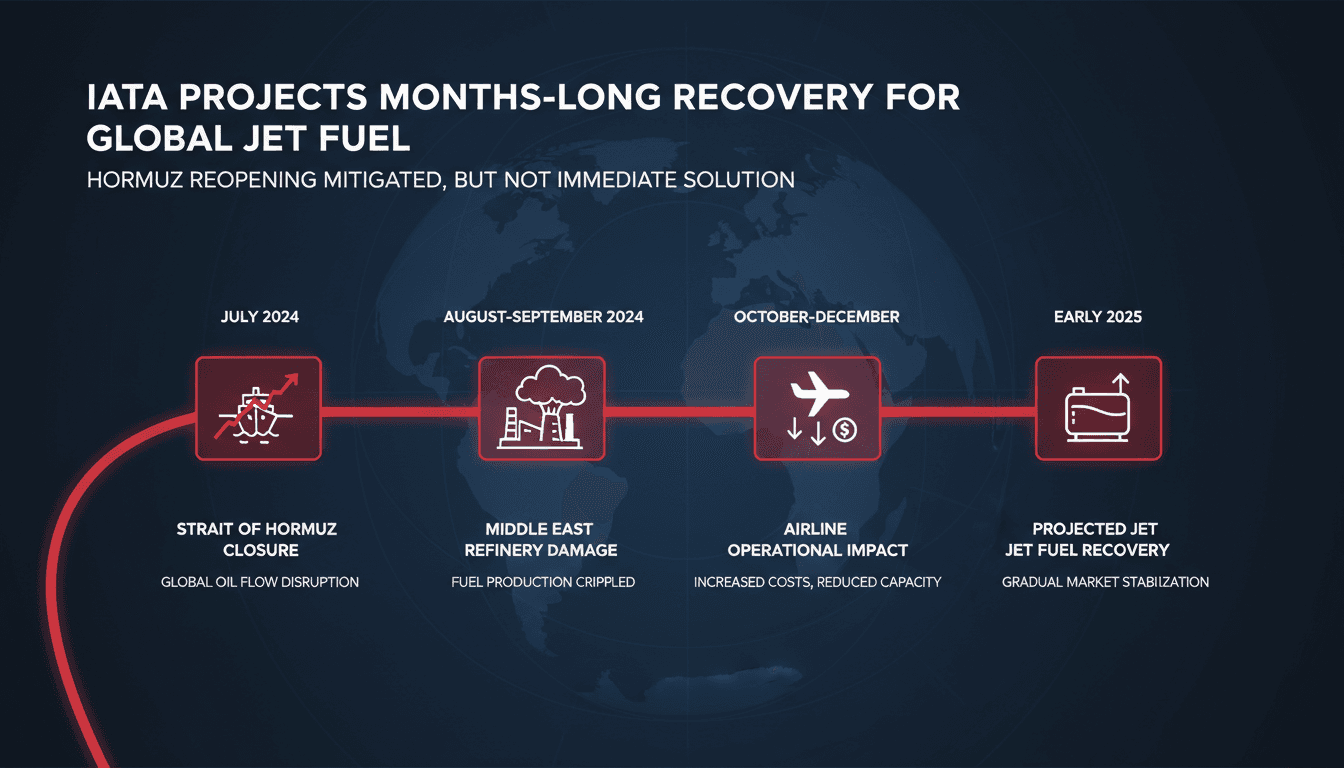
The closure of the Strait of Hormuz by Iran on February 28, 2026, was a direct response to U.S. and Israeli military actions against Iranian targets. This blockade disrupted approximately 20% of global oil trade, leading to immediate and severe consequences for the aviation sector. With the strait closed, jet fuel prices surged, doubling in cost, while crude oil prices rose by 50%. Airlines were forced to adapt quickly, implementing capacity cuts, adding refueling stops, and imposing fuel surcharges to manage escalating operational costs.
As the situation evolved, Gulf refineries sustained damage from Iranian counterattacks, further complicating the recovery of jet fuel supplies. The UAE temporarily closed its airspace on March 17, 2026, to mitigate risks, which disrupted connectivity for airlines relying on the Gulf as a key hub. As a result, many airlines, particularly those based in Asia, began trimming their schedules, exacerbating the supply chain issues.
On April 8, 2026, President Donald Trump announced a two-week ceasefire with Iran, contingent on the immediate safe reopening of the Strait of Hormuz. While this announcement led to a drop in oil prices below $100 per barrel, IATA's Willie Walsh warned that the recovery of jet fuel supplies would not be instantaneous. He cited extensive disruptions to Middle Eastern refining capacity as a critical factor, projecting that it could take months for supplies to stabilize.
The aftermath of these events has seen airlines like Delta forecasting an additional $2 billion in fuel costs, prompting fare increases and further capacity reductions. European carriers are assessing their stock levels, while airline shares have seen a rise post-ceasefire, indicating a cautious optimism in the market. However, the broader implications for the Middle East's $367 billion tourism sector remain uncertain, with IATA anticipating a gradual recovery over the next seven months.
Who feels it first (and how)
- Frequent travelers: Expect higher airfares and fewer available flights, particularly on routes serviced by Gulf carriers.
- Airlines: Increased operational costs will lead to fare hikes and potential service reductions.
- Tourism sector: Businesses reliant on travel may experience a slowdown as flight availability decreases and prices rise.
- Refinery operators: Those in the Middle East will prioritize jet fuel production as crude oil supplies resume, impacting their operational strategies.
What to watch next
- Jet fuel price trends: Monitor fluctuations in jet fuel prices as the market reacts to the reopening of the Strait and the recovery of refining capacity.
- Airline capacity adjustments: Keep an eye on announcements from airlines regarding schedule changes and capacity reductions, which will directly impact travel options.
- Geopolitical developments: Watch for any shifts in U.S.-Iran relations that could affect the stability of the Strait of Hormuz and, consequently, global oil and jet fuel supplies.
The Strait of Hormuz is crucial for global oil trade, and its closure has immediate impacts on jet fuel prices.
Airlines will continue to adjust their operations in response to fluctuating fuel costs and capacity constraints.
The long-term effects on the Middle East tourism sector and the overall recovery timeline for jet fuel supplies remain uncertain.
Frequently Asked Questions
- Why it matters?
- The prolonged recovery of jet fuel supplies following the Strait of Hormuz reopening could significantly impact global airline operations and ticket prices.
- What happened (in 30 seconds)?
- April 8, 2026: IATA Director General Willie Walsh announced in Singapore that global jet fuel supplies may take months to recover after the reopening of the Strait of Hormuz. February 28, 2026: Iran closed the Strait in retaliation for U.S. and Israeli military strikes, leading to a doubling of jet fuel prices and airline capacity reductions. Current Status: A two-week U.S.-Iran ceasefire is in place, contingent on the safe reopening of the strait, but refining capacity remains severely dama
- What's really happening?
- The closure of the Strait of Hormuz by Iran on February 28, 2026, was a direct response to U.S. and Israeli military actions against Iranian targets. This blockade disrupted approximately 20% of global oil trade, leading to immediate and severe consequences for the aviation sector. With the strait closed, jet fuel prices surged, doubling in cost, while crude oil prices rose by 50%. Airlines were forced to adapt quickly, implementing capacity cuts, adding refueling stops, and imposing fuel surcha
- Who feels it first (and how)?
- Frequent travelers: Expect higher airfares and fewer available flights, particularly on routes serviced by Gulf carriers. Airlines: Increased operational costs will lead to fare hikes and potential service reductions. Tourism sector: Businesses reliant on travel may experience a slowdown as flight availability decreases and prices rise. Refinery operators: Those in the Middle East will prioritize jet fuel production as crude oil supplies resume, impacting their operational strategies.
- What to watch next?
- Jet fuel price trends: Monitor fluctuations in jet fuel prices as the market reacts to the reopening of the Strait and the recovery of refining capacity. Airline capacity adjustments: Keep an eye on announcements from airlines regarding schedule changes and capacity reductions, which will directly impact travel options. Geopolitical developments: Watch for any shifts in U.S.-Iran relations that could affect the stability of the Strait of Hormuz and, consequently, global oil and jet fuel supp
Regional and international reporting focused on Middle Eastern politics, diplomacy, and economics.
"Asharq Al-Awsat is a Saudi-owned international newspaper reflecting mainstream Gulf political perspectives."
— A47 Editor
IATA Chief: Jet Fuel Supply Could Take Months to Recover after Hormuz Reopening
The International Air Transport Association (IATA) has indicated that the jet fuel supply could take months to recover following the reopening of the Strait of Hormuz, a vital maritime route for global oil transport. This statement comes amid ongoing...
Business, markets, economy, and corporate news with strong UAE and regional relevance.
"Emirates 24|7 business coverage tends to center UAE markets, property, regulation, and regional economic developments."
— A47 Editor
IATA chief says jet fuel supply could take months to recover after Hormuz reopening IATA chief says jet fuel supply could take months to recover after Hormuz reopening
The head of the International Air Transport Association (IATA), Willie Walsh, stated that even with the reopening of the Strait of Hormuz by Iran, it could take months for jet fuel supply to recover due to disruptions in Middle East refining capacity...
Market-moving headlines impacting equities, bonds, and related risk assets.
"Real-time catalysts and volatility drivers across indices and sectors."
— A47 Editor
IATA chief says jet fuel supply could take months to recover after Hormuz reopening
The International Air Transport Association (IATA) chief has indicated that the supply of jet fuel could take several months to recover following the reopening of the Strait of Hormuz, a crucial maritime route for global oil shipments. This statement...