
World Liberty Financial Investors Oppose Token Vesting Proposal
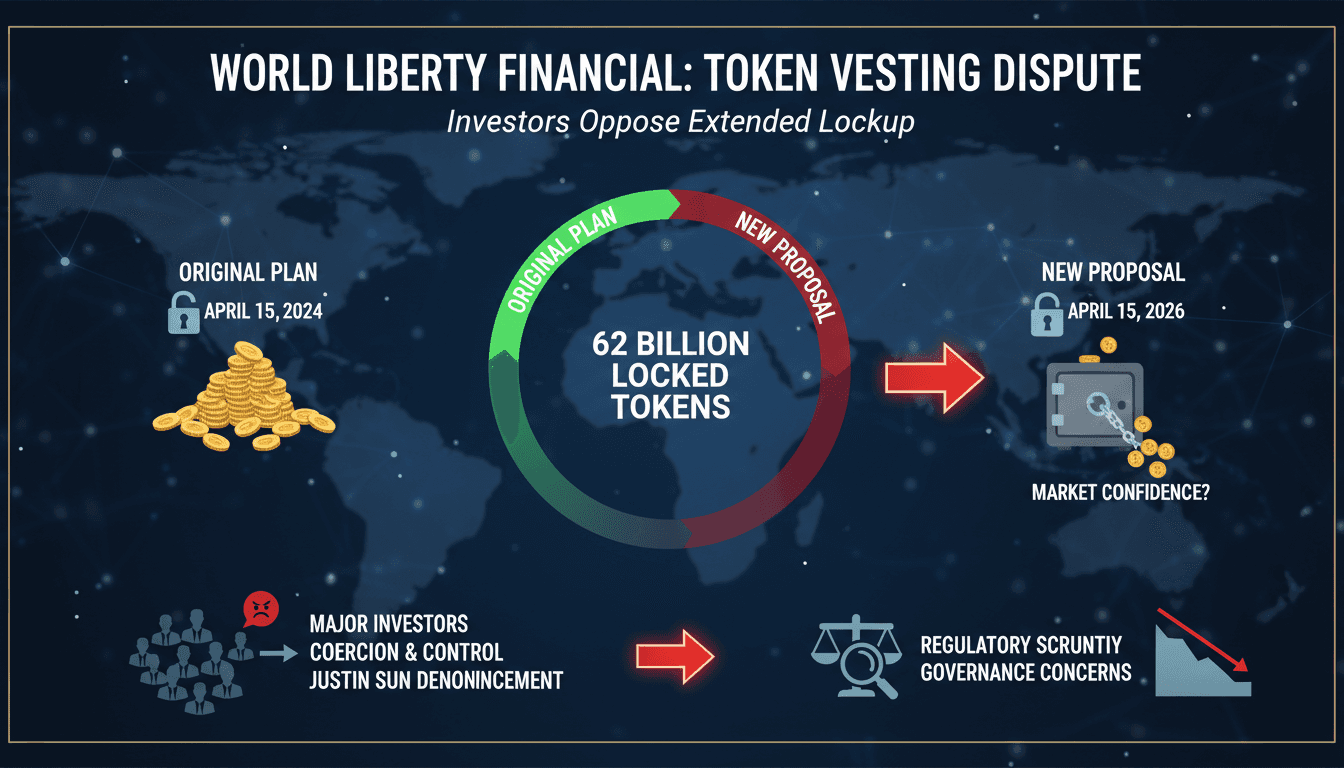
Here's what it means for you.
If you're an investor in decentralized finance, this governance dispute could reshape your expectations around token liquidity and governance.
Why it matters
This conflict highlights the tensions between centralized control and decentralized governance in the rapidly evolving DeFi landscape.
What happened (in 30 seconds)
- On April 15, 2026, World Liberty Financial (WLFI) proposed a governance restructuring that would extend the vesting period for 62 billion locked tokens.
- Major investors, including advisor Justin Sun, immediately opposed the plan, labeling it a coercive governance scam.
- The proposal includes a two-year cliff and two-year linear vesting for early supporters, with dissenters facing indefinite locks on their tokens.
The context you actually need
- WLFI launched in October 2024 as a DeFi protocol focused on stablecoin lending, initially locking tokens to raise funds.
- Tensions escalated after WLFI deposited 5 billion tokens as collateral for a $75 million loan, saturating the lending pool and raising concerns about liquidity.
- Geopolitical scrutiny has increased since UAE-linked entities acquired significant stakes in WLFI, complicating the governance landscape.
What's really happening
The governance proposal from World Liberty Financial (WLFI) is a response to the complexities of managing a decentralized finance platform that has attracted significant investment and scrutiny. The proposed restructuring of token vesting schedules aims to address the allocation of 62.3 billion locked WLFI tokens, which are currently frozen for early supporters, founders, and advisors.
The plan introduces a two-year cliff followed by a two-year linear vesting period for early supporters, while insiders are expected to burn 10% of their holdings over five years. However, dissenters who do not participate in the vote face indefinite locks on their tokens, raising accusations of coercion and centralized control. This has sparked backlash from major investors, notably Justin Sun, who holds about 4% of the voting power. Sun's public denouncement of the proposal as an "absurd governance scam" underscores the growing frustration among investors who feel their rights are being undermined.
The backlash is not just about token liquidity; it reflects deeper concerns about governance in decentralized platforms. Critics argue that the proposal undermines the very principles of decentralization by imposing punitive measures on those who oppose the governance changes. The situation is further complicated by the geopolitical implications of WLFI's ties to the Trump family and UAE-linked entities, which have drawn scrutiny from various stakeholders.
As the vote approaches, the implications of this governance dispute extend beyond WLFI. Investors are increasingly wary of governance structures that appear to favor insiders at the expense of broader community interests. The outcome of this vote could set a precedent for how decentralized finance platforms manage governance and token distribution, impacting investor confidence and participation in future projects.
Who feels it first (and how)
- Early investors: Those who supported WLFI from the beginning may face liquidity issues due to the extended vesting period.
- Advisors and insiders: Individuals with significant holdings may experience pressure to comply with governance changes to avoid losing access to their tokens.
- DeFi enthusiasts: Investors in the broader decentralized finance space will be watching closely, as the outcome could influence governance practices across the industry.
What to watch next
- Voting outcomes: The results of the governance vote will indicate investor sentiment and could lead to further governance reforms in WLFI.
- Market reactions: Monitor WLFI's token price and trading volume post-vote to gauge investor confidence and market stability.
- Regulatory scrutiny: Increased attention from regulators could emerge if the governance dispute escalates, particularly given the geopolitical ties involved.
The governance proposal has been submitted for community vote, and major investor opposition is evident.
The outcome of the vote will have significant implications for WLFI's governance structure and investor confidence.
The long-term effects on WLFI's market position and the broader DeFi landscape remain uncertain.
Frequently Asked Questions
- Why it matters?
- This conflict highlights the tensions between centralized control and decentralized governance in the rapidly evolving DeFi landscape.
- What happened (in 30 seconds)?
- On April 15, 2026, World Liberty Financial (WLFI) proposed a governance restructuring that would extend the vesting period for 62 billion locked tokens. Major investors, including advisor Justin Sun, immediately opposed the plan, labeling it a coercive governance scam. The proposal includes a two-year cliff and two-year linear vesting for early supporters, with dissenters facing indefinite locks on their tokens.
- What's really happening?
- The governance proposal from World Liberty Financial (WLFI) is a response to the complexities of managing a decentralized finance platform that has attracted significant investment and scrutiny. The proposed restructuring of token vesting schedules aims to address the allocation of 62.3 billion locked WLFI tokens, which are currently frozen for early supporters, founders, and advisors. The plan introduces a two-year cliff followed by a two-year linear vesting period for early supporters, while
- Who feels it first (and how)?
- Early investors: Those who supported WLFI from the beginning may face liquidity issues due to the extended vesting period. Advisors and insiders: Individuals with significant holdings may experience pressure to comply with governance changes to avoid losing access to their tokens. DeFi enthusiasts: Investors in the broader decentralized finance space will be watching closely, as the outcome could influence governance practices across the industry.
- What to watch next?
- Voting outcomes: The results of the governance vote will indicate investor sentiment and could lead to further governance reforms in WLFI. Market reactions: Monitor WLFI's token price and trading volume post-vote to gauge investor confidence and market stability. Regulatory scrutiny: Increased attention from regulators could emerge if the governance dispute escalates, particularly given the geopolitical ties involved.
Real-time updates, analysis, and reports on the blockchain and cryptocurrency sectors.
"Crypto News delivers real-time updates, analysis, and reports on the blockchain and cryptocurrency sectors."
— A47 Editor
World Liberty Financial investors revolt over four-year token lock-up proposal
Investors in World Liberty Financial (WLFI) are expressing strong opposition to a proposed governance plan that would lock their tokens for up to four years, a move they view as detrimental to their financial interests. This proposal, which surfaced ...
Covers blockchain, cryptocurrency news, project analysis, and market insights.
"Cointelegraph is a leading crypto-focused media outlet known for timely news, analysis, and educational content related to blockchain and digital assets."
— A47 Editor
Trump’s World Liberty under fire for ‘absurd’ token unlock plan
World Liberty Financial (WLFI), a cryptocurrency project associated with Donald Trump, is facing significant backlash due to a controversial plan to lock tokens for up to four years, which has been labeled as 'absurd' by major investor Justin Sun. Th...