
Panama Ports Company Files Arbitration Against Maersk Over Canal Terminal Dispute
Here's what it means for you.
The ongoing arbitration could disrupt global shipping routes, impacting logistics costs and timelines for businesses worldwide.
Why it matters
This dispute highlights the fragility of international shipping agreements and the geopolitical tensions that can influence global trade.
What happened (in 30 seconds)
- Panama Ports Company initiated arbitration against A.P. Moller-Maersk on April 7, 2026, alleging contract breaches.
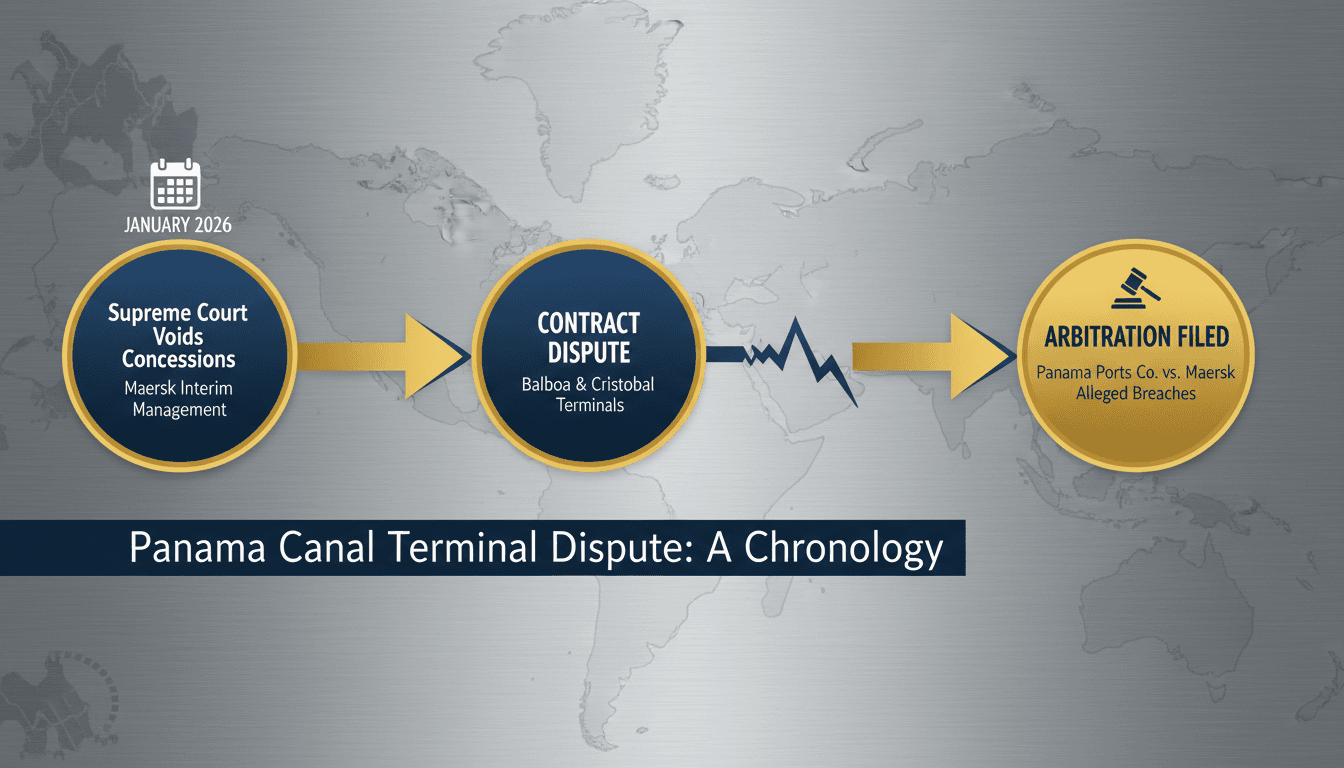
- Panama's Supreme Court voided the concessions for the Balboa and Cristobal terminals in January 2026, leading to asset seizures.
- CK Hutchison Holdings faces a separate arbitration claim exceeding $2 billion against the Panamanian government.
The context you actually need
- Long-term operations: Panama Ports Company has managed the Balboa and Cristobal terminals since the 1990s, handling significant container traffic.
- Legal challenges: The Supreme Court's ruling followed audits alleging $1.2 billion in underpayments, raising questions about contract validity.
- Geopolitical tensions: The dispute is set against a backdrop of U.S.-China rivalry, particularly after Panama's shift in diplomatic recognition from Taiwan to China in 2017.
What's really happening
The arbitration initiated by Panama Ports Company (PPC) against A.P. Moller-Maersk (Maersk) stems from a complex interplay of legal, economic, and geopolitical factors. PPC alleges that Maersk colluded with Panamanian authorities to undermine its operations at the strategically vital Balboa and Cristobal terminals. This claim follows a January 2026 ruling by Panama's Supreme Court that declared PPC's concessions unconstitutional, citing significant underpayments. The court's decision led to the physical seizure of the terminals by Panamanian authorities, who then temporarily handed over operations to Maersk and MSC.
The implications of this dispute extend beyond the immediate parties involved. The Panama Canal is a critical artery for global trade, and any disruption in its operations can ripple through supply chains worldwide. The arbitration proceedings are seated in London, adding another layer of complexity to the situation. As PPC pursues its claims, it is also embroiled in a separate arbitration against the Panamanian government, claiming damages exceeding $2 billion. This dual approach underscores PPC's strategy to leverage international arbitration as a means of recourse against perceived injustices.
The broader context includes heightened geopolitical tensions, particularly between the U.S. and China. Panama's shift in diplomatic recognition has raised alarms in Washington regarding Chinese influence over critical infrastructure. This situation has led to increased scrutiny of Panama-flagged vessels, complicating logistics for companies operating in the region. The ongoing arbitration could further entrench these tensions, as the outcomes may influence how international shipping companies navigate their operations in Panama.
As PPC seeks to resolve its disputes, the ongoing uncertainty could delay its planned divestment of global port assets, valued at $23 billion. This situation is particularly relevant for investors and stakeholders in the shipping and logistics sectors, as it may affect market dynamics and investment strategies.
Who feels it first (and how)
- Shipping companies: Increased operational costs and potential delays in logistics.
- Investors: Uncertainty surrounding CK Hutchison's global port divestment plans.
- Panamanian economy: Potential impacts on revenue from port operations and international trade.
- Global supply chains: Disruptions in shipping routes affecting timelines and costs for businesses worldwide.
What to watch next
- Arbitration outcomes: The results of the arbitration proceedings could set precedents for future international shipping contracts.
- Geopolitical developments: Any shifts in U.S.-China relations may influence Panama's operational environment and logistics strategies.
- Market reactions: Watch for changes in share prices of CK Hutchison and Maersk as the arbitration unfolds and impacts become clearer.
The arbitration has been initiated and is ongoing, with significant financial stakes involved.
The dispute will prolong uncertainty in Panama Canal operations, affecting global shipping logistics.
The long-term implications for CK Hutchison's global port divestment strategy remain uncertain.
Frequently Asked Questions
- Why it matters?
- This dispute highlights the fragility of international shipping agreements and the geopolitical tensions that can influence global trade.
- What happened (in 30 seconds)?
- Panama Ports Company initiated arbitration against A.P. Moller-Maersk on April 7, 2026, alleging contract breaches. Panama's Supreme Court voided the concessions for the Balboa and Cristobal terminals in January 2026, leading to asset seizures. CK Hutchison Holdings faces a separate arbitration claim exceeding $2 billion against the Panamanian government.
- What's really happening?
- The arbitration initiated by Panama Ports Company (PPC) against A.P. Moller-Maersk (Maersk) stems from a complex interplay of legal, economic, and geopolitical factors. PPC alleges that Maersk colluded with Panamanian authorities to undermine its operations at the strategically vital Balboa and Cristobal terminals. This claim follows a January 2026 ruling by Panama's Supreme Court that declared PPC's concessions unconstitutional, citing significant underpayments. The court's decision led to the
- Who feels it first (and how)?
- Shipping companies: Increased operational costs and potential delays in logistics. Investors: Uncertainty surrounding CK Hutchison's global port divestment plans. Panamanian economy: Potential impacts on revenue from port operations and international trade. Global supply chains: Disruptions in shipping routes affecting timelines and costs for businesses worldwide.
- What to watch next?
- Arbitration outcomes: The results of the arbitration proceedings could set precedents for future international shipping contracts. Geopolitical developments: Any shifts in U.S.-China relations may influence Panama's operational environment and logistics strategies. Market reactions: Watch for changes in share prices of CK Hutchison and Maersk as the arbitration unfolds and impacts become clearer.
U.S. business news, corporate developments, and economy.
"The Wall Street Journal is respected for deep financial and economic reporting with a center-right editorial perspective."
— A47 Editor
CK Hutchison Starts Arbitration Against Maersk Over Panama Ports
CK Hutchison has initiated arbitration against A.P. Moeller-Maersk following the seizure of its port assets in Panama, escalating a legal conflict over control of these critical facilities. This move comes as the company faces significant challenges ...
Market-moving headlines impacting equities, bonds, and related risk assets.
"Real-time catalysts and volatility drivers across indices and sectors."
— A47 Editor
CK Hutchison’s Panama unit files arbitration against Maersk over ports takeover
CK Hutchison's Panama unit has initiated arbitration proceedings against Maersk in London, following the forced takeover of its two ports in Panama. This legal action highlights ongoing disputes over asset control and the complexities surrounding the...
Global markets, investing, and macroeconomics from a premier financial newsroom.
"Bloomberg is respected for in-depth financial reporting and data-driven analysis."
— A47 Editor
CK Hutchison Starts London Arbitration Against Maersk Over Panama
CK Hutchison Holdings Ltd. has initiated arbitration proceedings against A.P. Moller-Maersk A/S in London following the forced takeover of its two ports in Panama, escalating a legal conflict over asset control.