
Trump Issues Ultimatum to Iran Demanding Reopening of Strait of Hormuz Amid Ongoing Conflict
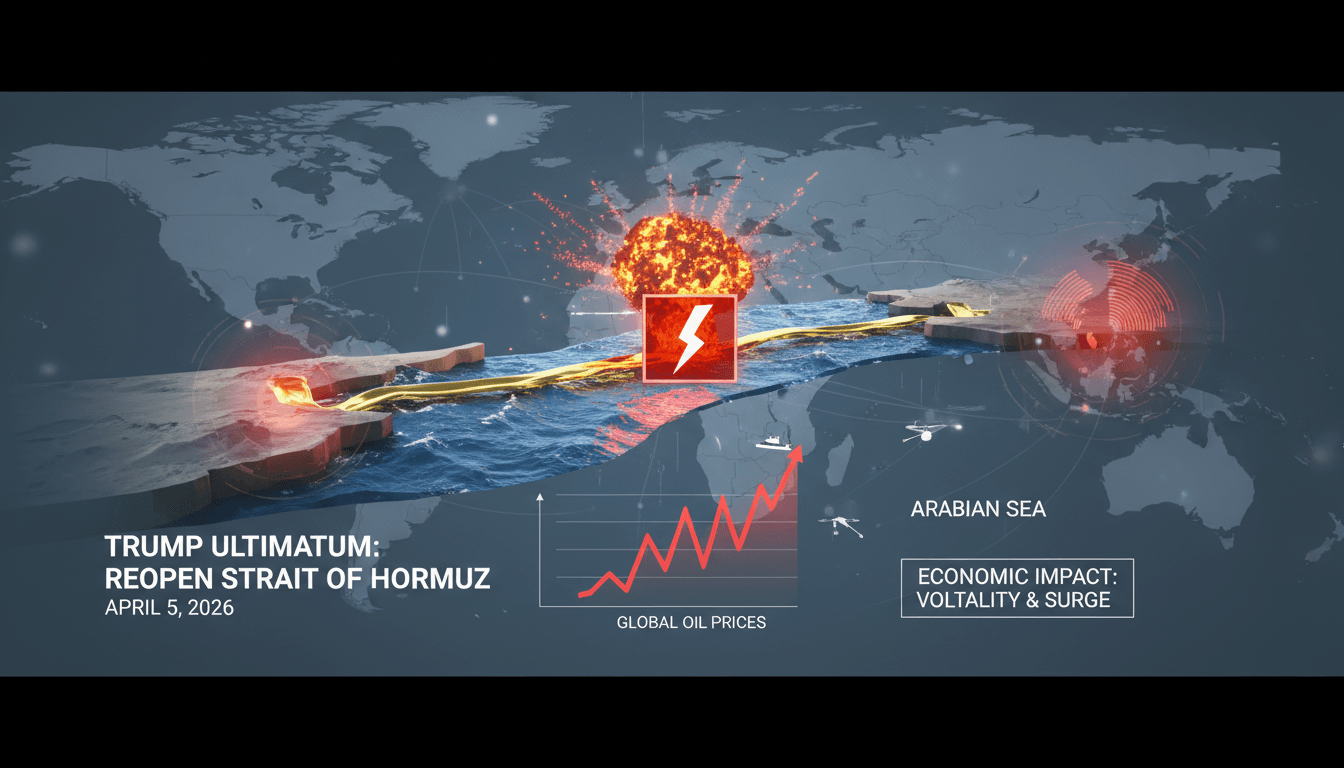
Here's what it means for you.
Your energy costs may rise as geopolitical tensions disrupt oil supply chains.
Why it matters
The Strait of Hormuz is a critical chokepoint for global oil transport, and its closure significantly impacts energy prices worldwide.
What happened (in 30 seconds)
- On April 5, 2026, President Donald Trump issued a profanity-laden ultimatum on Truth Social, demanding Iran reopen the Strait of Hormuz by April 7.
- The ultimatum follows an ongoing U.S.-Iran war that began in late February, during which Iran blocked the Strait, disrupting oil flows.
- Iran dismissed the ultimatum, vowing retaliation, while global oil prices surged above $100 per barrel amid heightened tensions.
The context you actually need
- The U.S.-Iran war erupted in late February 2026 after escalating military actions from both sides, leading to Iran's blockade of the Strait of Hormuz.
- Approximately 20% of global seaborne oil passes through the Strait, making its closure a significant leverage point in the conflict, which has spiked energy prices.
- Negotiations for a ceasefire have stalled, with both sides trading accusations and the U.S. preparing for potential military strikes on Iranian infrastructure.
What's really happening
The ultimatum from President Trump is a culmination of rising tensions between the U.S. and Iran, which have escalated since the war began in late February 2026. The conflict was triggered by U.S. and Israeli military actions targeting Iranian assets, prompting Iran to retaliate by closing the Strait of Hormuz, a vital passage for oil tankers. This blockade has led to significant disruptions in global oil supply, causing prices to soar and impacting economies reliant on stable energy costs.
Trump's ultimatum is not merely a rhetorical flourish; it reflects a strategic attempt to compel Iran back to the negotiating table amid stalled ceasefire talks. The deadline of April 7, 2026, serves as a pressure point, threatening military strikes on Iranian infrastructure if the Strait remains closed. This tactic aligns with Trump's historical approach to foreign policy, characterized by direct confrontation and public posturing.
The closure of the Strait has immediate implications for global energy markets. With approximately 20 million barrels of oil flowing through this chokepoint daily, any disruption can lead to price volatility. As oil prices exceed $100 per barrel, consumers and businesses worldwide are feeling the pinch. The spike in fuel costs can inflate import prices and threaten tourism and trade-dependent sectors, particularly in regions like Dubai, where the economy is heavily reliant on oil exports.
Iran's response to the ultimatum has been defiant, with officials labeling it "irrational" and vowing retaliation. This sets the stage for a potential escalation in military actions, which could further destabilize the region and exacerbate global energy supply issues. The Pentagon's preparations for strikes signal a serious commitment to enforcing the ultimatum, raising the stakes for both sides.
As the deadline approaches, the situation remains fluid, with the potential for rapid developments that could reshape the geopolitical landscape and impact global oil markets. The interplay of military threats, economic pressures, and diplomatic negotiations will determine the next steps in this high-stakes conflict.
Who feels it first (and how)
- Consumers: Higher fuel prices will directly impact household budgets, especially in energy-dependent regions.
- Businesses: Industries reliant on stable energy costs, such as transportation and manufacturing, will face increased operational expenses.
- Investors: Volatility in oil markets may lead to fluctuations in stock prices, particularly for energy companies and sectors tied to oil prices.
- Dubai residents: The UAE's economy, heavily reliant on oil exports, will experience acute pressures from rising costs and potential supply chain disruptions.
What to watch next
- Iran's military response: Monitoring Iran's actions in response to the ultimatum will provide insight into potential escalation or de-escalation of the conflict.
- Global oil prices: Continued fluctuations in oil prices will indicate the market's reaction to geopolitical developments and supply chain disruptions.
- Ceasefire negotiations: Any signs of renewed diplomatic efforts or breakthroughs in negotiations could alter the trajectory of the conflict and its economic implications.
The Strait of Hormuz is a critical chokepoint for global oil transport, with 20% of seaborne oil passing through it.
Continued military tensions will lead to volatility in global oil markets and rising energy prices.
The long-term implications of the U.S.-Iran conflict on regional stability and global energy security remain uncertain.
Frequently Asked Questions
- Why it matters?
- The Strait of Hormuz is a critical chokepoint for global oil transport, and its closure significantly impacts energy prices worldwide.
- What happened (in 30 seconds)?
- On April 5, 2026, President Donald Trump issued a profanity-laden ultimatum on Truth Social, demanding Iran reopen the Strait of Hormuz by April 7. The ultimatum follows an ongoing U.S.-Iran war that began in late February, during which Iran blocked the Strait, disrupting oil flows. Iran dismissed the ultimatum, vowing retaliation, while global oil prices surged above $100 per barrel amid heightened tensions.
- What's really happening?
- The ultimatum from President Trump is a culmination of rising tensions between the U.S. and Iran, which have escalated since the war began in late February 2026. The conflict was triggered by U.S. and Israeli military actions targeting Iranian assets, prompting Iran to retaliate by closing the Strait of Hormuz, a vital passage for oil tankers. This blockade has led to significant disruptions in global oil supply, causing prices to soar and impacting economies reliant on stable energy costs. Tru
- Who feels it first (and how)?
- Consumers: Higher fuel prices will directly impact household budgets, especially in energy-dependent regions. Businesses: Industries reliant on stable energy costs, such as transportation and manufacturing, will face increased operational expenses. Investors: Volatility in oil markets may lead to fluctuations in stock prices, particularly for energy companies and sectors tied to oil prices. Dubai residents: The UAE's economy, heavily reliant on oil exports, will experience acute pressures from r
- What to watch next?
- Iran's military response: Monitoring Iran's actions in response to the ultimatum will provide insight into potential escalation or de-escalation of the conflict. Global oil prices: Continued fluctuations in oil prices will indicate the market's reaction to geopolitical developments and supply chain disruptions. Ceasefire negotiations: Any signs of renewed diplomatic efforts or breakthroughs in negotiations could alter the trajectory of the conflict and its economic implications.
Capitol Hill news, legislation, and policy insight.
"The Hill specializes in U.S. politics and policy, with a focus on Capitol Hill developments and a reputation for insider reporting."
— A47 Editor
Trump to Iran: 'Open the F‑‑‑in’ Strait'
President Trump has escalated tensions with Iran by issuing a stark ultimatum demanding the reopening of the Strait of Hormuz, threatening military action against Iranian infrastructure if his demands are not met by a self-imposed deadline. This foll...
Breaking news, politics, business, and entertainment from the U.S. and around the world.
"The New York Post is a tabloid-format newspaper known for its sensationalist headlines and conservative-leaning editorial tone."
— A47 Editor
Trump’s final warning to Iran centers on Strait of Hormuz reopening
President Trump has issued a final warning to Iran, demanding the reopening of the Strait of Hormuz as a deadline approaches. This ultimatum follows a five-week conflict and is part of ongoing negotiations between Washington and Tehran aimed at resol...
Coverage of current events and conflicts in the Middle East.
"France 24 is viewed as a globally focused outlet with balanced coverage and a European perspective."
— A47 Editor
Donald Trump issues expletive threat to Iran over Hormuz Strait blockage
President Donald Trump has issued a profanity-laden ultimatum to Iran, demanding the reopening of the strategic Strait of Hormuz within 48 hours or face severe military action targeting critical infrastructure. This warning follows escalating tension...
European coverage of Middle East politics and security issues.
"France 24 offers international reporting with a European editorial perspective."
— A47 Editor
Donald Trump issues expletive threat to Iran over Hormuz Strait blockage
President Donald Trump has issued a profanity-laden ultimatum to Iran, demanding the reopening of the strategic Strait of Hormuz within 48 hours or face severe military action targeting critical infrastructure. This warning follows escalating tension...
Coverage of current events and conflicts in the Middle East.
"France 24 is viewed as a globally focused outlet with balanced coverage and a European perspective."
— A47 Editor
Donald Trump threatens "hell" unless Tehran reopens Hormuz Strait
President Donald Trump has issued a stark ultimatum to Iran, demanding the reopening of the strategic Strait of Hormuz within 48 hours or face severe military action. This threat follows heightened tensions after the downing of U.S. military jets by ...
European coverage of Middle East politics and security issues.
"France 24 offers international reporting with a European editorial perspective."
— A47 Editor
Donald Trump threatens "hell" unless Tehran reopens Hormuz Strait
U.S. President Donald Trump has issued a stark ultimatum to Iran, demanding the reopening of the strategically vital Strait of Hormuz within 48 hours or face severe military action. This warning follows heightened tensions after the downing of U.S. m...
English-language reporting on Saudi politics, policy, and society.
"Saudi Gazette reflects mainstream Saudi institutional perspectives."
— A47 Editor
Trump issues expletive-laden threat to Iran after extending deadline to reopen Hormuz Strait
US President Donald Trump has extended his deadline for Iran to reopen the Strait of Hormuz by 24 hours, threatening severe military action against Iranian infrastructure if the deadline is not met. The new ultimatum is set for Tuesday at 8:00 PM Eas...
English-language reporting on Saudi politics, policy, and society.
"Saudi Gazette reflects mainstream Saudi institutional perspectives."
— A47 Editor
Trump threatens Iran with “Power Plant Day” strikes
US President Donald Trump has issued a stark warning to Iran, declaring that Tuesday will be designated as “Power Plant Day” and “Bridge Day,” indicating potential military strikes on critical infrastructure if Tehran does not reopen the Strait of Ho...