
Syrian Government Takes Control of Ghwayran and Alaya Prisons from SDF
Here's what it means for you.
The recent handover of prisons in Syria could influence regional security dynamics, indirectly affecting global markets and international relations.
Why it matters
This shift signifies a move towards centralized governance in Syria, which may stabilize the region and impact international diplomatic efforts.
What happened (in 30 seconds)
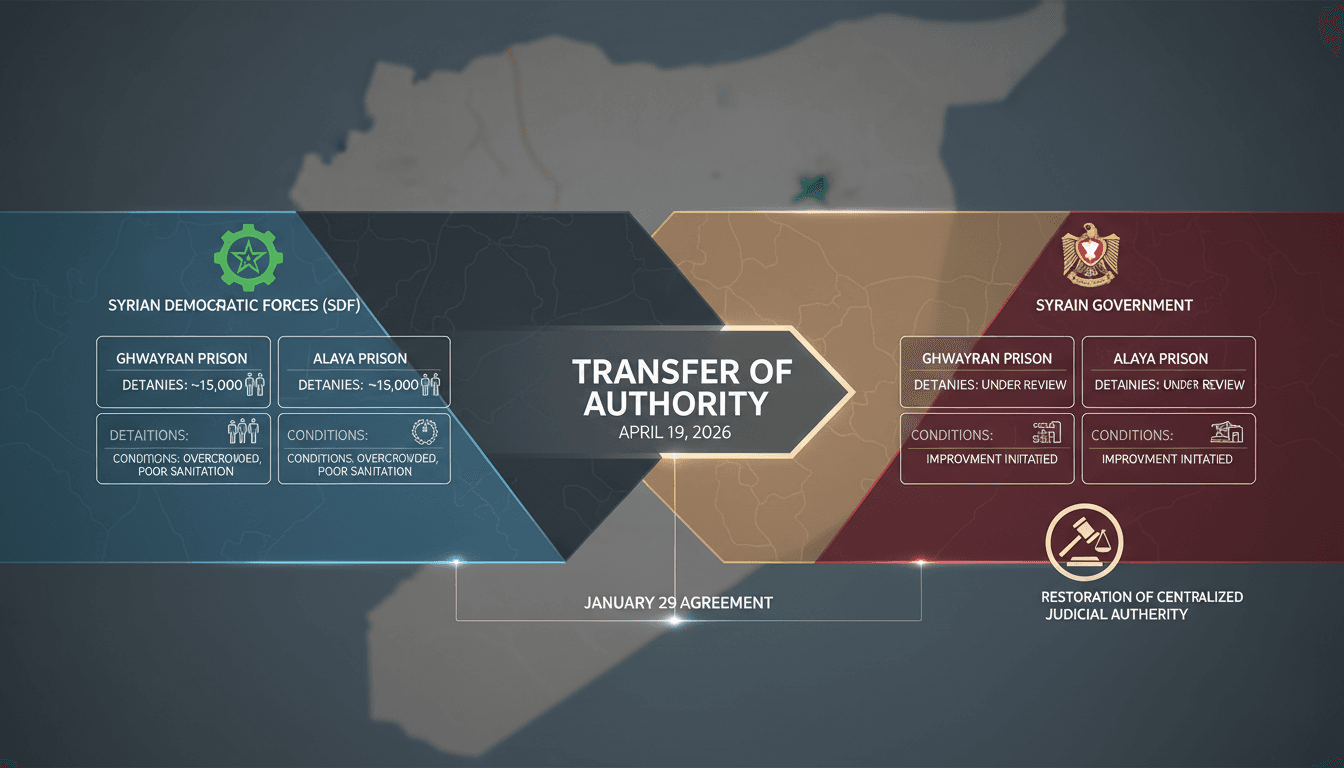
- On April 19, 2026, the Syrian government took control of Ghwayran and Alaya prisons from the Syrian Democratic Forces (SDF).
- This transfer is part of a broader agreement aimed at integrating SDF institutions into the Syrian state framework.
- Judicial operations in Al-Hasakah, which had been suspended for over a year, are set to resume, indicating a return to centralized authority.
The context you actually need
- Ghwayran prison, previously one of the largest under SDF control, held thousands of ISIS detainees, including high-ranking members.
- The January 29 agreement between the Syrian government and SDF initiated a process to restore centralized governance in northeastern Syria.
- Judicial functions in Al-Hasakah had been limited to provisional arrangements since the fall of the Assad regime, impacting local governance and security.
What's really happening
The handover of Ghwayran and Alaya prisons marks a significant step in the Syrian government's efforts to reassert control over northeastern regions previously managed by the SDF. This transition is rooted in a January 29 agreement that aims to merge SDF institutions into the central state framework, thereby restoring a semblance of order and governance in areas that have been fragmented since the civil war began.
The prisons, particularly Ghwayran, have been critical in the fight against ISIS, housing thousands of detainees, including key figures within the organization. The transfer of these facilities is not merely administrative; it represents a strategic move to consolidate power and re-establish judicial authority in a region that has seen a breakdown of law and order. The presence of Attorney General Judge Hassan Al-Tarba during the handover underscores the importance of this transition, as it signals the government's commitment to reviving judicial processes that have been dormant for over a year.
As the Syrian government begins to inventory and reorganize the prisons, it is also setting the stage for the resumption of judicial operations in Al-Hasakah. This is crucial for restoring public confidence in the state's ability to maintain law and order. The establishment of a new prison management mechanism that links these facilities to Ministry of Justice courts and provincial prosecutor's offices indicates a structured approach to governance that has been lacking in recent years.
Moreover, the rehabilitation of Alaya prison, which is reportedly nearly empty, suggests a focus on reforming the penal system rather than merely maintaining control. This could lead to a more humane approach to incarceration and a potential reduction in recidivism among former detainees. The implications of this shift extend beyond the immediate region, as a more stable Syria could influence broader geopolitical dynamics, including relations with neighboring countries and international stakeholders invested in the region's stability.
The integration of SDF institutions into the Syrian state framework is also a response to external pressures for a unified governance structure, which is seen as essential for long-term peace and stability. As the Syrian government reasserts its authority, it may also seek to engage with international partners to secure support for reconstruction and development efforts, further embedding its legitimacy on the global stage.
Who feels it first (and how)
- Local residents in Al-Hasakah will experience changes in security and governance.
- Judicial officials will be directly involved in the resumption of court operations and prison management.
- International stakeholders monitoring Syria's stability will adjust their strategies based on the evolving political landscape.
What to watch next
- Judicial reforms: Monitor the effectiveness of the new prison management system and its impact on local governance.
- Regional stability: Watch for shifts in security dynamics in northeastern Syria and how they affect relations with neighboring countries.
- International engagement: Keep an eye on how the Syrian government seeks foreign investment and support for reconstruction efforts.
The Syrian government has taken control of Ghwayran and Alaya prisons.
Judicial operations in Al-Hasakah will resume, leading to a more structured legal framework.
The long-term impact of this transition on regional stability and international relations remains to be seen.
Frequently Asked Questions
- Why it matters?
- This shift signifies a move towards centralized governance in Syria, which may stabilize the region and impact international diplomatic efforts.
- What happened (in 30 seconds)?
- On April 19, 2026, the Syrian government took control of Ghwayran and Alaya prisons from the Syrian Democratic Forces (SDF). This transfer is part of a broader agreement aimed at integrating SDF institutions into the Syrian state framework. Judicial operations in Al-Hasakah, which had been suspended for over a year, are set to resume, indicating a return to centralized authority.
- What's really happening?
- The handover of Ghwayran and Alaya prisons marks a significant step in the Syrian government's efforts to reassert control over northeastern regions previously managed by the SDF. This transition is rooted in a January 29 agreement that aims to merge SDF institutions into the central state framework, thereby restoring a semblance of order and governance in areas that have been fragmented since the civil war began. The prisons, particularly Ghwayran, have been critical in the fight against ISIS,
- Who feels it first (and how)?
- Local residents in Al-Hasakah will experience changes in security and governance. Judicial officials will be directly involved in the resumption of court operations and prison management. International stakeholders monitoring Syria's stability will adjust their strategies based on the evolving political landscape.
- What to watch next?
- Judicial reforms: Monitor the effectiveness of the new prison management system and its impact on local governance. Regional stability: Watch for shifts in security dynamics in northeastern Syria and how they affect relations with neighboring countries. International engagement: Keep an eye on how the Syrian government seeks foreign investment and support for reconstruction efforts.
Pan-Arab news coverage spanning politics, business, sports, and regional affairs.
"Asharq Al-Awsat reflects a broad Arab editorial perspective with strong attention to regional geopolitics."
— A47 Editor
الحكومة السورية تتسلم سجنَي «غويران» و«علايا» في محافظة الحسكة
The Syrian government has officially taken control of the judicial palace in Al-Hasakah province after a hiatus of over a year, along with the Guiran and Alaya prisons. This transfer marks a significant step in the government's efforts to re-establis...
Arabic-language coverage of political affairs and current events.
"Okaz political coverage typically follows mainstream Saudi framing on national and regional affairs."
— A47 Editor
القضاء السوري يتسلّم سجن غويران في الحسكة من «قسد»
Syrian authorities have officially taken control of the Ghuwayran prison in Hasakah, aiming to organize the prison's operations and integrate it into the judicial system. This transfer aligns with the January 29 agreement between the Syrian governmen...