
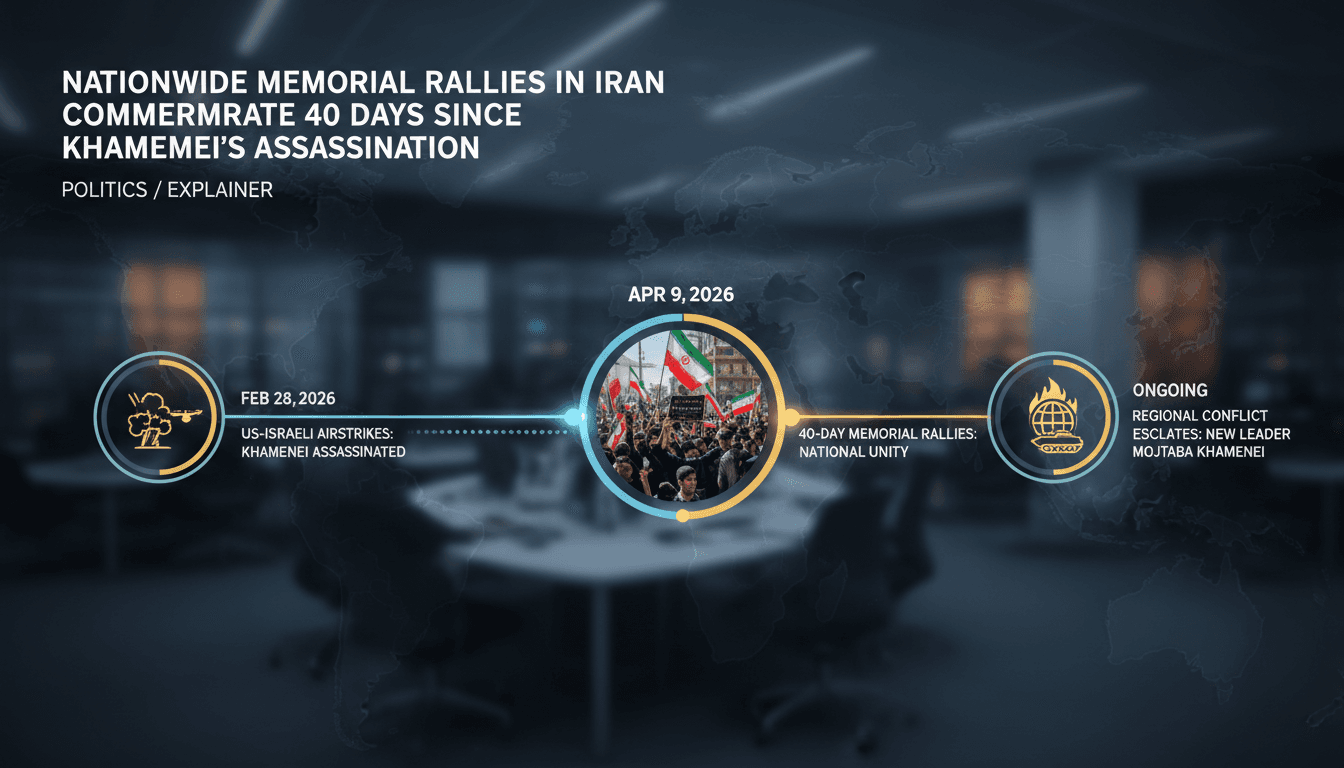
Nationwide Memorial Rallies in Iran Commemorate 40 Days Since Khamenei's Assassination
Here's what it means for you.
The ongoing conflict in the Middle East could disrupt global markets and impact expatriate communities, including those in Dubai.
Why it matters
The assassination of a key political figure has intensified regional tensions, affecting global oil supply and security dynamics.
What happened (in 30 seconds)
- Thousands of Iranians rallied nationwide on April 9, 2026, to commemorate the 40th day since Supreme Leader Ali Khamenei's assassination.
- Ceremonies began at 9:40 a.m., the exact time of his death, with participants displaying images of Khamenei in cities like Tehran, Urmia, and Gorgan.
- Mojtaba Khamenei, his son and successor, remained absent from the events, which were broadcast on state television to emphasize national unity.
The context you actually need
- Ali Khamenei served as Iran's Supreme Leader from 1989 until his assassination, significantly influencing the Islamic Republic's policies amid ongoing tensions with the US and Israel.
- The assassination on February 28, 2026, occurred during US-Israeli airstrikes aimed at high-ranking officials, triggering Iranian retaliation and escalating into a regional conflict.
- A 40-day mourning period was declared following his death, culminating in nationwide rallies that reflect both grief and a call for unity among supporters.
What's really happening
The assassination of Ali Khamenei has not only marked a pivotal moment in Iranian history but has also triggered a series of events that are reshaping the geopolitical landscape of the Middle East. Following the airstrikes that killed Khamenei, Iran's immediate response included retaliatory actions against US assets in the Gulf and strikes on Israel, escalating tensions to a boiling point. This conflict has drawn in various regional players, leading to a broader war that has implications for global security and economic stability.
The 40-day mourning period, culminating in nationwide rallies, serves multiple purposes. It allows the Iranian government to consolidate power and rally public support while also sending a message of defiance to external adversaries. The absence of Mojtaba Khamenei at these events raises questions about the new Supreme Leader's public engagement strategy amidst ongoing conflict. His low profile could be a tactical decision to avoid drawing attention during a volatile period, or it could indicate a struggle to establish authority in the wake of his father's death.
The Iranian state media's extensive coverage of the memorial rallies emphasizes national unity and the resolve to avenge Khamenei's death, framing it as a rallying point for the Iranian populace. This narrative is crucial for the regime as it seeks to maintain control and justify its military actions in the region. The vow to defend Iran's rights, particularly concerning the Strait of Hormuz, highlights the strategic importance of this waterway for global oil supply, making any instability in the region a concern for international markets.
As the conflict continues, the potential for further escalation remains high, with implications for oil prices and security in the Gulf region. The Iranian government is likely to leverage this moment to strengthen its position domestically while navigating the complex international landscape shaped by the assassination.
Who feels it first (and how)
- Iranian citizens: Directly impacted by the national mourning and potential military actions.
- Expatriate communities: Particularly in the UAE, facing heightened security and potential disruptions.
- Global oil markets: Likely to experience fluctuations due to instability in the region.
- Regional governments: Monitoring the situation closely for implications on their own security and economic interests.
What to watch next
- Military actions by Iran: Any further retaliatory strikes could escalate the conflict and impact global oil supply.
- International diplomatic responses: Engagement from global powers could influence the trajectory of the conflict and regional stability.
- Economic indicators in the Gulf: Fluctuations in oil prices and market stability will signal broader economic impacts.
The assassination of Khamenei has intensified regional tensions and led to a national mourning period in Iran.
Continued military actions and retaliations from Iran, affecting regional stability and oil supply.
The long-term implications for Mojtaba Khamenei's leadership and Iran's geopolitical strategy.
Frequently Asked Questions
- Why it matters?
- The assassination of a key political figure has intensified regional tensions, affecting global oil supply and security dynamics.
- What happened (in 30 seconds)?
- Thousands of Iranians rallied nationwide on April 9, 2026, to commemorate the 40th day since Supreme Leader Ali Khamenei's assassination. Ceremonies began at 9:40 a.m., the exact time of his death, with participants displaying images of Khamenei in cities like Tehran, Urmia, and Gorgan. Mojtaba Khamenei, his son and successor, remained absent from the events, which were broadcast on state television to emphasize national unity.
- What's really happening?
- The assassination of Ali Khamenei has not only marked a pivotal moment in Iranian history but has also triggered a series of events that are reshaping the geopolitical landscape of the Middle East. Following the airstrikes that killed Khamenei, Iran's immediate response included retaliatory actions against US assets in the Gulf and strikes on Israel, escalating tensions to a boiling point. This conflict has drawn in various regional players, leading to a broader war that has implications for glo
- Who feels it first (and how)?
- Iranian citizens: Directly impacted by the national mourning and potential military actions. Expatriate communities: Particularly in the UAE, facing heightened security and potential disruptions. Global oil markets: Likely to experience fluctuations due to instability in the region. Regional governments: Monitoring the situation closely for implications on their own security and economic interests.
- What to watch next?
- Military actions by Iran: Any further retaliatory strikes could escalate the conflict and impact global oil supply. International diplomatic responses: Engagement from global powers could influence the trajectory of the conflict and regional stability. Economic indicators in the Gulf: Fluctuations in oil prices and market stability will signal broader economic impacts.
Comprehensive coverage of Middle Eastern and global issues.
"Al Jazeera is a prominent voice from the Global South, especially the Middle East, with an emphasis on underreported stories."
— A47 Editor
Iranians rally nationwide to honour late leader Ali Khamenei
Thousands of Iranians gathered nationwide to honor the late Supreme Leader Ali Khamenei, whose assassination has been marked as a pivotal moment leading to the US-Israeli military actions against Iran. The rallies reflect a deep sense of mourning and...
Regional coverage and analysis focused on politics, diplomacy, and business across the Middle East.
"Al-Monitor is known for analytical reporting on Middle East politics and policy developments."
— A47 Editor
Iranians pay tribute to slain supreme leader weeks after killing
Thousands of Iranians gathered to pay tribute to former supreme leader Ali Khamenei, who was killed in a US-Israeli attack on February 28, coinciding with the onset of the war. The rallies, marked by portraits of Khamenei and national flags, reflect ...
24/7 international news from a French perspective in multiple languages.
"France 24 is viewed as a globally focused outlet with balanced coverage and a European perspective."
— A47 Editor
Iranians rally to mark 40-day mourning for slain supreme leader Khamenei
Mourners across Iran began ceremonies on Thursday to mark the 40th day after the death of Supreme Leader Ayatollah Ali Khamenei, who was killed at the onset of the Iran war. In Tehran, participants dressed in black rallied from Jomhouri Eslami Square...