
First Video Evidence of Sperm Whale Birth Captured Off Dominica
Here's what it means for you.
The collaborative birthing behavior of sperm whales could reshape our understanding of social structures in marine life, influencing conservation strategies and research funding.
Why it matters
This groundbreaking observation highlights the complex social dynamics of sperm whales, potentially impacting marine conservation policies and research methodologies.
What happened (in 30 seconds)
- Project CETI captured the first-ever video of a sperm whale birth off Dominica in July 2023.
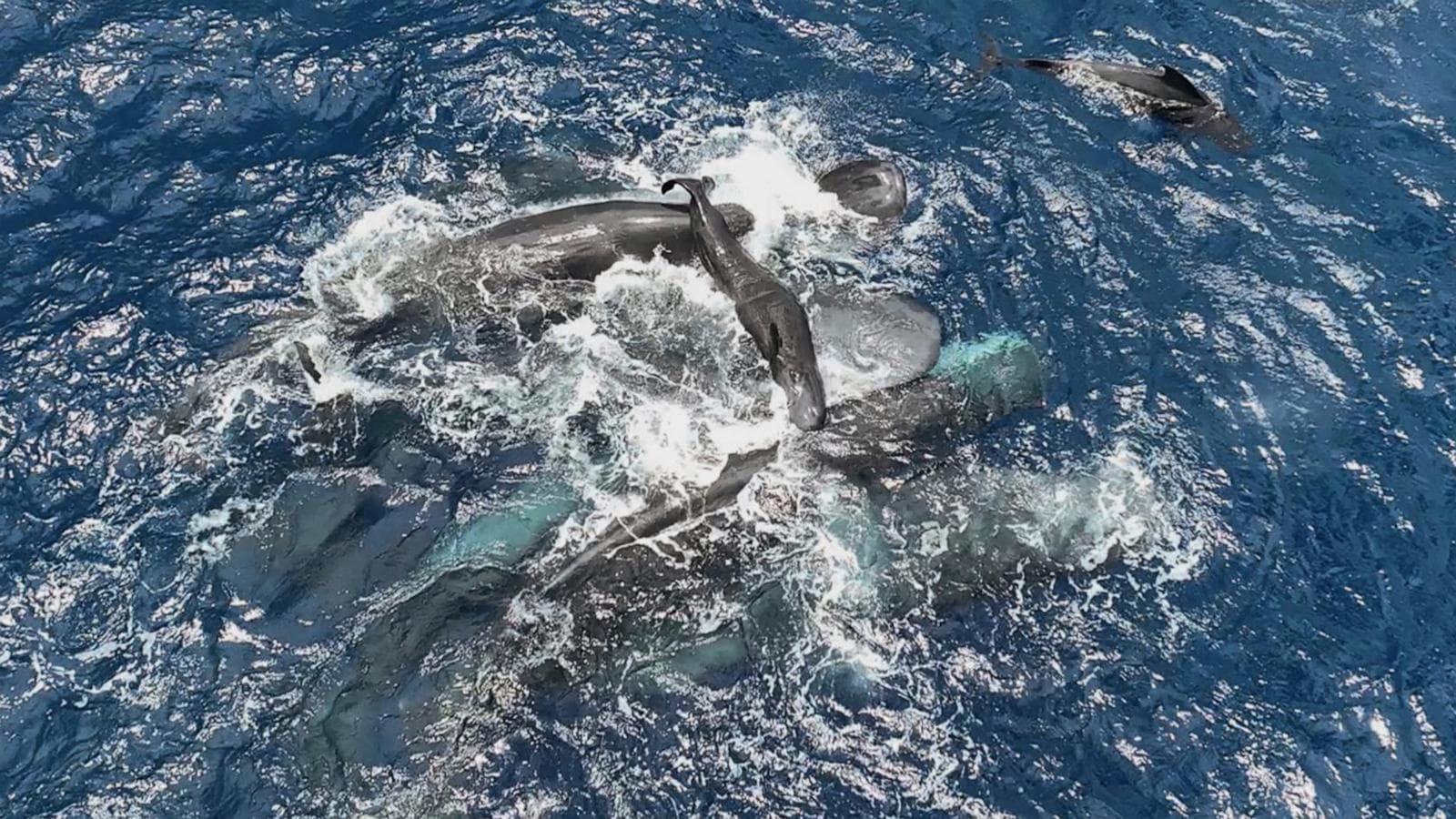
- Eleven whales from two matrilineal clans assisted the mother, Rounder, during a 34-minute labor and supported the calf post-birth.
- Research findings published in March 2026 reveal significant insights into cooperative behaviors and vocal communication among sperm whales.
The context you actually need
- Sperm whales (Physeter macrocephalus) are known for their matrilineal social structures, which have been poorly documented in terms of reproductive behaviors.
- Project CETI employs advanced AI and non-invasive technologies to study sperm whale populations, aiming to decode their communication and social interactions amidst environmental threats.
- Prior documentation of sperm whale births was limited to anecdotal accounts from whaling operations, lacking comprehensive audio-visual data.
What's really happening
The recent documentation of a sperm whale birth by Project CETI marks a significant advancement in marine biology, particularly in understanding the social dynamics of these intelligent creatures. The footage reveals a coordinated effort among 11 sperm whales from two distinct matrilineal clans, demonstrating a level of cooperation previously unrecorded in the wild. This collaborative behavior during the birthing process not only sheds light on the social structures of sperm whales but also raises questions about the evolution of social contracts in non-human species.
The use of aerial drones and hydrophones allowed researchers to observe the intricate interactions among the whales during the labor and delivery. The mother whale, named Rounder, was supported by both kin and non-kin, illustrating that cooperative assistance in birthing transcends mere familial bonds. This finding aligns with similar behaviors observed in primate societies, suggesting that complex social behaviors may be more widespread in the animal kingdom than previously thought.
The implications of these findings extend beyond mere observation. They challenge existing notions about the social capabilities of cetaceans and may influence future research directions, particularly in the fields of ethology and marine conservation. The use of machine learning to analyze the whales' positions and vocalizations during the birthing process provides a new framework for understanding animal communication and social roles. The increased frequency of specific coda vocalizations during the event indicates a sophisticated level of interaction and role differentiation among the whales, suggesting that these vocalizations may serve critical functions in social coordination.
As marine ecosystems face increasing threats from human activities, such as shipping and climate change, understanding the social dynamics of species like sperm whales becomes crucial. This knowledge can inform conservation strategies, ensuring that efforts to protect these animals consider their complex social structures and behaviors.
Who feels it first (and how)
- Marine biologists: Gain new insights into cetacean behavior, influencing research focus and funding.
- Conservation organizations: May adjust strategies based on findings about social dynamics and cooperative behaviors.
- Local communities in Dominica: Potentially impacted by increased interest in marine tourism and conservation efforts.
What to watch next
- Research publications: Look for follow-up studies that further explore the implications of social cooperation in marine species.
- Conservation policies: Monitor changes in marine protection laws that may arise from new understandings of sperm whale social structures.
- Technological advancements: Watch for innovations in AI and monitoring technologies that enhance our ability to study marine life.
The first video-recorded sperm whale birth has been documented, revealing cooperative behaviors.
Increased funding and interest in marine biology research focused on social structures in cetaceans.
The long-term impact of these findings on conservation policies and local economies.
Frequently Asked Questions
- Why it matters?
- This groundbreaking observation highlights the complex social dynamics of sperm whales, potentially impacting marine conservation policies and research methodologies.
- What happened (in 30 seconds)?
- Project CETI captured the first-ever video of a sperm whale birth off Dominica in July 2023. Eleven whales from two matrilineal clans assisted the mother, Rounder, during a 34-minute labor and supported the calf post-birth. Research findings published in March 2026 reveal significant insights into cooperative behaviors and vocal communication among sperm whales.
- What's really happening?
- The recent documentation of a sperm whale birth by Project CETI marks a significant advancement in marine biology, particularly in understanding the social dynamics of these intelligent creatures. The footage reveals a coordinated effort among 11 sperm whales from two distinct matrilineal clans, demonstrating a level of cooperation previously unrecorded in the wild. This collaborative behavior during the birthing process not only sheds light on the social structures of sperm whales but also rais
- Who feels it first (and how)?
- Marine biologists: Gain new insights into cetacean behavior, influencing research focus and funding. Conservation organizations: May adjust strategies based on findings about social dynamics and cooperative behaviors. Local communities in Dominica: Potentially impacted by increased interest in marine tourism and conservation efforts.
- What to watch next?
- Research publications: Look for follow-up studies that further explore the implications of social cooperation in marine species. Conservation policies: Monitor changes in marine protection laws that may arise from new understandings of sperm whale social structures. Technological advancements: Watch for innovations in AI and monitoring technologies that enhance our ability to study marine life.
24/7 international news from a French perspective in multiple languages.
"France 24 is viewed as a globally focused outlet with balanced coverage and a European perspective."
— A47 Editor
Caribbean: scientists release rare footage of sperm whale birth
Scientists have released rare footage of a sperm whale birth off the coast of Dominica, marking a significant observation in marine biology as birth assistance among these creatures has only been documented previously in primates. This footage, filme...
International coverage from The Guardian's global desks.
"The Guardian is known for its progressive editorial stance and in-depth analysis."
— A47 Editor
Scientists film whale giving birth while other whales work together to help her
Scientists captured rare footage of a sperm whale named Rounder giving birth off the coast of Dominica, with other female whales assisting her during the process. This event occurred on July 8, 2023, as part of Project Ceti's efforts to study whale c...
Scientific research, space, environment, and health coverage.
"The New York Times is a globally recognized newspaper offering authoritative reporting with a center-left editorial stance."
— A47 Editor
Scientists Filmed a Whale Birth. The Surprise: Mom Had Many Helpers.
Scientists have captured footage of a sperm whale giving birth, revealing that the mother was assisted by several other whales during the process. This observation contributes to the growing body of evidence suggesting that various species, not just ...
Technology innovations, startups, and trends.
"ABC News delivers broad national coverage with a mainstream editorial stance, focusing on accessibility and balanced reporting."
— A47 Editor
Scientists captured female sperm whales on video working together during a birth to protect the calf
Scientists have captured rare footage of female sperm whales collaborating during a birth to protect the calf, providing valuable insights into the social behaviors of these large marine mammals. This unprecedented video highlights the cooperative na...
Discoveries, research, environment, and health innovations.
"New Scientist is a well-respected publication offering accessible science news, commentary, and expert analysis."
— A47 Editor
First glimpse of sperm whale birth reveals teamwork to support newborn
A female sperm whale has been filmed giving birth for the first time, with the support of 10 adult females who assisted in lifting the calf out of the water and protecting it from potential predators. This unprecedented observation highlights the col...
News in science and technology, with a focus on consumer and innovation stories.
"Popular Science simplifies complex scientific topics for general audiences and celebrates innovation."
— A47 Editor
Baby sperm whale birth captured in groundbreaking video
Scientists captured groundbreaking footage of a sperm whale named Rounder giving birth, supported by a group of 10 adult females who assisted in the process. This unprecedented observation highlights the collaborative nature of sperm whales during ch...