
U.S. Federal Student Loan Management Transferred to Treasury Department
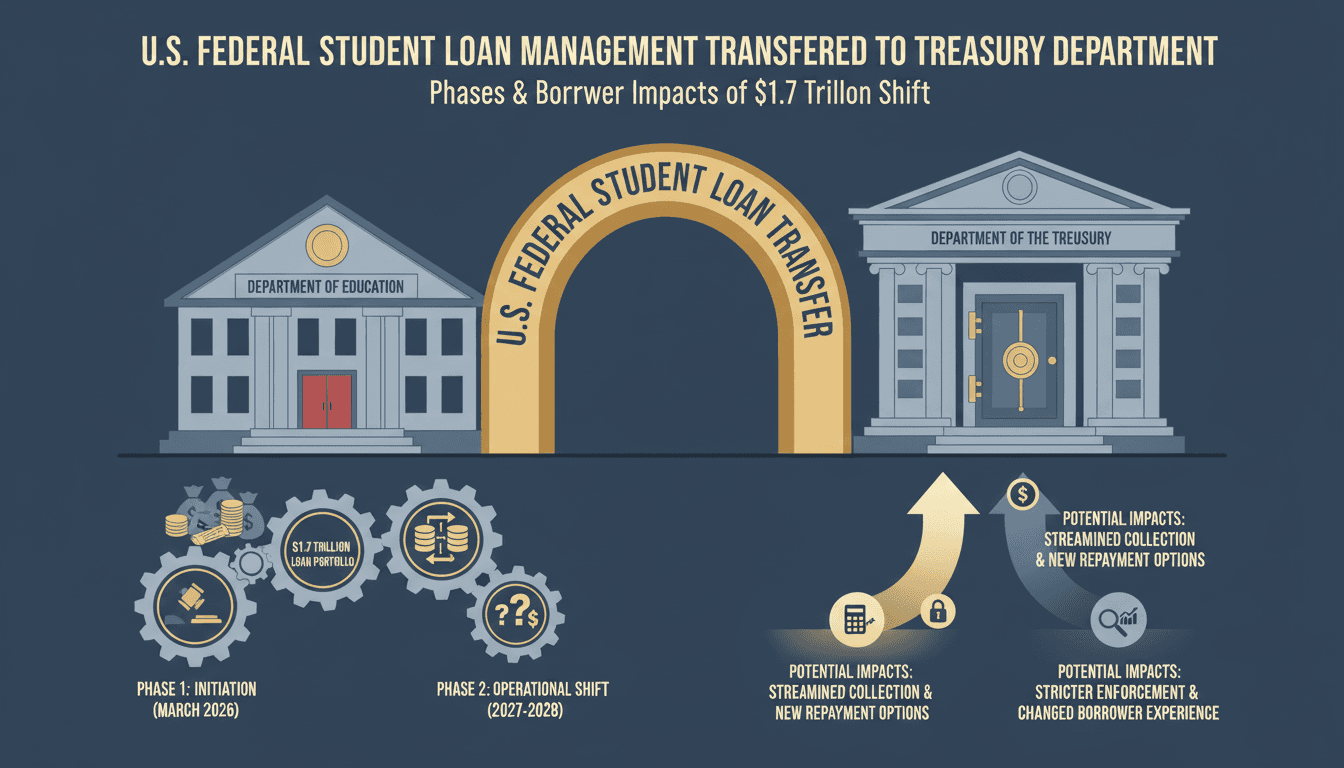
Here's what it means for you.
If you’re a U.S. expatriate in Dubai with federal student loans, expect no immediate changes, but stay informed about potential shifts in loan management.
Why it matters
This transfer impacts 43 million borrowers and could reshape the landscape of federal student loan management and repayment.
What happened (in 30 seconds)
- On March 19, 2026, the U.S. Department of Education transferred control of the federal student loan portfolio to the Department of the Treasury.
- Phase 1 involves immediate oversight of $180 billion in defaulted loans affecting up to 12 million borrowers.
- Future phases will expand Treasury's role, potentially including all federal student loans and related programs.
The context you actually need
- The federal student loan program, established in 1980, has become the largest consumer debt portfolio in the U.S., totaling nearly $1.7 trillion.
- Default rates have been troubling, with nearly one-quarter of borrowers in default and less than half making regular payments, prompting the need for a new management strategy.
- This transfer is part of a broader effort by the Trump administration to reduce the Department of Education's influence, marking the tenth interagency agreement to redistribute federal functions.
What's really happening
On March 19, 2026, Education Secretary Linda McMahon and Treasury Secretary Scott Bessent signed a 17-page interagency agreement named the "Federal Student Assistance Partnership." This agreement signifies a pivotal shift in the management of federal student loans, which have been under the purview of the Department of Education for 45 years.
The first phase of this transfer immediately shifts operational control of over $180 billion in defaulted loans—approximately 11% of the total student loan portfolio—to the Treasury. This move affects between 9.2 to 12 million borrowers, who will now be subject to enhanced debt collection methods, such as IRS offsets and wage garnishment. The rationale behind this shift is to leverage the Treasury's financial expertise to improve debt recovery rates, particularly in light of the high default rates currently plaguing the system.
Phases 2 and 3 of the agreement are pending, with Phase 2 set to evaluate the feasibility of transferring non-defaulted loans to the Treasury. This phase could potentially expand the Treasury's authority to manage all federal student loans, including the administration of the Free Application for Federal Student Aid (FAFSA) and programs like Pell Grants. However, borrowers will not experience immediate changes in their servicers, payment amounts, or eligibility criteria during this transition.
Critics of the transfer have raised concerns about the legality and potential confusion it may cause among borrowers. Legal challenges are anticipated, citing federal law that mandates the Education Department's oversight of student loans. Organizations such as Protect Borrowers and the American Federation of Government Employees (AFGE) have voiced apprehensions about the implications for borrower relief and the overall legality of dismantling the Education Department's role without congressional approval.
Despite these criticisms, Treasury officials are emphasizing a seamless transition and fiscal discipline, asserting that the move is designed to enhance efficiency in managing the federal student loan portfolio. As the situation unfolds, it remains to be seen how these changes will affect the broader landscape of student loan management and repayment in the U.S.
Who feels it first (and how)
- Borrowers in default: Approximately 9.2 to 12 million individuals will experience immediate changes in how their loans are managed.
- Loan servicers: Companies like MOHELA and Navient will need to adapt to the new oversight structure.
- U.S. expatriates: Those living in Dubai with federal loans will continue repayments through existing servicers, but should monitor for potential changes.
What to watch next
- Legal challenges: Watch for court cases that may arise questioning the legality of the transfer and its implications for borrowers.
- Phase 2 timeline: Keep an eye on when the Treasury will assess the feasibility of taking over non-defaulted loans, as this could affect more borrowers.
- Market reactions: Observe how loan servicers and the broader financial markets respond to this significant restructuring.
The transfer of federal student loan management from the Department of Education to the Treasury is officially underway.
Legal challenges will emerge, potentially delaying further phases of the transfer.
The long-term impact on borrower repayment behavior and default rates remains uncertain.
Frequently Asked Questions
- Why it matters?
- This transfer impacts 43 million borrowers and could reshape the landscape of federal student loan management and repayment.
- What happened (in 30 seconds)?
- On March 19, 2026, the U.S. Department of Education transferred control of the federal student loan portfolio to the Department of the Treasury. Phase 1 involves immediate oversight of $180 billion in defaulted loans affecting up to 12 million borrowers. Future phases will expand Treasury's role, potentially including all federal student loans and related programs.
- What's really happening?
- On March 19, 2026, Education Secretary Linda McMahon and Treasury Secretary Scott Bessent signed a 17-page interagency agreement named the "Federal Student Assistance Partnership." This agreement signifies a pivotal shift in the management of federal student loans, which have been under the purview of the Department of Education for 45 years. The first phase of this transfer immediately shifts operational control of over $180 billion in defaulted loans—approximately 11% of the total student lo
- Who feels it first (and how)?
- Borrowers in default: Approximately 9.2 to 12 million individuals will experience immediate changes in how their loans are managed. Loan servicers: Companies like MOHELA and Navient will need to adapt to the new oversight structure. U.S. expatriates: Those living in Dubai with federal loans will continue repayments through existing servicers, but should monitor for potential changes.
- What to watch next?
- Legal challenges: Watch for court cases that may arise questioning the legality of the transfer and its implications for borrowers. Phase 2 timeline: Keep an eye on when the Treasury will assess the feasibility of taking over non-defaulted loans, as this could affect more borrowers. Market reactions: Observe how loan servicers and the broader financial markets respond to this significant restructuring.
Stock market news, investing ideas, and trading analysis.
"TheStreet provides market news and retail-investor-focused analysis."
— A47 Editor
The biggest change to student loans in 45 years is here
The Trump administration has announced a significant change in the management of federal student loans, transferring oversight from the Department of Education to the Treasury Department. This marks the first major shift in the federal student loan p...
Corporate leadership, finance, technology, and market trends.
"Fortune covers financial trends, leadership, and innovation with a pragmatic editorial approach."
— A47 Editor
Scott Bessent’s Treasury Department will start overseeing the $180 billion of student loans that are in default
The U.S. Education Department is transferring oversight of approximately $180 billion in defaulted student loans to the Treasury Department, a move led by Treasury Secretary Scott Bessent. This transition marks a significant shift in the management o...
Right-of-center views on political news.
"The Washington Times is a conservative-leaning newspaper known for its political coverage and advocacy of right-of-center viewpoints."
— A47 Editor
Student loans shifting to Treasury in Education Department overhaul
The Trump administration has announced a three-phase plan to transfer the federal government's nearly $1.7 trillion student loan portfolio from the U.S. Education Department to the U.S. Treasury Department, marking a significant step in its efforts t...
International stories from NPR’s global desk.
"NPR is an American public media organization known for thoughtful reporting and a slightly left-leaning editorial tone."
— A47 Editor
Trump is dismantling democracy, reports find. And, Treasury to take over student loans
Recent studies indicate that the U.S. is experiencing a decline in democratic practices, with reports suggesting that the Trump administration is contributing to this erosion. Additionally, the administration plans to shift the management of federal ...
Macro commentary, policy analysis, growth/inflation themes, and global outlooks.
"Contextual macro coverage that complements day-to-day market headlines."
— A47 Editor
Trump administration moving federal student loan management to Treasury Department
The Trump administration has announced the transfer of federal student loan management responsibilities to the Treasury Department, marking a significant shift in how these loans will be overseen. This move is part of broader efforts to streamline go...
Coverage of national news and events from across the United States.
"HuffPost is known for its progressive editorial stance, offering opinionated yet comprehensive coverage on social, political, and cultural topics."
— A47 Editor
Treasury Department Begins Taking Over Student Loans As The Education Department Gets Dismantled
The Treasury Department has begun the process of taking over the management of federal student loans, marking a significant shift as the Education Department faces dismantlement. This move represents the most substantial step yet in reducing the Educ...
Public radio coverage of American news and issues.
"NPR is an American public media organization known for thoughtful reporting and a slightly left-leaning editorial tone."
— A47 Editor
Federal student loans will move to Treasury, further shrinking Education Department
The Trump administration has announced a significant transition plan that will shift the management of most federal student loans and the Free Application for Federal Student Aid (FAFSA) to the Treasury Department, further reducing the role of the Ed...