
FIFA Appoints First-Ever Complete Egyptian Referee Crew for 2026 World Cup
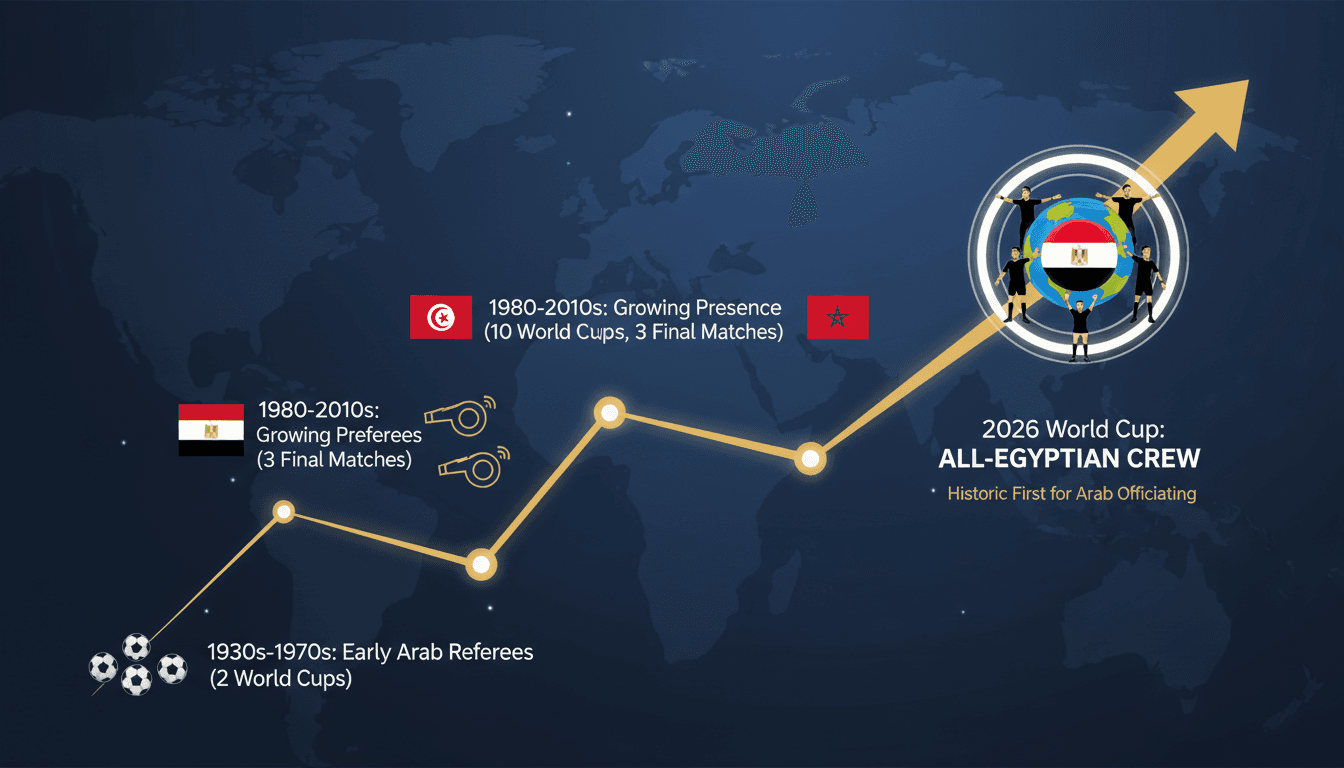
Here's what it means for you.
The inclusion of a complete Egyptian referee crew at the World Cup signals a shift in global sports representation that could inspire local talent and affect regional football dynamics.
Why it matters
This landmark decision enhances the visibility of Arab officiating talent on a global stage, potentially influencing future selections and investments in regional football development.
What happened (in 30 seconds)
- FIFA announced the appointment of match officials for the 2026 World Cup on April 9, 2026, including a full Egyptian referee crew.
- Amin Omar leads as the field referee, supported by assistants Mahmoud Abouelregal and Ahmed Hossam Taha, with Mahmoud Ashour as the video assistant referee.
- Nine Arab referees in total were selected, marking a significant increase in Arab representation in World Cup officiating.
The context you actually need
- FIFA's selection process included rigorous training camps and evaluations based on performances in continental tournaments, emphasizing diversity and technology integration.
- This appointment follows previous successes of Arab referees, showcasing a trend toward greater inclusivity in international sports officiating.
- The Egyptian Football Association views this achievement as a testament to national development programs, reflecting a broader commitment to enhancing the quality of officiating in the region.
What's really happening
The appointment of a complete Egyptian referee crew for the 2026 World Cup is not just a milestone for Egypt but a reflection of FIFA's evolving approach to officiating diversity. Historically, officiating at the World Cup has been dominated by referees from Europe and South America. However, FIFA's recent initiatives aim to broaden this scope, recognizing the need for representation from underrepresented regions, particularly the Arab world.
The selection process involved extensive evaluations, including training camps held in Doha and Dubai, where referees underwent rigorous assessments. This was part of FIFA's broader strategy to enhance the quality of officiating by integrating technology, such as Video Assistant Referee (VAR) systems, and ensuring that referees are well-prepared for high-stakes matches. The inclusion of Arab referees is indicative of a shift in FIFA's priorities, aligning with global trends towards inclusivity and representation in sports.
The implications of this decision extend beyond the tournament itself. It serves as a catalyst for regional football development, inspiring local academies and aspiring referees. In Dubai, for instance, the pride felt by residents in the Arab contingent highlights a growing recognition of the region's potential in the global football landscape. This could lead to increased investments in training programs and infrastructure, ultimately elevating the standard of football officiating across the Arab world.
Moreover, the success of this Egyptian crew could pave the way for more Arab referees in future international tournaments, creating a feedback loop that encourages further participation and development. As the world watches the 2026 World Cup, the performance of these referees will be closely scrutinized, and their success could significantly influence FIFA's future selections.
Who feels it first (and how)
- Aspiring referees in the Arab world, who may see new opportunities for advancement and representation.
- Football academies in the UAE and surrounding regions, which could experience increased interest and investment in referee training programs.
- Local football associations that may leverage this achievement to enhance their own officiating standards and attract international attention.
What to watch next
- Performance of the Egyptian crew during the World Cup: Their success could lead to more Arab referees being appointed in future tournaments.
- Investment in referee training programs across the Arab region: Increased focus on developing local talent could reshape the officiating landscape.
- Reactions from international football bodies: How FIFA and other organizations respond to this milestone could influence future policies on diversity in officiating.
The appointment of a complete Egyptian referee crew is a historic first for the World Cup.
Increased investment in referee training programs in the Arab region following this achievement.
The long-term impact on the quality of officiating in international tournaments and how it will affect FIFA's future selections.
Frequently Asked Questions
- Why it matters?
- This landmark decision enhances the visibility of Arab officiating talent on a global stage, potentially influencing future selections and investments in regional football development.
- What happened (in 30 seconds)?
- FIFA announced the appointment of match officials for the 2026 World Cup on April 9, 2026, including a full Egyptian referee crew. Amin Omar leads as the field referee, supported by assistants Mahmoud Abouelregal and Ahmed Hossam Taha, with Mahmoud Ashour as the video assistant referee. Nine Arab referees in total were selected, marking a significant increase in Arab representation in World Cup officiating.
- What's really happening?
- The appointment of a complete Egyptian referee crew for the 2026 World Cup is not just a milestone for Egypt but a reflection of FIFA's evolving approach to officiating diversity. Historically, officiating at the World Cup has been dominated by referees from Europe and South America. However, FIFA's recent initiatives aim to broaden this scope, recognizing the need for representation from underrepresented regions, particularly the Arab world. The selection process involved extensive evaluations
- Who feels it first (and how)?
- Aspiring referees in the Arab world, who may see new opportunities for advancement and representation. Football academies in the UAE and surrounding regions, which could experience increased interest and investment in referee training programs. Local football associations that may leverage this achievement to enhance their own officiating standards and attract international attention.
- What to watch next?
- Performance of the Egyptian crew during the World Cup: Their success could lead to more Arab referees being appointed in future tournaments. Investment in referee training programs across the Arab region: Increased focus on developing local talent could reshape the officiating landscape. Reactions from international football bodies: How FIFA and other organizations respond to this milestone could influence future policies on diversity in officiating.
Arabic-language digital news outlet covering UAE, regional, and international developments with broad general-news coverage.
"Al Ain News coverage typically blends UAE-focused reporting with wider Arab regional and international news."
— A47 Editor
طاقم مصري كامل.. حضور تاريخي للحكام العرب في كأس العالم 2026
The International Football Federation (FIFA) has announced the selection of referees for the 2026 World Cup, highlighting a significant presence of Arab officials, including a complete Egyptian team. This marks a historic moment for Arab representati...
Pan-Arab news coverage spanning politics, business, sports, and regional affairs.
"Asharq Al-Awsat reflects a broad Arab editorial perspective with strong attention to regional geopolitics."
— A47 Editor
بعد تدقيق «3 أعوام»... «فيفا» يعلن عن قائمة من 52 حَكماً لإدارة «مونديال 2026»
FIFA has announced a list of 52 referees selected to officiate at the 2026 World Cup, following a comprehensive three-year selection process. This marks a significant milestone in the preparation for the tournament, which will be hosted across the Un...
Arabic-language UAE newspaper coverage focused on domestic affairs, public institutions, business, society, and regional developments.
"Al Khaleej coverage generally reflects a mainstream UAE editorial lens with strong attention to public affairs, institutions, and regional developments."
— A47 Editor
تسعة حكام عرب لقيادة مباريات مونديال 2026
The International Football Federation (FIFA) has selected nine Arab referees from a total of 52 to officiate matches at the 2026 World Cup. This decision highlights the growing recognition and inclusion of Arab officials in international football eve...