
U.S. Naval Blockade of Strait of Hormuz Enforced Amid Rising Software Stock Gains
Here's what it means for you.
If you’re invested in tech or software stocks, the current market dynamics could significantly impact your portfolio.
Why it matters
The U.S. naval blockade of the Strait of Hormuz is a critical geopolitical event that could influence global oil prices and market stability.
What happened (in 30 seconds)
- On April 13, 2026, the U.S. enforced a naval blockade of the Strait of Hormuz amid escalating tensions with Iran.
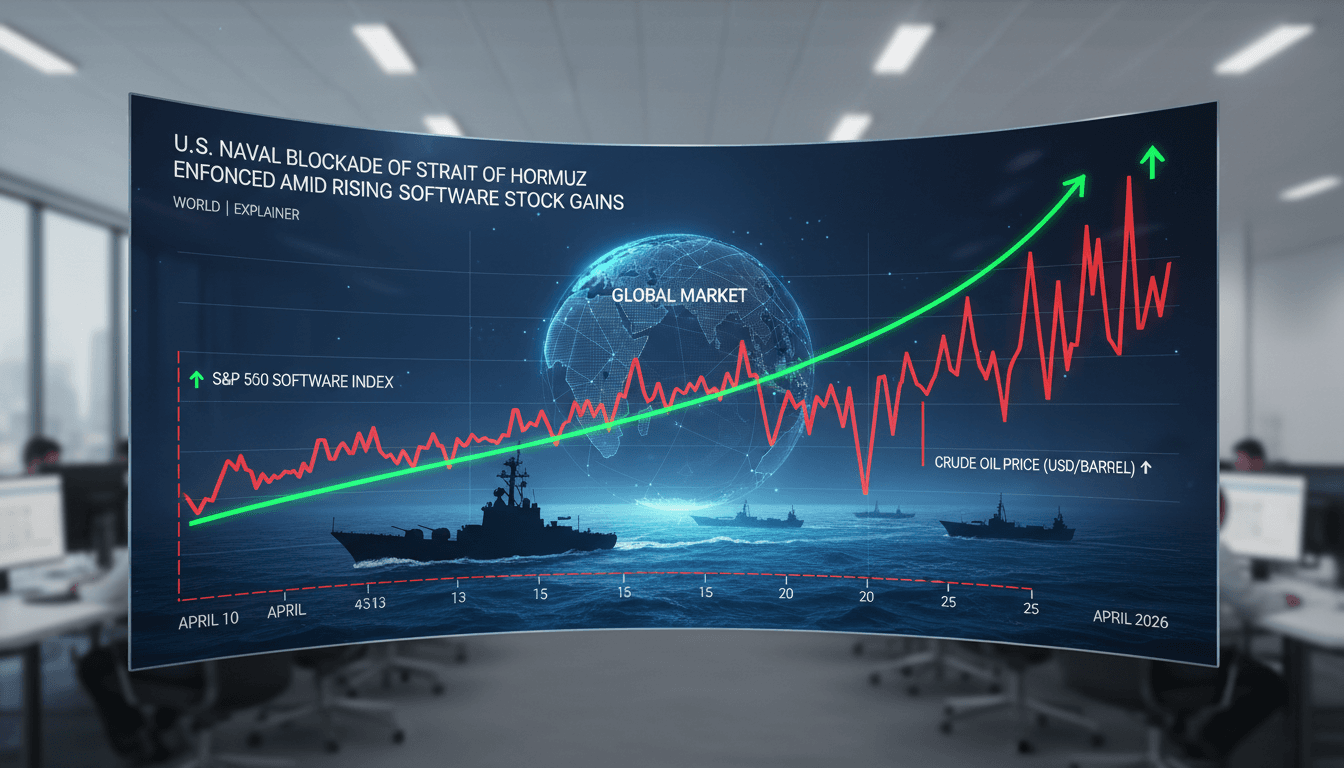
- Despite oil prices briefly exceeding $100 per barrel, the S&P 500 gained 1%, marking its eighth consecutive session of increases.
- The blockade aims to restrict Iranian shipments, reflecting a shift in market resilience to geopolitical shocks.
The context you actually need
- The U.S.-Iran conflict escalated in late February 2026, following military strikes and failed peace negotiations.
- The blockade was ordered by President Trump to curtail Iranian oil exports, impacting global supply chains.
- Software stocks surged, driving the S&P 500 to recover pre-conflict levels, indicating a shift in investor focus towards tech amid geopolitical instability.
What's really happening
The enforcement of the naval blockade in the Strait of Hormuz is a direct response to the deteriorating situation between the U.S. and Iran, which has seen military actions and failed diplomatic efforts. The U.S. military's decision to extend operations into the Gulf of Oman and Arabian Sea is aimed at limiting Iranian oil exports, a critical component of the global oil supply. This blockade comes at a time when oil prices are already volatile, having briefly surpassed $100 per barrel due to the collapse of peace talks in Pakistan.
Despite these tensions, the stock market, particularly the S&P 500, has shown remarkable resilience. The 1% gain on April 13, 2026, is significant as it marks the eighth consecutive day of increases for the index, reflecting a broader trend where investors are increasingly focusing on sectors less affected by geopolitical risks. The software sector, in particular, has been a standout performer, with companies in this space benefiting from a shift in consumer and business spending towards digital solutions.
This divergence between oil prices and stock market performance suggests a complex interplay of investor sentiment and market dynamics. While oil prices are influenced by geopolitical events, the tech sector's growth is driven by underlying demand for innovation and digital transformation. As a result, investors are reallocating their portfolios, moving away from traditional energy stocks towards technology, which is perceived as a safer bet in times of uncertainty.
The blockade's implications extend beyond immediate market reactions. It signals a potential shift in how markets respond to geopolitical events, with a growing belief that tech stocks can provide a buffer against volatility. This could lead to a longer-term trend where investors prioritize sectors that demonstrate resilience in the face of geopolitical shocks, fundamentally altering investment strategies.
Who feels it first (and how)
- Investors in software and tech stocks: Likely to see gains as these sectors thrive amid geopolitical tensions.
- Oil and energy sector stakeholders: May experience volatility and potential losses due to rising oil prices and supply chain disruptions.
- Consumers in Dubai and the Middle East: Will face increased fuel and grocery prices, along with potential shipping delays affecting e-commerce.
What to watch next
- Oil price fluctuations: Monitoring how the blockade affects global oil supply and prices will be crucial for market stability.
- Software sector performance: Continued growth in tech stocks could indicate a shift in investor confidence and market dynamics.
- Geopolitical developments: Any changes in U.S.-Iran relations or further military actions could significantly impact both markets and global stability.
The U.S. has enforced a blockade in the Strait of Hormuz.
Continued volatility in oil prices and a sustained rally in software stocks.
The long-term effects of the blockade on global supply chains and market sentiment.
This article was generated by AI from 3 verified sources and reviewed by A47 editorial systems.
Arabic-language UAE newspaper coverage focused on domestic affairs, public institutions, business, society, and regional developments.
"Al Khaleej coverage generally reflects a mainstream UAE editorial lens with strong attention to public affairs, institutions, and regional developments."
— A47 Editor
وول ستريت تصعد وسط رهانات على إنهاء الصراع في إيران
Major indices on Wall Street rose at the close on Monday, driven by investor optimism regarding the potential resolution of the conflict in the Middle East, despite the failure of peace talks between the United States and Iran earlier in the week.
Markets desk coverage, trading insights, and investor updates.
"WSJ’s markets reporting provides in-depth analysis and context for investors."
— A47 Editor
Software Stock Rally Powers S&P 500 Through Hormuz-Blockade Tumult
The S&P 500 has experienced a rally, rising for eight consecutive sessions, and has returned to levels seen before the onset of the Iran conflict. This surge is largely attributed to strong performance in the software sector, which has bolstered inve...
Global markets, investing, and macroeconomics from a premier financial newsroom.
"Bloomberg is respected for in-depth financial reporting and data-driven analysis."
— A47 Editor
S&P Erases Losses Since Iran War Began | Closing Bell
The S&P 500 has regained its losses since the onset of the Iran conflict, reflecting a stabilization in U.S. markets as reported during the closing bell on Bloomberg. This recovery comes amidst ongoing geopolitical tensions and fluctuating investor s...